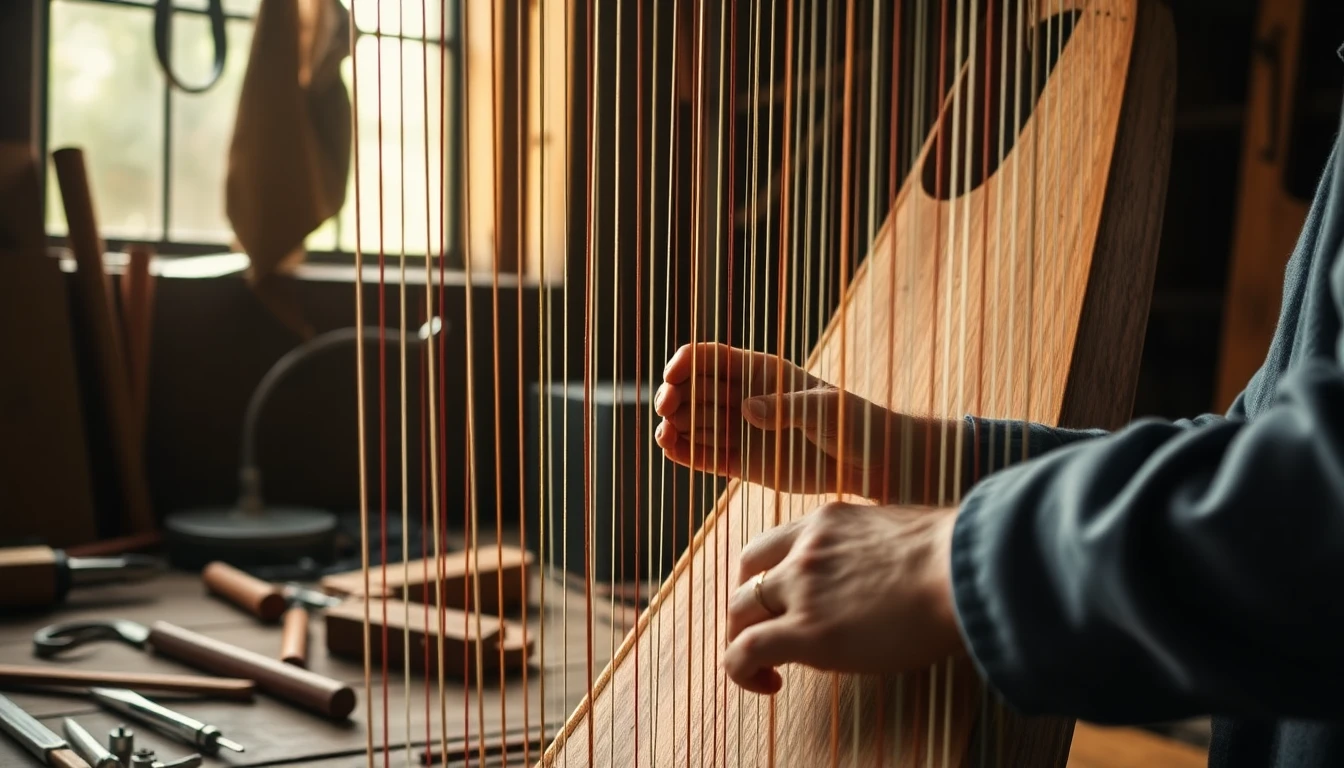
The harp may evoke a European orchestra, but in Paraguay it can lead a dance, imitate a bell bird and drive a polca with the force of a rhythm section. The arpa paraguaya is not a miniature concert harp. It belongs to a Latin American family of diatonic harps that musicians and craftspeople reshaped for local music.
Paraguayan law declared it the symbolic instrument of national musical culture in 2010. In 2019, the Culture Secretariat recognized the techniques of playing and making it as intangible cultural heritage. The wording matters: the heritage is not only a wooden object in a museum, but knowledge held by performers, builders, teachers and families.
From imported harp to local instrument
European harps arrived in the colonial Americas with explorers, missionaries and church music. Instruments of that period spread through communities and developed separate regional traditions in Mexico, the Andes, Venezuela and the Río de la Plata world. Paraguay’s version gradually moved beyond chapel accompaniment into rural and popular ensembles.
Musicologist Alfredo Colman describes that path as a ‘colonial transplant’ transformed into a cultural symbol. The phrase avoids a simple origin myth. The harp was not invented from nothing in Paraguay, but neither is the modern Paraguayan instrument merely Spanish. Its construction, technique, repertory and social meaning became local over generations.
The traditional instrument is diatonic: its strings are tuned primarily to the notes of a scale rather than controlled by the complex pedal mechanism of a concert harp. Makers build a tall triangular frame with a resonant sound box, relatively light tension and closely spaced strings. Exact woods, string materials, dimensions and mechanisms differ, especially among contemporary builders.
The lower strings supply bass patterns and rolling chords while the upper register carries melody and fast ornament. Players commonly use fingernails as well as fingertips, producing a bright attack. The right and left hands can sound like melody, bass and percussion moving at once.
The move from 32 to 36 strings
Félix Pérez Cardozo, born in Hyaty—today Félix Pérez Cardozo—became the central twentieth-century innovator and international ambassador of the instrument. The Culture Secretariat credits him with expanding the common harp from 32 to 36 strings and changing their placement in the head, enriching its range and harmonic possibilities.
His name is inseparable from Pájaro campana, the virtuoso showpiece whose rapid notes evoke the metallic call of the bellbird. The composition demonstrates what makes the instrument distinctive: ringing treble, repeated figures, glissandi, sudden accents and a bass that keeps the music moving.
Paraguay observes National Harp Day on 9 June in Pérez Cardozo’s honour. The commemoration is less a claim that one musician created the entire tradition than recognition that he helped define the modern instrument and carry it through recordings and performances beyond Paraguay.
The sound of polca—and more
The harp often appears with guitar and sometimes bass, accordion, requinto or voices. In Paraguayan polca, it can articulate the characteristic tension between subdivisions of two and three, making the rhythm feel both flowing and sharply propelled. Familiar repertory includes dance pieces, galopa, song arrangements and descriptive works.
It also plays guarania, although José Asunción Flores originally developed that slower genre through a band and orchestral sound world rather than as a simple harp subgenre. Modern performers arrange guaranias, classical works, jazz, pop and experimental music for arpa. An instrument becomes national not by remaining frozen but by being recognizable through change.
The arpa also travelled. Paraguayan performers built audiences in Argentina and Brazil and much farther away. Japan has a particularly visible teaching and performance community, and international players meet Paraguayan artists at festivals in Asunción. Migration turned the instrument into a portable marker of identity for the diaspora.
The maker is part of the music
A harp is a collaboration between luthier and performer. The curve of the neck, string spacing, soundboard thickness, balance and tension affect response. A light instrument can travel easily but must withstand constant pull from dozens of strings and Paraguay’s changes in heat and humidity.
Traditional knowledge is often transmitted in workshops and families: selecting and drying wood, carving, joining, finishing, stringing, tuning and repairing. Industrial materials and modern hardware can improve consistency or add chromatic options, but they also change sound and feel. There is no single factory specification that defines every authentic Paraguayan harp.
The same applies to playing. Some techniques are taught formally; others pass by watching, listening and repeating at home, in a peña, at festivals or beside older musicians. Protecting the tradition means paying teachers and makers, documenting knowledge and creating stages for young players—not simply placing the word ‘heritage’ on publicity.
How to listen
Start with the bass. In a fast polca, notice how the left hand creates a ground over which the melody sparkles. Listen for rolled chords, damped notes, nail attack and changes between accompaniment and solo voice. In Pájaro campana, hear how technique becomes sound painting.
Then compare performers. Pérez Cardozo’s legacy, Luis Bordón’s broad international popular style, Nicolás Caballero’s virtuosity and contemporary ensembles do not sound identical. That variety is the tradition at work.
The Paraguayan harp is a useful lesson in cultural identity. Its remote ancestors arrived from elsewhere, but local hands rebuilt the instrument until the result became unmistakably Paraguayan. National culture here is not purity. It is the sustained act of adapting wood, strings and inherited form into a sound a community recognizes as its own.