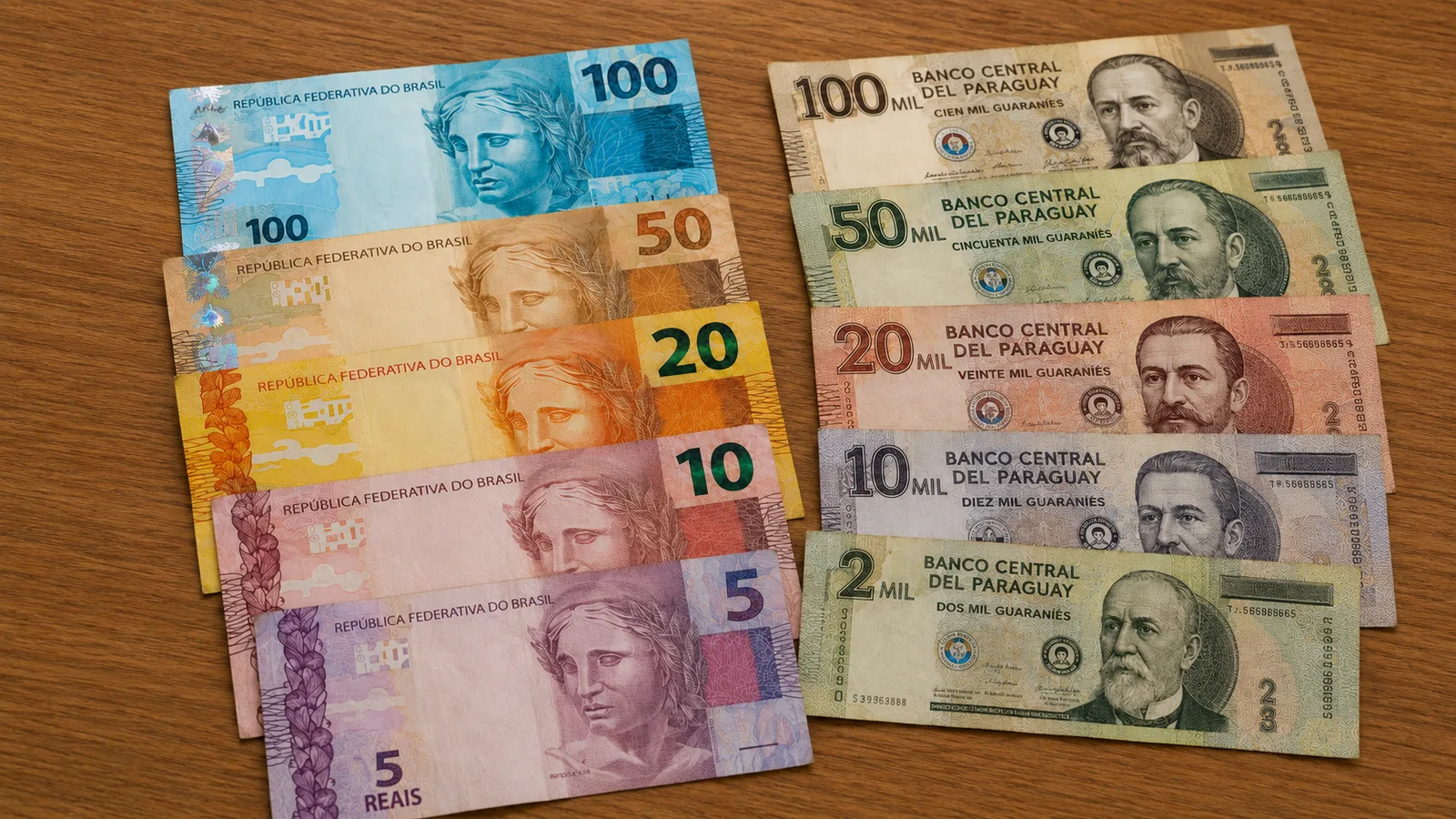
The Brazilian real exchange rate reached G. 1,177 in the foreign exchange market, a rate that has shown high volatility and directly impacts trade in border regions, especially in the main cities of eastern Paraguay.
With the guarani strengthened against the real, Paraguayan consumers are finding it more advantageous to purchase certain products in the Brazilian market, such as food, cleaning supplies, and other mass-consumption goods. Conversely, the so-called Brazilian "sacoleiros," informal traders who traditionally buy in Paraguay, are seeing their purchasing power reduced for acquiring products like electronics.
Cities like Ciudad del Este, Pedro Juan Caballero, and Salto del Guairá are already experiencing changes in commercial dynamics. Paraguayan businesses are adopting strategies to retain their customer base, including promotions, discounts, and preferential exchange rates for payments made in reais. Currency exchange houses in Asunción and at the borders update their rates several times a day.
The exchange rate fluctuation also affects families who receive remittances from Brazil, as the amount of guaranis obtained for each real sent varies directly with the exchange rate, altering the purchasing power of this income. Financial analysts assess that the volatility of the real may persist in the coming weeks due to regional macroeconomic factors.