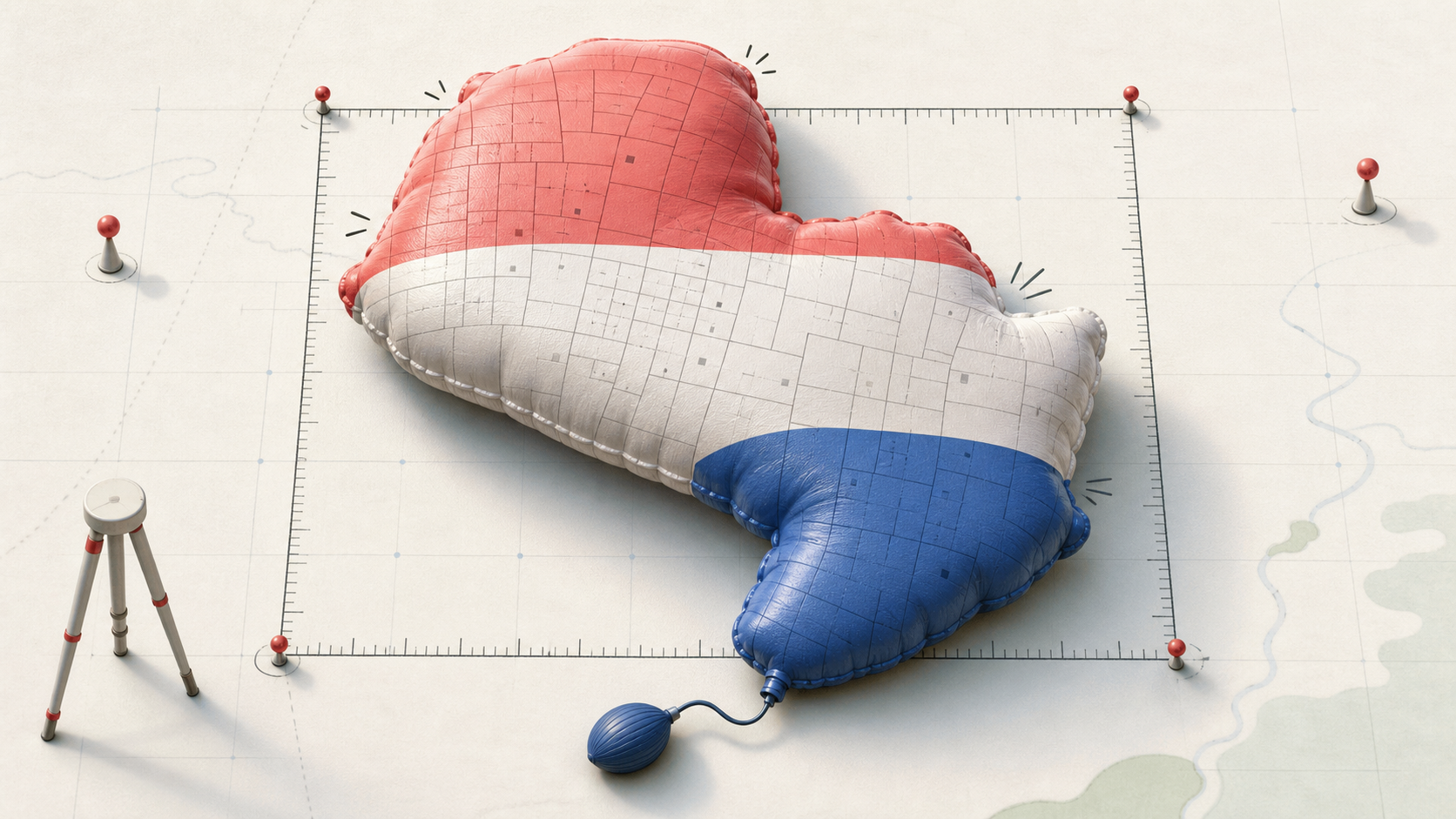
A post by political analyst and journalist Benjamín Fernández Bogado has reignited the debate over the reliability of cadastral records and land administration in Paraguay. Based on data from the National Cadastre Service for 2019, the commentator pointed out that the total sum of registered rural areas amounts to 65,486,136 hectares, equivalent to 654,861 km² — roughly 270,000 km² more than the 406,752 km² officially recognized as the country's territorial extent.
"A startling picture. Paraguay has more square kilometers registered than we learned in school, which was 406,752 km². Now we are adding more than 270,000. And these are official data. Has the giant awakened?" Fernández Bogado wrote on his social media.
The published figures show that the largest areas correspond to private lands owned by individuals, with over 7.3 million hectares. Significant parcels appear under the administration of state agencies linked to agrarian reform, public institutions, and indigenous communities. Also listed are properties attributed to Itaipú, Yacyretá, the Central Bank of Paraguay, and the National Development Bank, among other official entities.
The gap between the country's territorial surface and the hectares registered in the Cadastre — roughly 270,000 km² — represents the discrepancy between registered cadastral area and the official territorial extent, not a literal territorial gain. This disparity has brought back to the table a long-standing discussion about title overlaps, historical measurement errors, record duplication, and so-called "irregularly acquired lands" — a problem that for decades has been highlighted by experts, peasant organizations, and academic sectors. Agrarian affairs specialists have repeatedly warned that the land registration system carries historical inconsistencies stemming from a lack of cadastral updates, institutional weaknesses, and ownership conflicts that make it difficult to accurately determine the actual amount of land registered in the country.