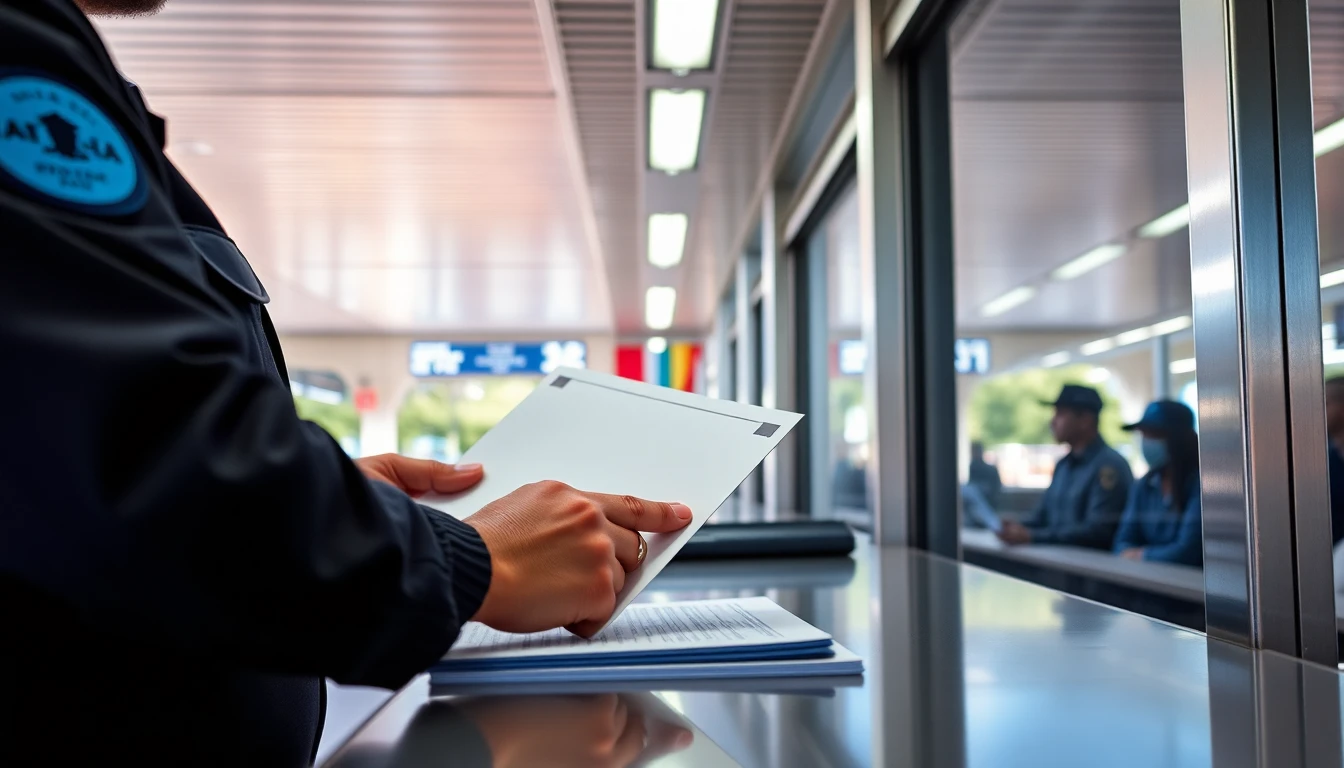
Entering Paraguay as a tourist is often straightforward, but a land crossing can look more informal than it legally is. Buses, cars and pedestrians may move through a busy frontier while shops and commuters blur the line between two cities. The traveller's essential task remains the same as at an airport: personally register entry with Paraguay's Dirección Nacional de Migraciones at an enabled control post.
The physical act of crossing a bridge is not the immigration record. A bus ticket, toll receipt, hotel reservation, Brazilian or Argentine exit stamp, or phone location does not prove that Paraguay admitted the traveller. The Paraguayan inspector must register the movement and provide an entry record. That record later matters for a lawful departure, a stay extension and any residence application.
Start with nationality and document, not route
A non-resident tourist normally presents a valid passport. Citizens of Mercosur member and associated countries identified by Migraciones may instead travel with a valid national identity document within the bloc. A receipt or temporary password for a travel document under production is not accepted as the document itself.
Visa rules depend on nationality and sometimes passport type. Paraguay's Ministry of Foreign Affairs maintains the official list of nationalities exempt from a tourist visa and identifies cases where an exemption applies only to diplomatic, official, special or service passports. If a country does not appear as exempt for an ordinary passport, the traveller needs the applicable visa process before travel.
A visa does not guarantee admission. The Foreign Ministry explains that it shows the consular application was reviewed and that the person is eligible to seek entry; the final admission decision belongs to the immigration authority at the border. Travellers who require a visa should apply with substantial lead time and verify which consular office is authorised to process it.
Document validity can shorten the visit. Migraciones states that when a foreigner enters with a travel document close to expiry, the authorised stay will take that expiry into account. Airlines, bus companies and neighbouring countries may impose their own boarding or transit requirements as well. Check every country in the itinerary, not only Paraguay.
The maximum is up to 90 days
Under the current immigration rules, a non-resident admitted for a transitory stay may receive up to 90 consecutive days. The phrase up to is important. The inspector and entry record determine the authorised period; 90 days should not be assumed without checking what was granted. Count calendar days, including arrival and departure as the authorities apply them, and leave a margin rather than planning an exit at the last possible hour.
A transitory stay is for a limited visit without establishing residence, such as tourism, transit, neighbourhood border traffic or medical treatment. It is not a residence card. A tourist who decides to remain longer must use the legally available extension or change-of-category procedure while still able to comply with its timing and documentation.
Migraciones says a transitory stay may be extended once, on request, for no longer than the period previously granted and at the agency's discretion. That is a maximum, not an automatic extra 90 days. The current requirements, fee and office must be checked before the authorised period expires. A request being considered should not be treated as approval unless the agency has issued the corresponding record.
At a land crossing, find the right counter
All nationals and foreigners, adults and minors, must register entry and exit. Registration is free and is performed only at enabled land, river and airport migration posts by accredited DNM officials. At a road border, ask the driver where passengers complete Paraguayan immigration and do not remain seated merely because other passengers do.
Some crossings use integrated or reciprocal controls, and the Paraguayan record may be processed on the neighbouring country's side. Encarnación–Posadas, for example, has operated a unified control arrangement. The location of the desk does not change the obligation. Ask specifically whether your Paraguayan entry was registered, rather than looking only for the national flag above the booth.
Long-distance buses can collect passports and return them after processing, but each traveller remains responsible for the result. Inspect the passport or issued card immediately. Confirm name, document number, date, direction of movement and authorised stay. Migraciones warns travellers to verify the data and period at entry and says later complaints will not be accepted simply because the traveller failed to check.
If the bus is waved through, the booth is closed or the driver says stamping is unnecessary, do not silently continue inland. Ask an accredited immigration official. A local commuter arrangement or neighbourhood-border regime may not apply to a tourist who will travel beyond the border city. Convenience at a high-volume crossing does not create an exemption.
Keep the proof of entry
For a non-resident, the proof can be the Paraguayan entry stamp in the passport or a stamped migration card issued by the border official. Keep it until departure. Photograph or scan it as a backup, but retain the original where one was issued. At exit, the traveller must present the entry proof to avoid sanctions.
An entry stamp from the neighbouring country is not a substitute. Land borders involve two sovereign controls: leaving one country and entering the other. A traveller can complete one side and accidentally miss the second, especially on foot, in a private car or during congestion. Before leaving the border area, verify both movements.
If no proof was issued, resolve the question immediately at the post. Do not wait until a flight months later. Migraciones can check its system, but a missing registration may require an administrative procedure and a fine. A contemporaneous correction is generally easier to document than a disputed account after a long stay.
Pre-registration speeds the counter; it is not admission
Migraciones offers an online pre-registration for specified enabled posts and travel situations. The traveller completes a form for each movement, receives a single-use QR code and shows it at the immigration window together with the required travel document. The official page asks for submission at least 48 hours before the movement.
The QR code does not replace the personal border control, visa or entry record. It supplies data in advance to shorten processing. Coverage is not universal and the list of participating posts can change. Check that the exact crossing and travel direction are covered before relying on it, and keep an offline copy in case mobile service fails.
A separate neighbourhood-border mechanism may operate at designated locations for people entering only the border city and leaving through the same post. Its geographic restriction matters. A foreign visitor continuing to Asunción, the Chaco or another department should register in the correct tourist category rather than treating local border traffic as a nationwide admission.
Travelling by car or bus adds another layer
Immigration registers people; customs and transport authorities govern the vehicle and goods. Completing the driver's vehicle paperwork does not register the passengers, and an immigration stamp does not settle temporary vehicle admission, insurance, driving authority or customs declarations. Ask separately about each layer.
A private driver should carry the valid registration, driving licence, proof of authority if not the owner, and insurance accepted for the route, then verify current customs rules with the competent authority. Rental cars need written cross-border authorisation. These requirements vary by origin, vehicle and crossing and should be confirmed before collecting the car.
On a bus, keep essential documents and medication in hand luggage. Know the company name, vehicle plate and departure time before handing over a passport. Do not allow a driver or unofficial helper to retain it after the control. Immigration registration itself is free; pay only an official charge, visa or fine through an authorised channel and demand a receipt.
Minors complete migration too
Children are not covered automatically by an adult's record. Each minor must carry the travel document accepted for their nationality and have entry and exit registered. Additional parental authorisations can apply when a child travels alone, with one parent or with a third person, depending on nationality, residence and the law of the country of departure.
Families should check both Paraguay and the neighbouring country. A document sufficient to enter Paraguay may not be enough to leave Argentina, Brazil or Bolivia with a minor. Carry original permissions in the required form and translations or legalisations where applicable. A birth certificate copy can help explain relationships but does not automatically replace the formal travel authorisation.
Exit closes the record
Every traveller must register departure, even when returning across the same bridge after a short visit. Present the same travel document used at entry and the entry proof. If a passport was renewed, lost or replaced during the stay, bring the old document or police and consular records and allow extra time for Migraciones to reconcile the movement.
Migraciones currently lists fines for overstaying and for failing to present the entry proof at departure. The amount is tied to six statutory daily wages and therefore changes as the wage base changes; the official page should be consulted on the travel date. Border payment to accredited officials is in guaraní cash under the published procedure, and online payment can include a service commission. Always obtain proof of payment.
Paying a fine is not a substitute for registering exit. The traveller should complete the administrative resolution and ensure the departure appears in the system. Repeated or unresolved irregularities can complicate later visits or a residence file. A clean sequence of entry and exit records is more valuable than saving a few minutes at the bridge.
A practical border checklist
Before departure, verify visa status for the exact nationality and passport type on the Foreign Ministry site. Check passport validity and requirements of transit countries. Locate the enabled Paraguayan control post, determine whether pre-registration is available, and download all reservations and documents for offline access.
At the crossing, complete the neighbouring country's movement and the Paraguayan movement. Present every traveller, including minors. Ask for and inspect the Paraguayan entry proof before leaving the control area. If driving, complete the separate vehicle, customs and insurance formalities.
During the stay, protect the entry record and calculate the authorised deadline. Begin any extension or residence process early. At departure, use the same document, present the entry proof, register exit and retain the final evidence.
The central lesson is modest but consequential: a land border can feel open without being legally invisible. The valid document, required visa and recorded movements—not the bridge crossing—create a lawful tourist visit. Five deliberate minutes at the right window can prevent a fine, a missed flight or months of trouble proving how and when the traveller entered Paraguay.