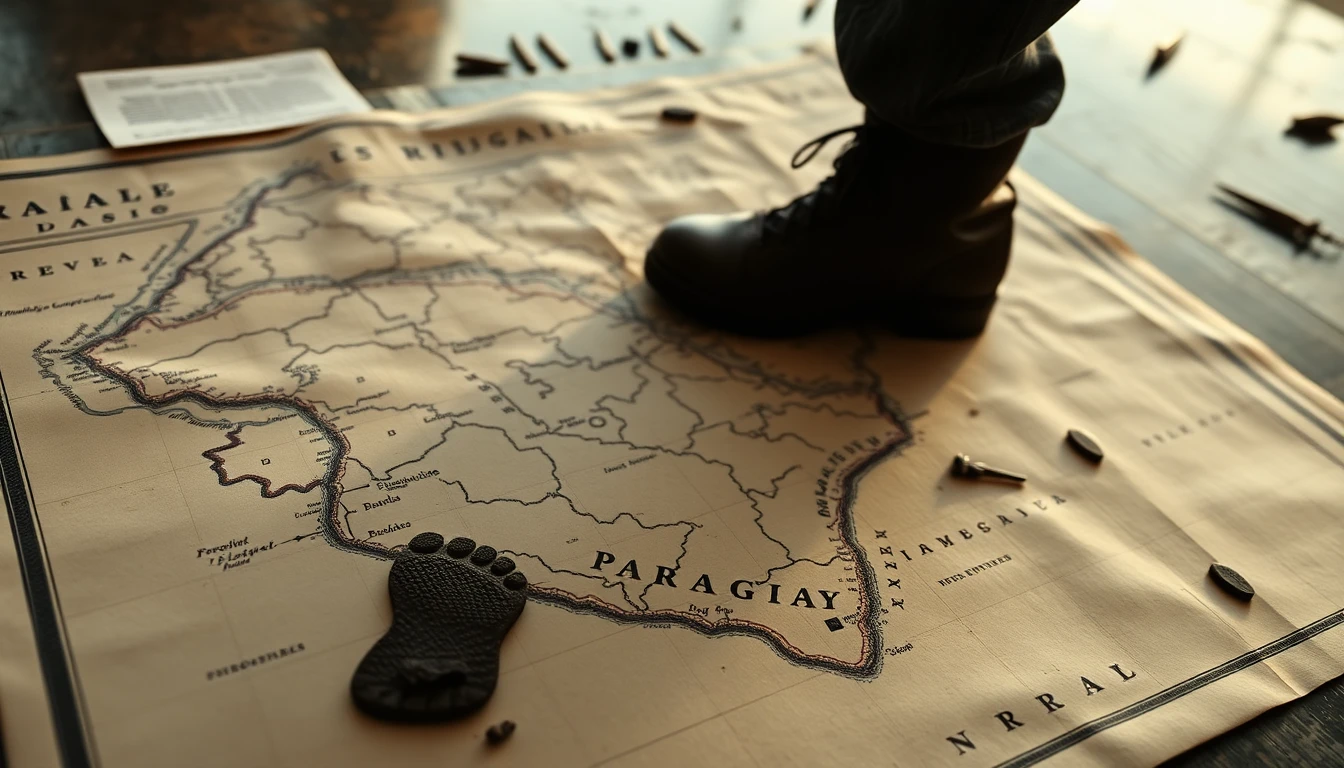
Brazil's President, Luiz Inácio Lula da Silva, defended the need to keep the Armed Forces well-equipped as a tool of deterrence in an international scenario of growing uncertainty. During a visit to the defense company Avibras in São Paulo on Friday, Lula invoked a historical episode to justify military investments, stating that the War of the Triple Alliance began when "Paraguay decided to invade Brazil," also citing incursions into Uruguay and Argentina.
The statements from the Brazilian leader, which come amid the country's electoral process, prompted an immediate response from Paraguayan historian Fabián Chamorro. He classified Lula's remarks as containing "half-truths" and stated that the interpretation is "somewhat scattered and confused." Chamorro argued that the conflict cannot be analyzed without considering the prior context, highlighting that the trigger was Brazil's military intervention in Uruguay, which overthrew a constitutional Uruguayan government.
The historian also commented on the different historiographical views, noting that there is greater convergence among Paraguayan, Argentine, and Uruguayan researchers regarding the war's causes—a perspective that, according to him, is not shared in Brazil due to its "imperialist ambitions." Meanwhile, Paraguay's National Secretariat of Culture (SNC) maintains that the war was triggered by the Brazilian intervention in Uruguay.
In his speech, Lula insisted that Brazil does not seek confrontation but needs a solid defense system to protect its sovereignty and a territory spanning more than 8.5 million square kilometers. He compared the importance of the Armed Forces to religious faith, arguing that their relevance is only fully recognized in crisis situations.