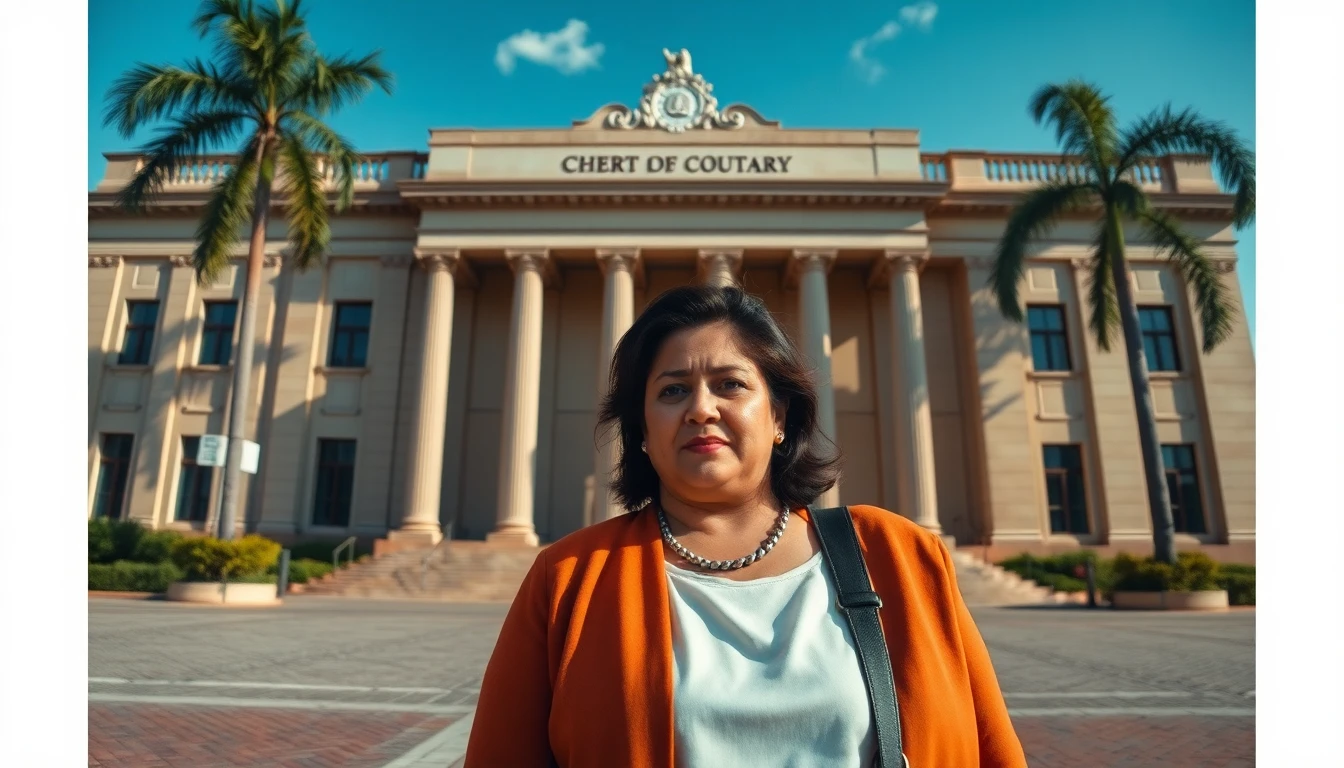
Lawyer and anti-corruption activist María Esther Roa criticized the performance of Paraguay’s Public Prosecutor’s Office and Supreme Court of Justice and advocated structural reform of the institutions. A member of the Coordinadora de Abogados del Paraguay and Somos Anticorrupción Paraguay, she said the available structure is insufficient to investigate and prosecute misuse of public funds.
Roa held Attorney General Emiliano Rolón responsible for what she considers a deterioration in the fight against corruption. “He is the person who has done the most damage to this country,” she said, expressing a political and personal assessment that does not constitute an official conclusion about the Public Prosecutor’s Office chief’s conduct.
According to the activist, there are 14 anti-corruption prosecutors, only one expert and shortages of infrastructure, technology and personnel to investigate the executive, legislative and judicial branches, as well as more than 260 municipalities, 17 departmental governments and autonomous entities. In the justice system, she cited two criminal judges responsible for guarantees, two appeals courts and two trial courts handling economic crime and corruption cases.
Roa also criticized the use of conditional suspension, plea agreements and expedited proceedings in corruption cases. In her view, these mechanisms provided for by law should be treated differently when they involve the looting of public funds.
The most serious accusations were directed at Supreme Court ministers Luis María Benítez Riera, Carolina Llanes and Alberto Martínez Simón. Roa said that María Verónica Lina Sienra Bertón, Benítez Riera’s wife and director general of Constitutional Guarantees in the Judiciary, allegedly did not have a law degree and received more than G. 22 million a month. The information was presented in the interview without independent documentation in the material analyzed.
Regarding Martínez Simón, Roa cited his daughter-in-law, Analía Carrillo, who allegedly had been studying in Spain for two years on paid leave and received G. 11 million a month without working. In Llanes’s case, she mentioned her sister Nury Llanes, director of Personnel Welfare, as well as a daughter and a nephew who allegedly worked as rapporteurs. She also cited employees of the Social Security Institute (IPS) assigned to work with the minister, including Mirko Duré, director general of Administration and Finance.
The allegations about connections, qualifications and salaries were not independently corroborated in the material consulted. Roa also criticized the other ministers’ silence and said that impeachment proceedings, provided for in the Constitution in cases of poor performance, could be used as an accountability mechanism.
In a comparison she presented, Roa said that a Supreme Court minister who “profits from the robe” was more dangerous than a member of the First Capital Command (PCC), a Brazilian criminal organization active in the Triple Frontier region, because the judge would have access to public positions and state money. The activist advocated better salaries, stricter selection criteria and protection for anti-corruption prosecutors, citing the murder of Paraguayan prosecutor Marcelo Pecci.