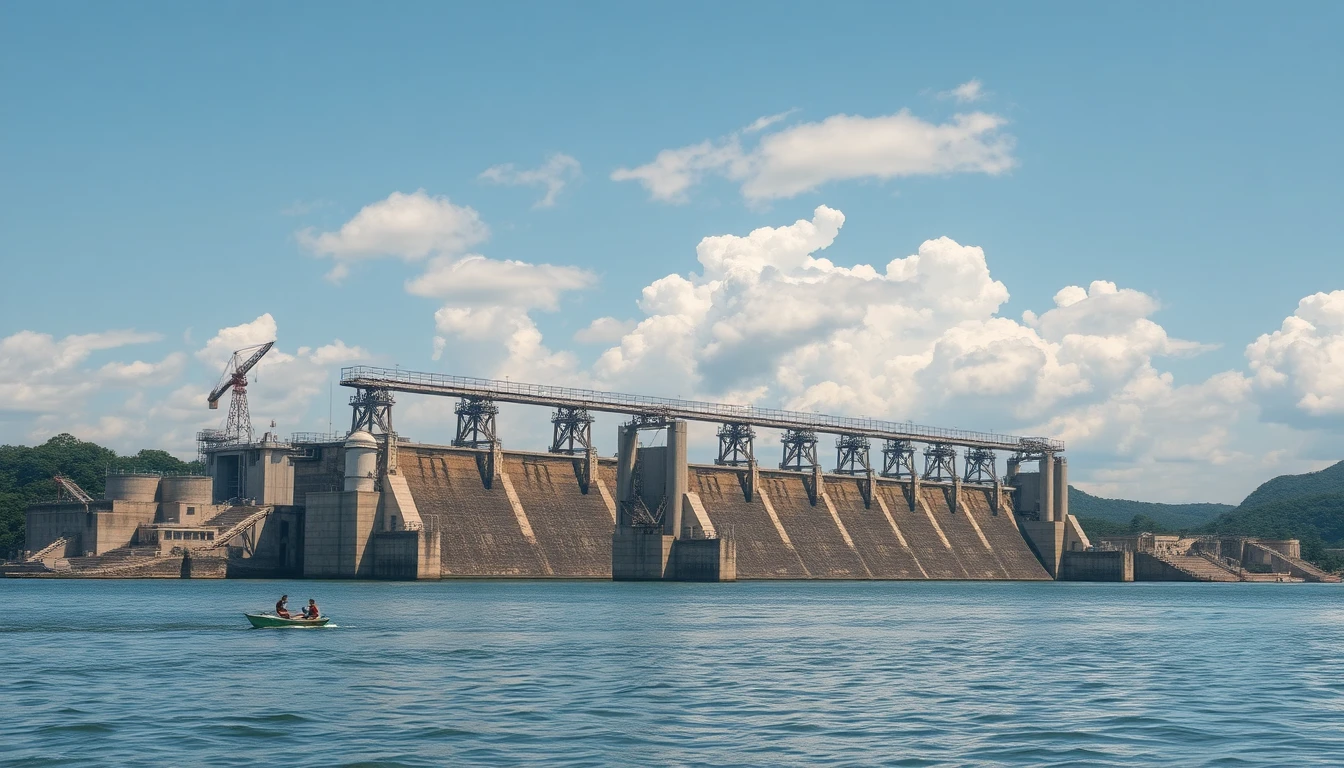
The Paraguayan government is accelerating plans to diversify its energy matrix and prevent the country from exhausting its electricity surplus by 2030, according to the Chief of Staff of the Presidency, Javier Giménez.
In an interview, Giménez described the current moment as "crucial" for Paraguay's energy future, highlighting that the Executive Branch is analyzing various alternatives to expand supply. The options under consideration include natural gas-fired thermoelectric plants, upgrading existing hydroelectric plants, solar power projects with battery storage, wind farms, and small hydroelectric plants.
The Chief of Staff confirmed that the government is holding talks with Argentina to study the feasibility of bringing gas from the Vaca Muerta field to Paraguay, possibly through the Chaco or Formosa to Villa Hayes. The goal would be to use this fuel for more stable power generation.
Giménez also highlighted the potential of solar energy, revealing that a pilot project with floating panels on the Itaipú reservoir showed significantly lower costs than expected—between US$30 and US$35 per megawatt, compared to initial estimates of US$60 to US$70.
In addition to technical alternatives, the government is seeking to attract private investment to the energy sector through institutional reforms, clear rules, and reduced bureaucracy, aiming to establish Paraguay as an attractive destination for foreign capital.