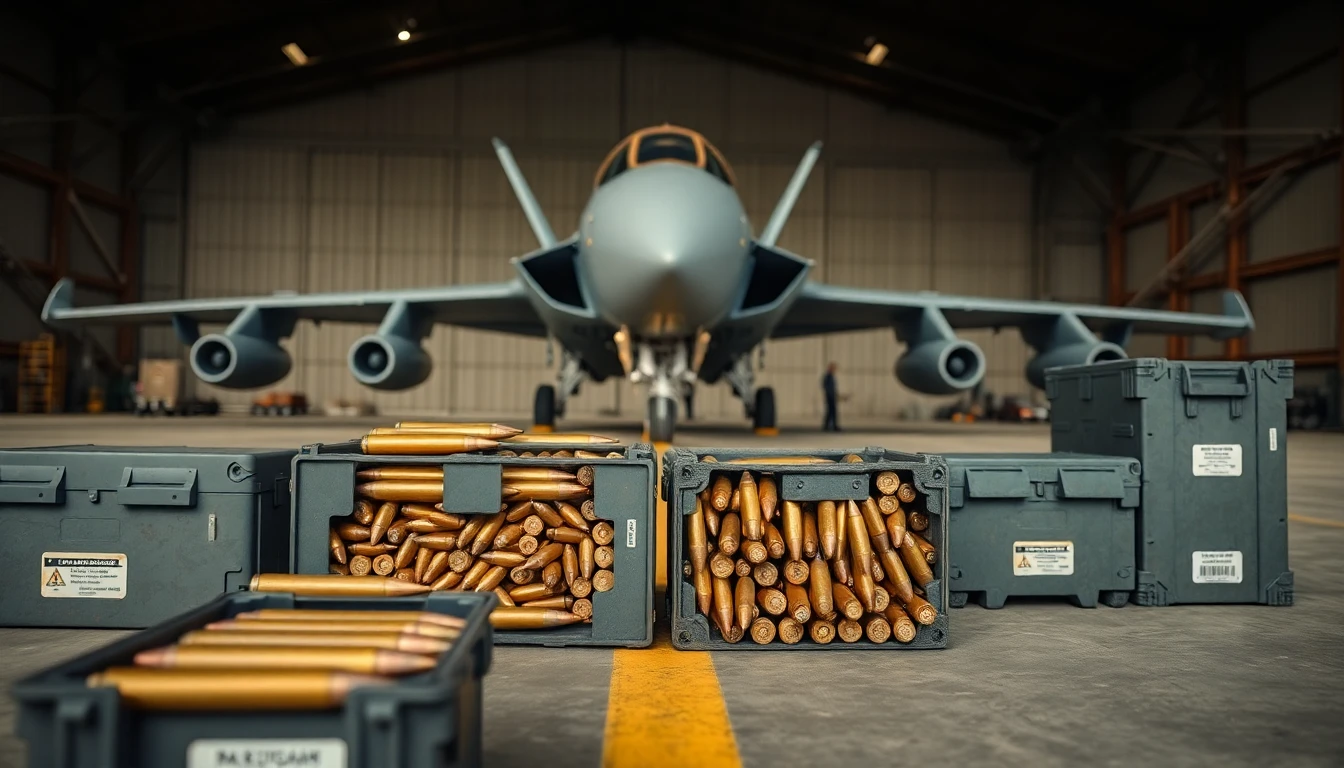
Paraguay bought ammunition valued at about G. 8.2 billion, or approximately US$1.1 million, from the United States to equip its security forces for operations against organized crime and terrorism. The acquisition was made by the Directorate-General of War Materiel (DIGEMABEL), in a direct government-to-government operation through the Foreign Military Sales (FMS) program, administered by the U.S. Department of Defense.
National Defense Minister Óscar González announced the purchase after a meeting with U.S. military representatives to discuss further acquisitions. The meeting also assessed the possibility of reactivating an ammunition factory in Paraguay, but there was no announcement of a timetable, investment or final decision on the facility.
This is Paraguay’s second operation through FMS. In early 2025, the country used the program to acquire radars and equipment for the Paraguayan Air Force (FAP), as part of a strategy to strengthen airspace control against aircraft linked to drug trafficking.
The announcement comes as the FAP expands air surveillance with two repaired mobile radars and six Super Tucano aircraft manufactured by Brazil’s Embraer. The force’s commander, General Julio Fullaondo, said that more than 40 irregular flights had been detected since the end of 2025 and that five had been classified as illicit. In January, he had reported the identification of four suspicious aircraft since August 2025.
Fullaondo said that detected illicit flights had declined since March, especially in the Concepción region, and attributed the change to the radars’ constant movement and the Super Tucanos’ operations. He said traffickers were seeking new routes through neighboring countries. The National Anti-Drug Secretariat (Senad), however, estimates that about 20 aircraft used by drug traffickers still enter Paraguayan territory each month.
The six Super Tucanos cost US$101.606 million, funded by Itaipu, while the recovery of the two Israeli-made radars required US$1.08 million. Paraguay also bought TPS-78 radars from U.S. company Northrop Grumman, whose arrival is expected by the end of 2027. A command-and-control system is expected to integrate data from the different pieces of equipment.
The commander stressed that the FAP cannot combat drug trafficking alone and called for coordination with the National Police, Senad, the Public Prosecutor’s Office, the Army and the National Directorate of Civil Aeronautics (Dinac), as well as exchanges with Brazil, Argentina and Bolivia.
Military cooperation with Washington gained an additional foundation in December last year, when the two countries signed the Agreement on the Status of Forces (SOFA). The treaty establishes rules for training, joint exercises and the presence of U.S. military personnel in Paraguay. The agreement was questioned because it grants those personnel immunities similar to those of diplomatic-mission staff.