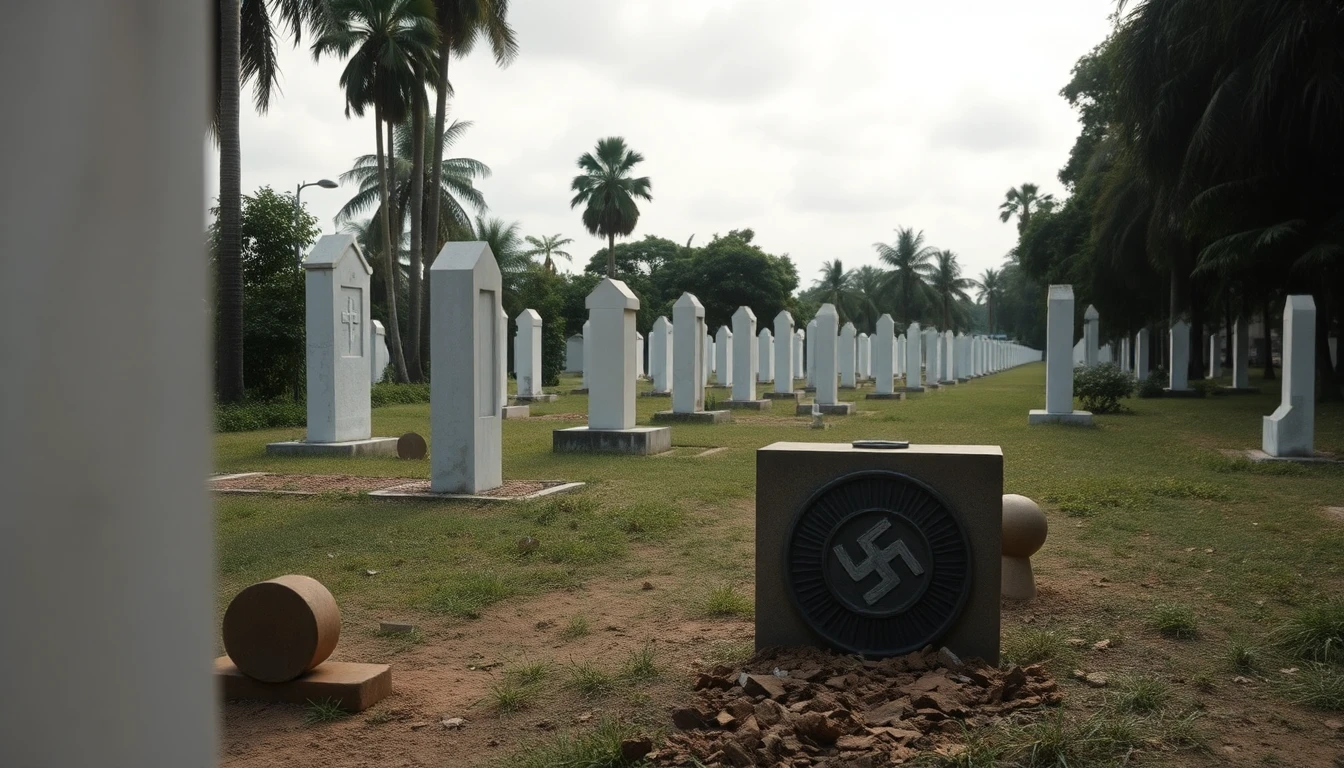
A team of researchers found an empty grave in Itá Municipal Cemetery while searching for possible remains of Martin Bormann, a Nazi leader and Adolf Hitler’s private secretary. The specialists suspect that a body was buried there and later exhumed and moved, but the investigation shown on History Channel did not identify who may have been buried there.
American geophysicist Neil Anderson examined the ground with ground-penetrating radar, guided by a cemetery worker from the town. The team reported chaotic changes in the electromagnetic readings and found fragments of broken bricks. One specialist said the pieces appeared to have been broken with a sledgehammer. These signs supported the hypothesis that the site had been disturbed, without proving the identity of any possible body.
Hugo Ayala, director of culture for the Itá municipal government, said he did not know when the researchers had been at the cemetery. He said the material was old and that the expedition did not take place in 2026. A longtime resident of the town, Ayala said he had heard rumors about Nazi graves since childhood: some said one grave belonged to Hitler, others to Josef Mengele and, more recently, to Bormann.
Bormann was officially declared dead in 1945, but later accounts fueled theories that he had escaped to South America. Belgian collaborator Paul van Aerschodt said in an interview with Belgian newspaper Dernière Heure that Bormann had lived in Paraguay and Bolivia under the identity of a religious figure. Another version, presented by the researchers, places his death in Asunción in 1959 from stomach cancer, and his anonymous burial in Itá. There are also accounts that he lived in the German colonies of Obligado, Bella Vista and Hohenau, in Alto Paraná. None of these versions is confirmed by the cemetery search.
The documentary links the possible escape to Odesa—the German abbreviation for the Organization of Former SS Members—described as a network that allegedly helped war criminals escape through Italy, with support from some sectors of the Church and German industrialists. The expedition itself does not demonstrate that the network was active or confirm that Bormann lived or died in Paraguay.
The local story about Mengele also features in this context. In a report by Andrés Colmán Gutiérrez published by Última Hora, Reinaldo Becker Dietze interviewed Alfonz Dierckx, a Belgian former SS officer who has since died, who moved to Hohenau after World War II and said he had personally known Josef Mengele. The Nazi doctor is said to have lived for two to four years in the early 1960s in a house that had belonged to Alban Krug. His son, Eugen Krug, was interviewed for the report and refused to speak: he said he had been offered millions of dollars for interviews and that his family had decided never to discuss the subject.