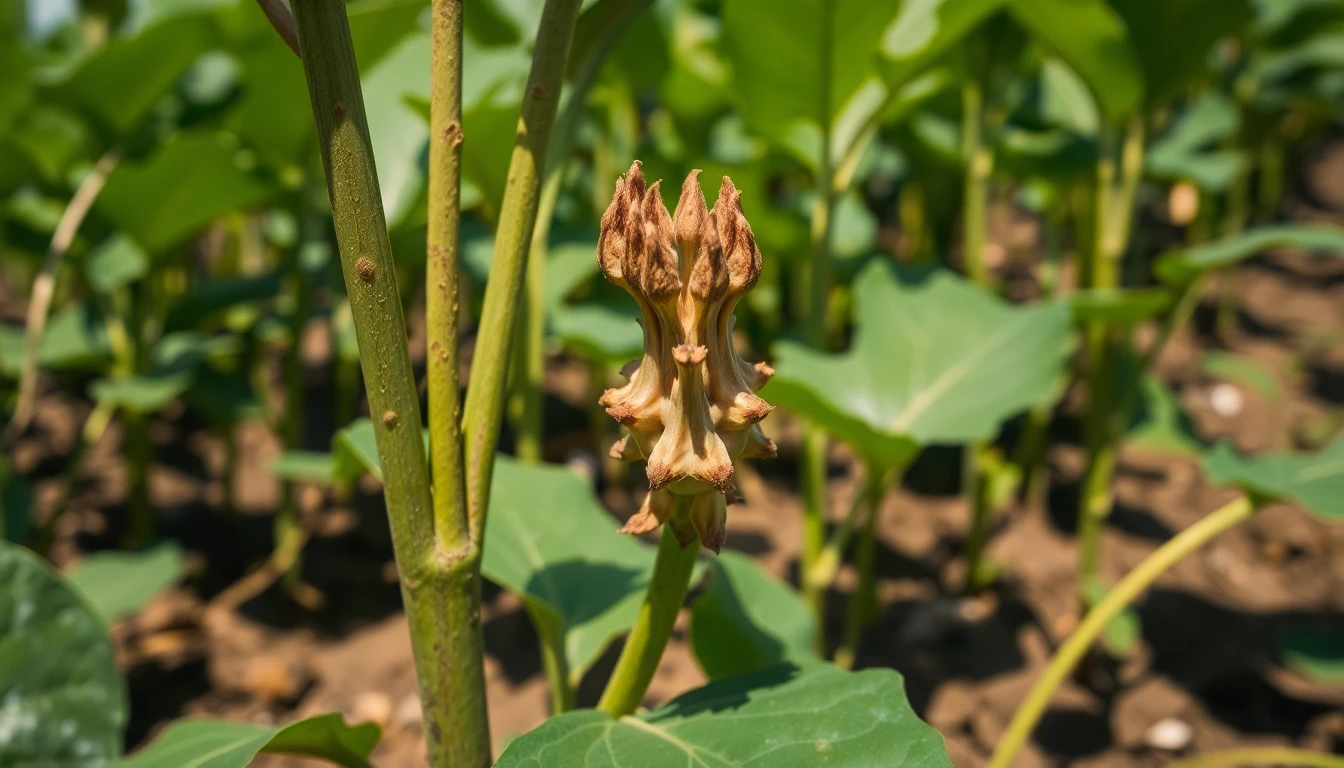
The National Service for Plant and Seed Quality and Health (Senave) issued a sanitary alert to prevent the entry into Paraguay of the disease known as 'Escoba de Bruja de la Mandioca' (Cassava Witches' Broom). The pest, already detected in Argentina, Brazil, and Bolivia, represents a serious threat to one of the most important crops for food security and the economy of Paraguayan producer families.
The disease, whose technical name is Cassava Witches’ Broom Disease (CWBD), is caused by the fungus Ceratobasidium theobromae and is classified as an Absent Quarantine Pest in the country. Symptoms include excessive leaf proliferation, smaller petioles, vascular necrosis, and deformations that form broom-like structures, drastically reducing plant growth and root yield.
Senave warns that there is no curative treatment once the plant is infected, with losses ranging between 80% and 100% of production. Transmission occurs mainly through infected cassava cuttings – which may not show visible symptoms – and through vector insects that feed on sap. The disease can also affect avocado plants as an alternative host.
Given the risk, the institution prohibits the introduction or use of cassava propagation material from countries with confirmed outbreaks of the disease. The recommendation is to use only certified material, of known origin and with sanitary guarantees. Producers who prepare their own cuttings should select vigorous and healthy plants.
Additionally, Senave requests that producers and technicians carry out constant monitoring in crops and immediately notify any suspicious symptoms, without waiting for confirmation, collaborating with field inspections conducted by the institution's technicians. Vigilance is considered crucial, as the entry of the pest could severely impact producer economies and national food security.
In parallel, Senave warned that the El Niño phenomenon, forecast for spring and summer, may create favorable conditions – such as intense rains, high humidity, and elevated temperatures – for the emergence and proliferation of various pests and diseases in crops like soybeans, corn, sesame, chia, vegetables, and fruits. Senave biologist Estela Acosta recommended that farmers use quality seeds, consider adjusting planting dates based on climate forecasts, and intensify monitoring for early detection of problems.