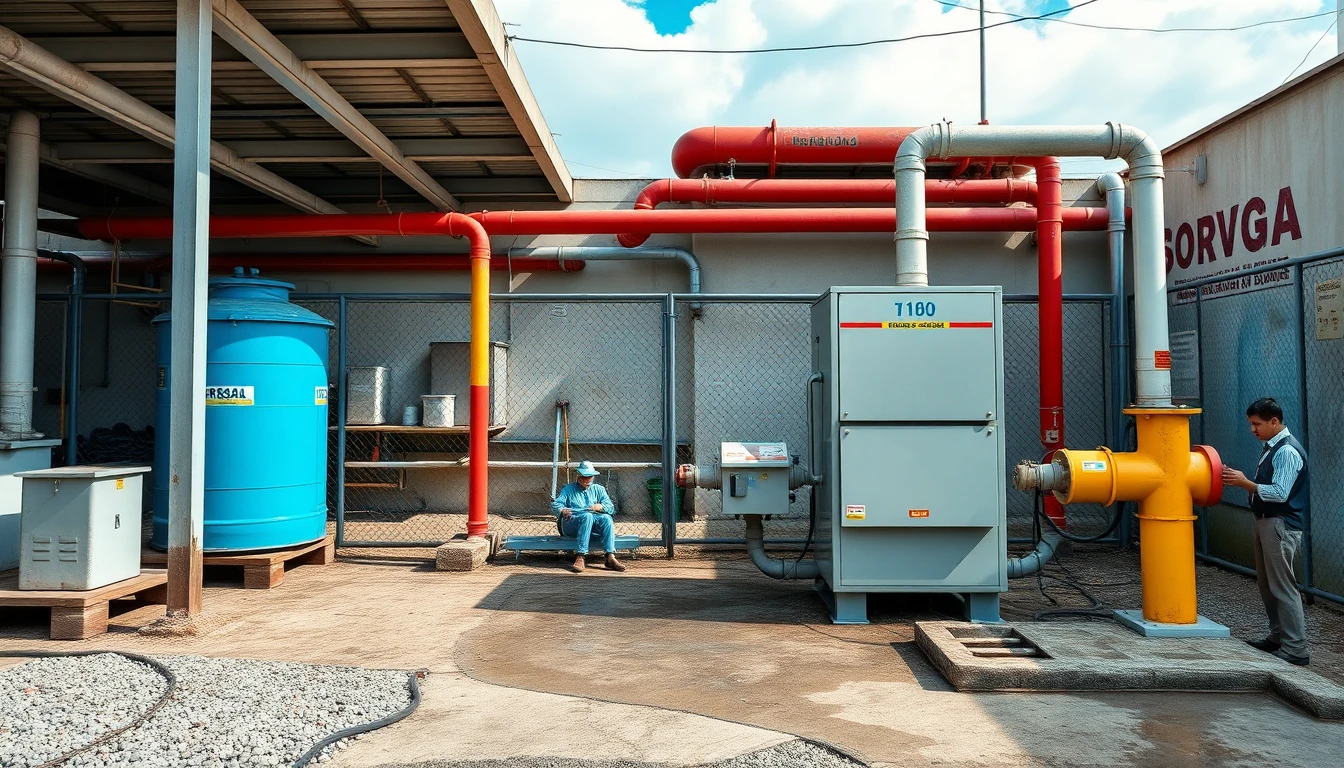
For a water-service complaint in Paraguay, the first question is not “ESSAP or ERSSAN?” but which provider actually serves this connection? Check the bill, receipt, meter documentation or service contract. Paraguay has multiple providers; ERSSAN regulates the sector but is not the direct provider for every address.
ERSSAN's provider map is useful for understanding the provider landscape by area. It is not a dependable street-address lookup. The provider named on the actual bill is therefore the stronger starting point.
Open a traceable case with the provider first
The Reglamento del Usuario currently linked by ERSSAN allows requests and complaints to be made verbally or in writing. The provider must register the matter and tell the user in writing:
- the registration/case number;
- the applicable decision period, including the effect of silence;
- the person or function responsible for handling the case.
Those three items are more useful than a verbal “we will look into it.” Keep the number, date, channel and every response.
Deadlines depend on the type of complaint
The user regulation contains issue-specific tables, and a matter not listed in those tables generally has a 30-day period. Ask the provider to state which deadline applies when it registers the case.
For billing complaints, there is an important filing limit: they generally must be submitted within 15 days after receipt of the invoice. A properly justified impediment may extend that filing period by no more than another 15 days. Where the dispute concerns recorded consumption, the regulation provides for inspection of the connection, installations and, where relevant, the meter.
During a billing dispute, the regulation also provides a provisional billing mechanism based on the average of previous consumption periods. Do not simply assume that filing a complaint means paying nothing; use the payment arrangement that applies to the registered case.
Organize evidence by problem
| Problem | Useful records |
|---|---|
| Billing | current and previous invoices, payment receipts, customer number, disputed period |
| Meter | meter number, dated photographs, readings, inspection reports |
| Interruption | start/end of each outage, address, provider notices, case number |
| Water quality | date, time, location, photos of visible changes, description of smell/color without turning it into a medical conclusion |
| Sewerage | address, photographs, timeline, prior reports and provider responses |
Do not state that water was contaminated merely from appearance, taste or smell unless a competent test or authority supports that conclusion. Record observable facts; handle health concerns through the appropriate health channel as well.
If the provider does not resolve the case
The Reglamento del Usuario separates reconsideration by the provider from appeal to ERSSAN.
A reconsideration may be filed within ten days of the provider's decision. The provider generally has ten days to decide it, with a limited evidence-related extension available under the regulation. If the provider remains silent after the applicable decision period, the regulation treats that silence as a denial for the user's next procedural step.
An express or silent decision on the complaint or reconsideration can be appealed to ERSSAN by the same user who filed the original complaint. The appeal must be written and reasoned and filed within 15 days after notification. The regulation gives ERSSAN up to 60 days to decide. Its decision must then be complied with within the period set by the rule.
Current ERSSAN contact point
ERSSAN currently publishes its office at Washington N° 609 at Juan de Salazar, Edificio Itasã, fourth floor, Asunción, telephone (+595 21) 234143/5, and email [email protected]. Because the formal appeal rule refers to written filing with the user-attention office, confirm the current intake channel and office hours before relying on remote delivery for a deadline-sensitive appeal.
Complaint file
- Provider name and service address.
- Account/customer number.
- Problem category and short dated timeline.
- Bills, photographs, receipts and notices.
- Case number, stated deadline and responsible office/person.
- Provider decision or evidence that the deadline expired.
- Reconsideration record, if used.
- For ERSSAN, a precise written explanation of why the provider's decision is being challenged.
The durable workflow is: identify the real provider, create a registered evidence-backed case, track the deadline that applies to that exact problem, and escalate to ERSSAN on the resulting record rather than starting with an undocumented complaint.