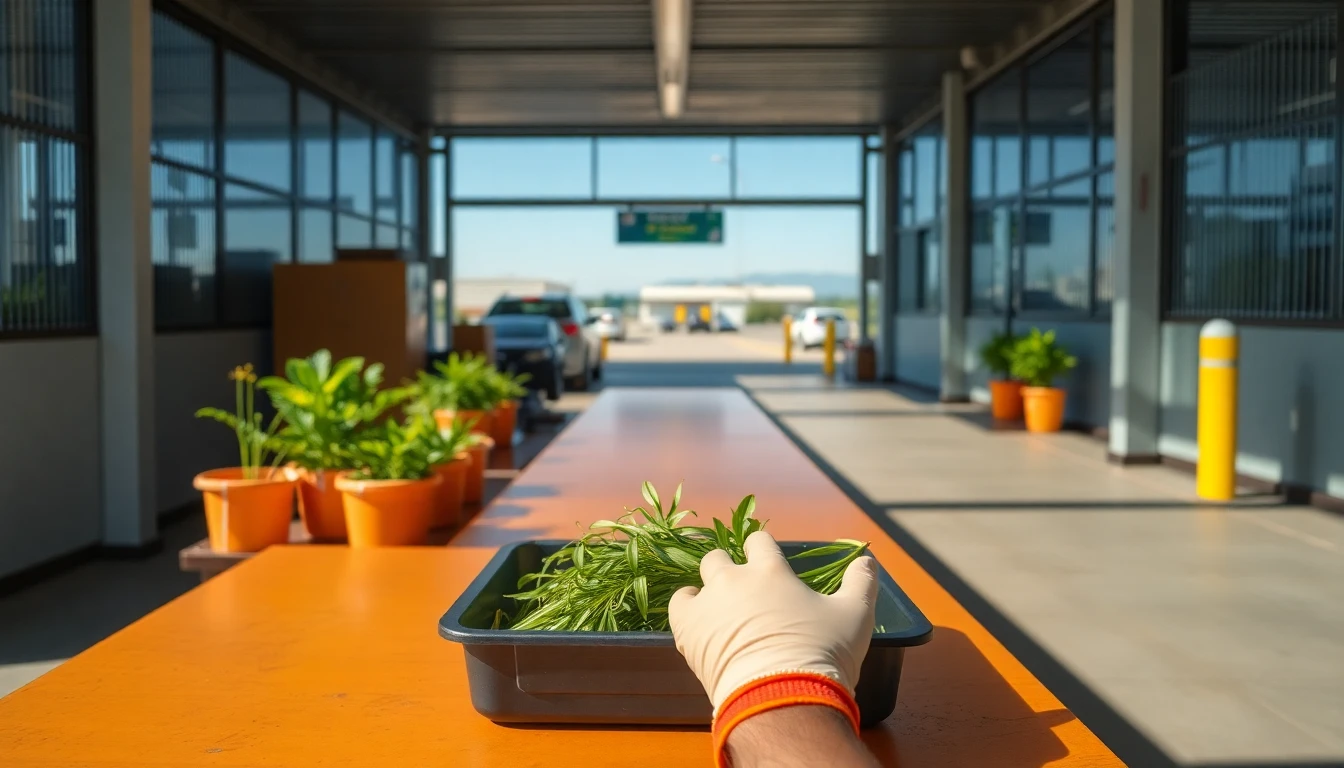
If a bag contains plants, seeds, fresh produce or another plant product, the safe starting point is not “personal use” or “small quantity.” The first question is whether the item presents a phytosanitary risk for Paraguay. SENAVE’s baggage-control procedure covers passenger and crew baggage that may contain plant products in categories capable of introducing pests. That makes the plant-health check a separate packing decision from ordinary travel habits or customs allowances.
The practical answer is a four-part test: identify the product, its country of origin, the intended use and the plant part. Processing also matters. A sufficiently processed product that is treated as non-risk under the applicable standards is not handled the same way as a risk product, but that does not create a blanket permission for all foods of plant origin or all items in sealed packages.
The packing decision tree
- Is the item plant material or derived from a plant? If it is a live plant, seed, cutting, bulb, fresh fruit, vegetable, grain, leaf, bark, flower, wood, soil-bearing item or another plant product, continue the check.
- What exactly is the product? Use the product name that best matches the item, not a broad travel description such as “snack,” “gift” or “garden thing.”
- Where is it from? The country of origin is one of the official search dimensions. Do not substitute the country where the passenger boarded if the product originated elsewhere.
- What will it be used for? Eating, planting, propagation, decoration, research, processing or another use can point to different phytosanitary treatment.
- Which plant part is involved? Seed, fruit, leaf, root, whole plant and other parts are not interchangeable for risk purposes.
- What does the official requirement say now? SENAVE’s import-requirements tool searches by product, country of origin, use and plant part, and its results must be rechecked because they may change.
Why processing changes the question
Processing can reduce or remove phytosanitary risk, depending on the product and the applicable standard. That is why travelers should avoid two opposite mistakes: assuming every plant-based food needs the same certificate, and assuming every processed or packaged item is outside control.
The useful question is not whether the item feels commercial. It is whether the product, in its actual condition, falls into a risk category. Fresh produce, seed intended for planting and a highly processed plant-derived product can lead to different answers because the risk depends on the product, processing and intended use.
| Traveler question | Why it matters | What to check |
|---|---|---|
| “It is only for my own use.” | Personal use is not a confirmed safe harbor. | Check the product, origin, use and plant part. |
| “It is a seed packet.” | Seeds can raise a plant-health question, especially when the use is planting or propagation. | Search the specific seed product and intended use. |
| “It is fresh fruit or vegetables.” | Fresh plant products may present pest-introduction risk. | Check the exact product and origin before packing. |
| “It is processed food.” | Sufficient processing can change risk treatment, but not every processed item should be generalized. | Confirm whether the actual product is treated as risk or non-risk. |
| “Customs allows passenger baggage.” | Customs treatment and phytosanitary control are separate questions. | Do not treat a customs assumption as SENAVE clearance. |
How to use the SENAVE lookup
The official import-requirements tool is built around four fields: product, country of origin, intended use and plant part. Travelers should gather those facts before searching. A vague search can produce a misleading sense of comfort, especially when the item is a mixture, a gift with unclear origin or a product whose use could be either consumption or planting.
For a practical pre-travel check, write down the item as it appears on the label or receipt, identify the country where it was produced, decide the real intended use in Paraguay and identify the plant part. Then search those inputs in the SENAVE tool shortly before travel. Because the tool warns that results may change, an old screenshot, saved message or previous trip experience should not be treated as current clearance.
When documents or inspection may be required
Regulated plant imports can require phytosanitary certification from the origin country, prior authorization and inspection. Which combination applies depends on the current requirement for the specific product, origin, use and plant part. The important point for travelers is that a baggage item can still be a regulated plant import for phytosanitary purposes.
A phytosanitary certificate, when required, is not something a traveler can reliably solve at the arrivals hall. Prior authorization, where required, also points to action before packing. Inspection means the item may need to be presented for control rather than kept casually inside luggage.
Worked examples to frame the check
A traveler wants to bring tomato seeds as a gift for a relative’s garden. The product is tomato seed, the plant part is seed, the intended use is planting or propagation, and the country of origin is the place where the seed was produced. The traveler should search those inputs and should not rely on the gift being small or non-commercial.
Another traveler carries fresh mangoes for family consumption. The product is mango, the plant part is fruit, the intended use is consumption, and the origin is the producing country. The fact that the fruit is for eating does not remove the need to check whether the product and origin are controlled.
A third traveler has a packaged plant-derived food. The right check is more precise: what is the product, how processed is it, what plant part does it contain, where did it originate and how will it be used? The answer may differ from fresh produce or planting material, but the traveler should not convert “processed” into a universal exemption.
If the item does not comply
SENAVE's current passenger- and crew-baggage procedure is more specific than a general warning. If inspection finds a plant product whose entry is not permitted or whose required documents are missing – for example a required phytosanitary certificate or evidence of origin – the procedure calls for seizure and destruction and an inspection record. For products above phytosanitary risk category 1, missing documentation leads to seizure and destruction regardless of the quantity inspected.
The procedure treats risk category 1 differently. These are plant-derived products processed to the point that, under the applicable risk standards, they no longer have capacity to introduce regulated pests. Category-1 products are not subject to the cited seizure-and-destruction treatment. Do not infer category 1 merely from sealed packaging or ordinary consumer use; check the actual SENAVE classification.
That is why the decision belongs before packing. When the classification is uncertain, the lower-risk choice is to leave the item out or confirm the current requirement with SENAVE's Plant Quarantine Department before travel.
Final packing checklist: name the exact product; identify country of origin; identify intended use; identify plant part; consider processing; check the official SENAVE requirement close to travel; prepare any required certificate, authorization or inspection step before departure; and present controlled material as required. A small amount in passenger baggage is not a substitute for that check.