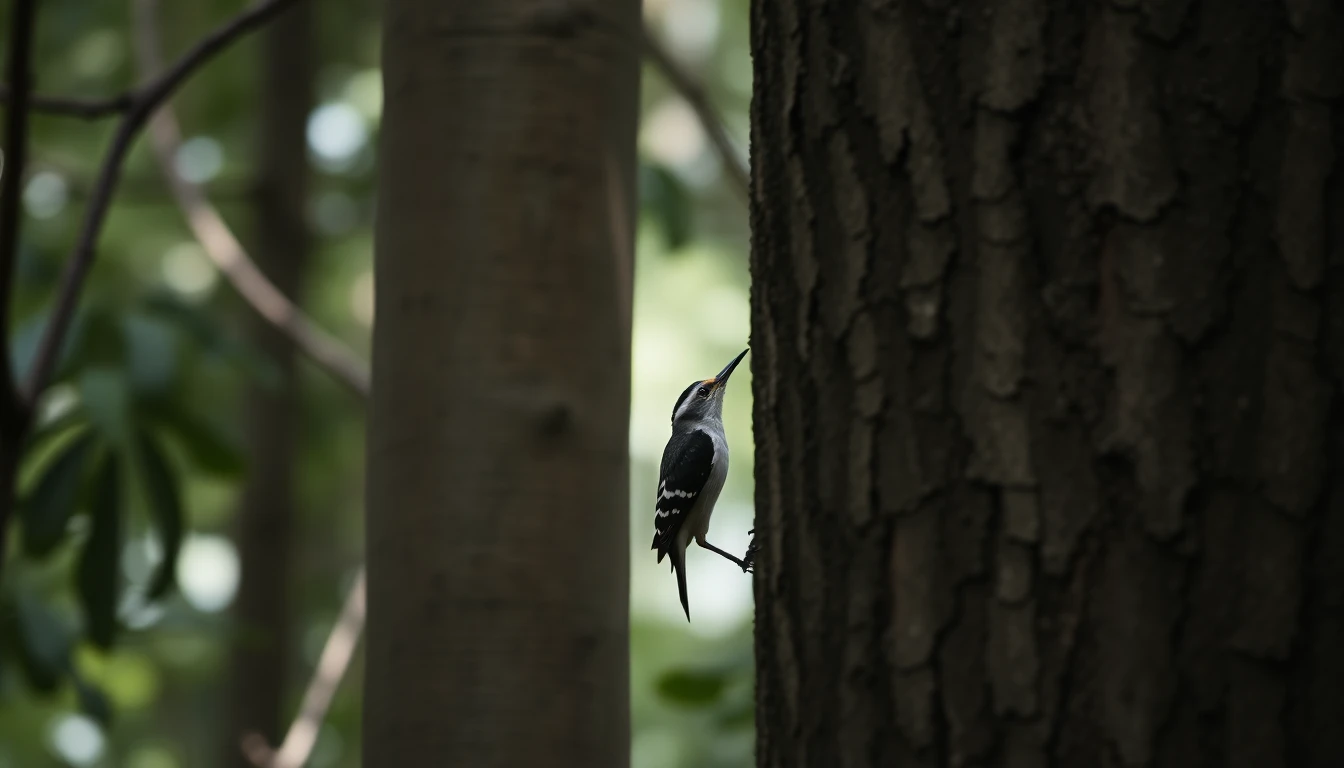
Images captured by park ranger Carlos Ortega reveal the fascinating world of arapusu, birds known as trepadores or chincheros, which inhabit the woodlands of Paraguay. These species, with unique adaptations for living on the vertical surfaces of tree trunks, play a crucial role in the health of ecosystems.
Five of the twelve species present in Paraguayan territory were documented by Ortega, highlighting distinct morphological characteristics. The red-billed woodcreeper (Dendrocolaptes picumnus) and the planalto woodcreeper (Dendrocolaptes platyrostris) use their tails as a support point, with stiffened feathers that function like a tripod. Their short, strong legs with sharp claws ensure grip on surfaces, while their beaks vary according to their feeding niche: the great rufous woodcreeper (Xiphocolaptes major) has a massive beak for extracting large prey, while other species have long, curved beaks to reach insects in deep crevices.
These birds are important biological controllers, feeding mainly on insects. The thrush-like woodcreeper (Dendrocincla turdina), for example, follows columns of army ants (known as verijeras in the Chaco) to capture small animals fleeing their path. This strategy allows for efficient foraging with minimal energy expenditure. By feeding in an ascending spiral up tree trunks, they perform a cleaning of parasites and larvae that could harm tree health.
Each species has habitat preferences: the thrush-like woodcreeper is common in the humid woodlands of the east, such as the Atlantic Forest of the Upper Paraná (BAAPA), while the great rufous woodcreeper inhabits the dry woodlands of the Chaco. The white-throated woodcreeper (Xiphocolaptes albicollis) and the planalto woodcreeper prefer the middle and lower strata of primary forests.
Despite their resilience, trepadores face critical threats due to deforestation and habitat fragmentation. As forest specialists, many species avoid crossing open areas, becoming isolated in fragments insufficient to maintain healthy populations. Furthermore, they depend on old trees with natural cavities for nesting, which are often removed by logging.
The preservation of these birds is intrinsically linked to the conservation of Paraguayan woodlands. Their existence not only enriches biodiversity but sustains vital ecological processes for wildlife and humans in the region.