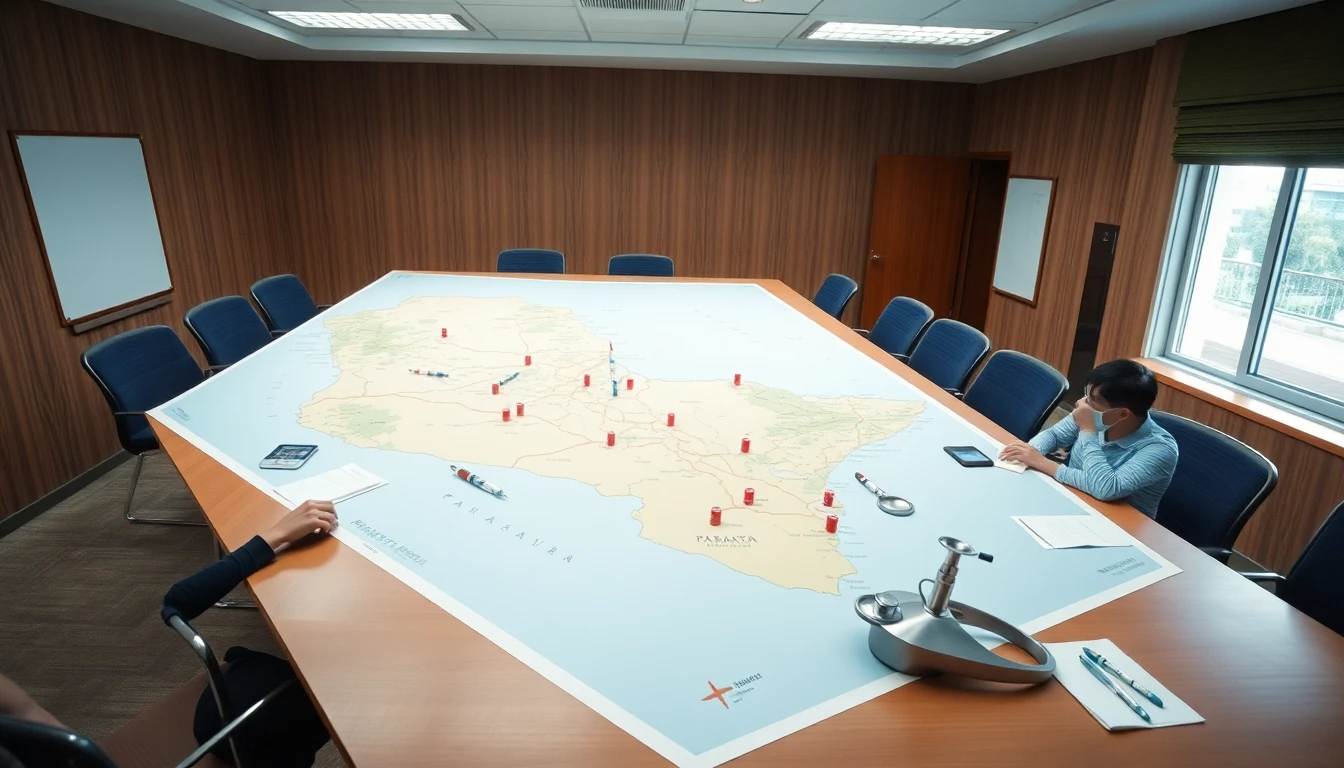
Paraguay's Ministry of Public Health began a planning workshop on Wednesday to define a national strategy aimed at eliminating more than 30 communicable diseases and preventable conditions. The initiative has technical support from the Pan American Health Organization (PAHO/WHO) and seeks to consolidate progress already made while accelerating pending actions.
Health authorities classified progress into three main areas. The first includes maintained historical achievements, such as the elimination of polio, congenital rubella syndrome, malaria, cholera, and yellow fever, sustained by vaccination, epidemiological surveillance, and prevention actions.
The second group comprises short-term goals, where Paraguay is close to achieving the elimination of human rabies transmitted by dogs and open defecation, the latter linked to the expansion and improvement of sanitation conditions.
The third axis involves innovation and updating of health strategies, with modification of regulations and simplification of procedures to advance the ETMI-Plus strategy – aimed at preventing mother-to-child transmission of HIV, congenital syphilis, and Chagas disease – and strengthening interventions against HIV/AIDS, viral hepatitis, sexually transmitted infections, leprosy, cervical cancer, bacterial meningitis, and echinococcosis.
Vice Minister of Health Governance and Surveillance José Ortellado highlighted the importance of combining technical capacity, specialized knowledge, and clear planning to translate health objectives into concrete results. Meanwhile, Director General of Health Surveillance Andrea Ojeda emphasized that the immediate challenge is to transform the existing diagnosis into an effective action plan, dependent on coordination among professionals from different areas.
Haydee Padilla, PAHO/WHO representative in Paraguay, valued the capacities developed by the country and stated that the main challenge is not only achieving the elimination of a disease, but ensuring that results can be sustained over time. She reiterated that Paraguay has the conditions to accelerate the process and that the workshop will allow converting the analysis of obstacles and opportunities into concrete decisions.