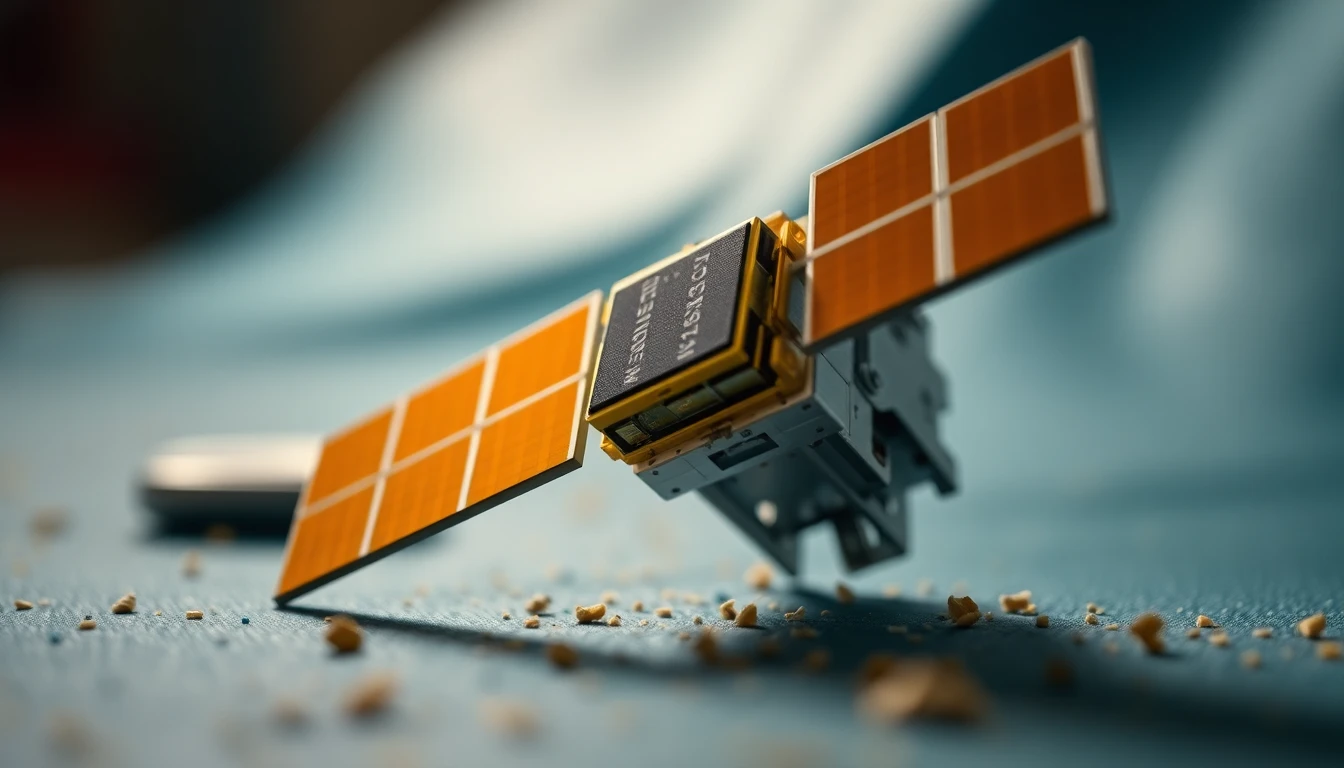
GuaraníSat-2, Paraguay’s second satellite, launched on Thursday, October 1, aboard a SpaceX rocket and was deployed about an hour after liftoff, according to the newspaper Hoy. In a state-media interview reproduced by Agencia IP and El Nacional, Alejandro Román, director of aerospace execution and development at the Paraguayan Space Agency (AEP), had announced a launch scheduled for 3 p.m. Paraguay time.
The nanosatellite measures 30 × 10 × 10 centimetres and weighs less than four kilograms. It is the first developed entirely in Paraguay, with more than 40 national and international professionals and collaborators involved. Environmental tests took place abroad.
The mission is intended to test solar panels from Italian company Astradine, relay amateur radio data and evaluate a chip from NASA’s Jet Propulsion Laboratory (JPL) for processing and storing images. The technology has previously been used in Mars missions. Another experiment, from the Engineering Faculty of the National University of Asunción (FIUNA), is intended to measure the South Atlantic magnetic anomaly, which covers parts of Paraguay and Brazil.
A ground station located at Spacelab at the National University of Asunción will receive data and send commands. System activation was expected about six minutes after the satellite’s deployment. The mission is estimated to last two years, and the spacecraft is designed to disintegrate completely when it reenters the atmosphere.
The tests are intended to inform planning for GuaraníSat-3, an Earth observation satellite.
According to Román, GuaraníSat-1, developed by Paraguayans in Japan and launched in 2021, completed an 18-month mission to monitor the vector of Chagas disease using ground sensors in the Chaco. In the same interview with state media, he said the AEP and the Japan International Cooperation Agency (JICA) plan to establish capacity for environmental testing in Paraguay over the next three years.