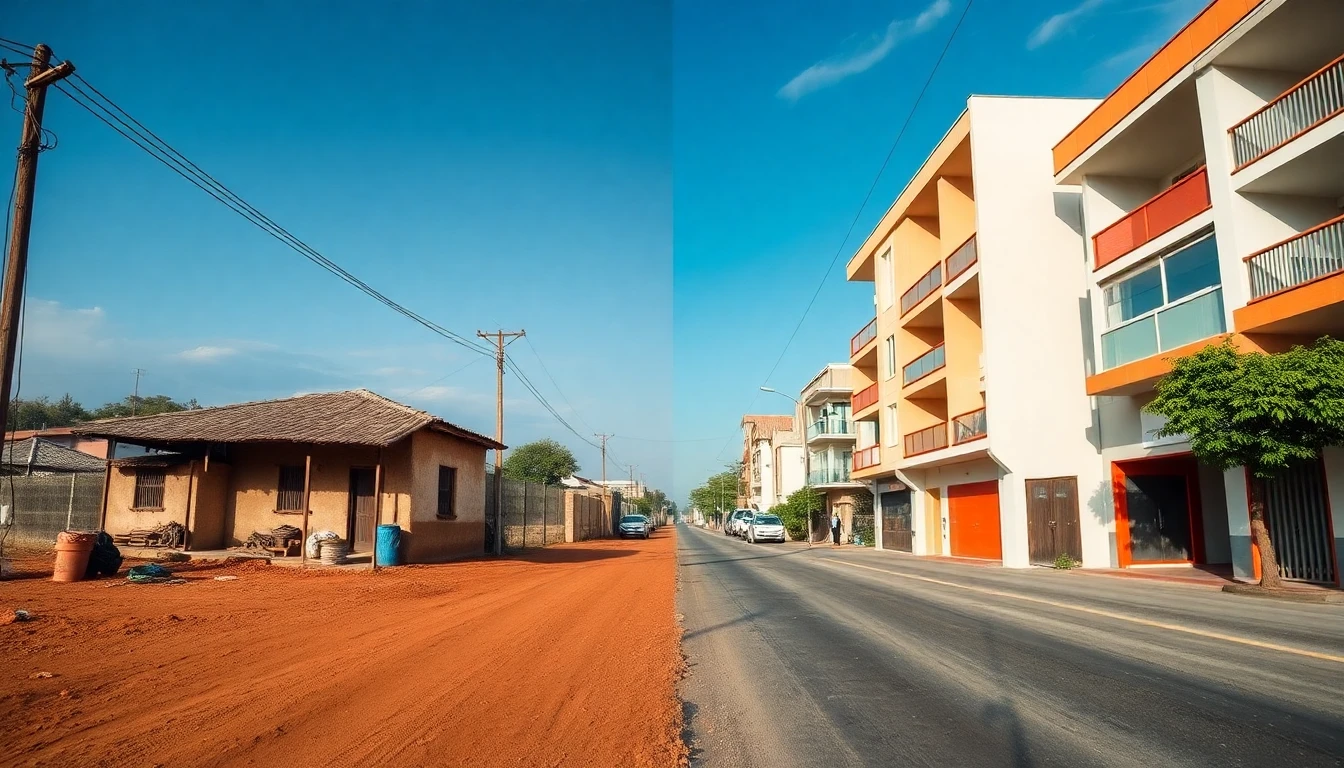
Paraguay's National Statistics Institute (INE) has for the first time released a detailed multidimensional poverty map for the country's 263 districts, revealing extreme disparities between regions. The data, based on the 2022 National Population and Housing Census and the 2022 Indigenous Census, show that Puerto Pinasco, in the Chaco region, leads the ranking with 82.2% of its population in multidimensional poverty.
The municipalities of Teniente Esteban Martínez (78.3%) and Teniente 1° Manuel Irala Fernández (75.3%), also located in the Western Region, appear next on the list of areas with the greatest deprivations. In these localities, households face severe shortages in education, environmental conditions, and housing.
At the opposite extreme, Fernando de la Mora, in the Central Department, records the lowest incidence, with only 0.9% of its population in multidimensional poverty. Lambaré (1.3%), Villa Elisa (1.7%), San Lorenzo (1.9%), and Asunción (2.5%) complete the list of districts with the best indicators.
The index evaluates four dimensions with equal weight: work and social security, housing and services, environment, and education. A household is considered multidimensionally poor if it accumulates deprivations equivalent to at least 26% of the indicators, which range from lack of access to pensions and child labor to illiteracy, inadequate sanitation, and use of harmful fuels for cooking.
Nationally, the most widespread deprivations are related to living conditions: 42.3% of the population practices inadequate waste disposal, 28.6% uses charcoal or firewood for cooking, 19.8% lacks access to a pension, and 17.3% lives in households with high economic dependency.
The study also highlights a gap between urban and rural areas. While 90.9% of the rural population disposes of waste inadequately, in urban areas this rate drops to 19.9%. Similarly, the use of charcoal or firewood affects 61.9% of rural households, compared to 13.3% in cities.
This new tool will allow local and national authorities to accurately identify territorial gaps and direct public policies and resources to communities with the greatest needs for infrastructure and basic services.