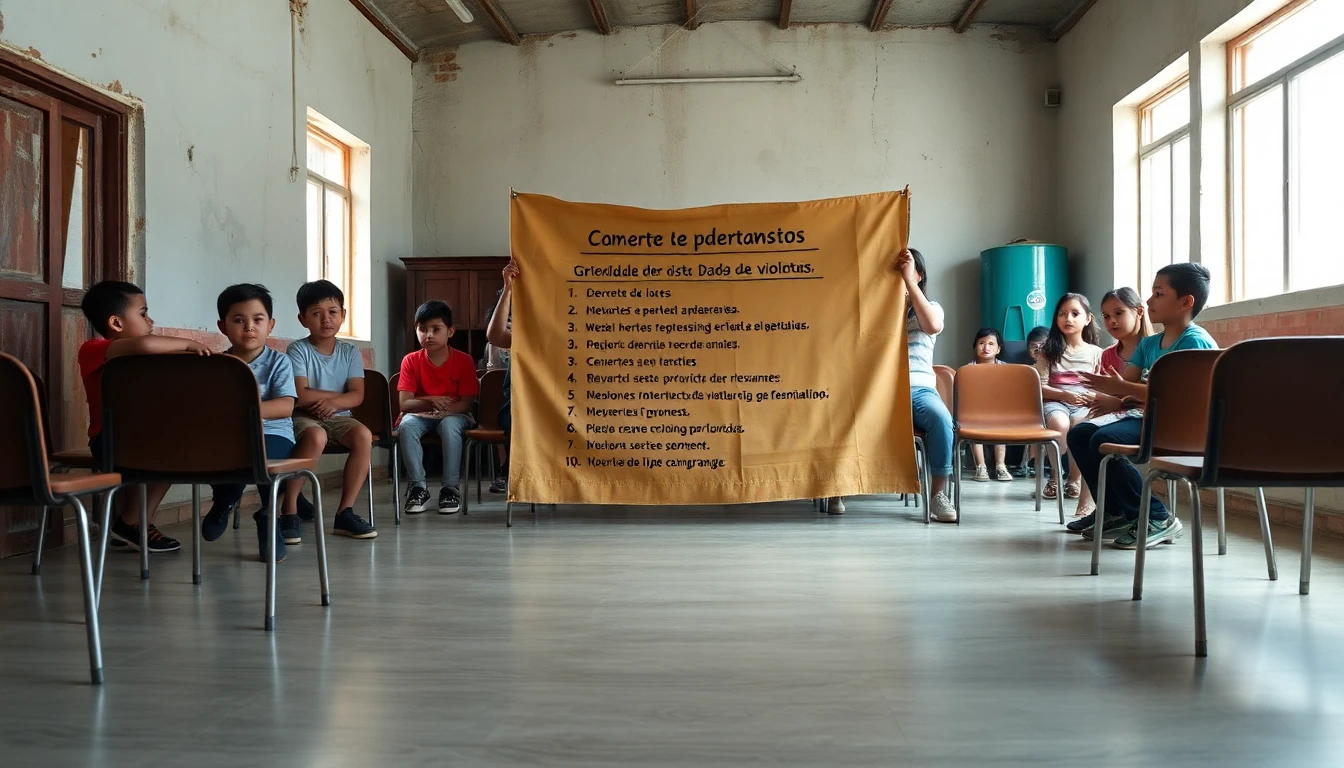
On August 13, Paraguayan children and adolescents presented seven priority demands for their rights during the launch of the 2026 Week for the Rights of the Child and Adolescent. The initiative, held under the slogan "We demand our rights for a fair present and dignified future," seeks to influence public policies based on the voices of young people, a tradition that began in 1994.
The demands include decent work, land, health and comprehensive sexuality education, protection and mental health, leading participation, inclusion, and education. Participants highlighted the need to differentiate permitted adolescent work from child exploitation, demanding safe conditions, fair pay, and guarantees that work does not interfere with studies.
The youth also called for access to adequate information about body and emotion care, better health services, and the protection of peasant and indigenous communities against violent evictions. Mental health was another strong point, with requests for more spaces for sports and cultural activities, as well as psychologists in schools.
Meanwhile, official data reveals a worrying scenario. The National Institute of Statistics and Censuses (INE) indicates that children and adolescents aged 0 to 17 represent 30% of the Paraguayan population, approximately 1.8 million people. However, statistics compiled by the Observatory of the Coordinator for Children's and Adolescents' Rights (CDIA) show that 24.5% of them, or 448,785 youth, live in poverty.
The problems extend to nutrition and health. The National Institute of Food and Nutrition indicates that one in three children under 5 has inadequate nutrition, while in the 5 to 17 age group, 34.6% suffer from overweight or obesity. In terms of mental health, every two and a half days an adolescent attempts suicide in the country, with 72 deaths recorded for this cause in 2025.
The executive director of CDIA, Cynthia Florentín, criticized the lack of state action, stating that policies are often "only on paper." She warned of delays in responses to serious cases of violence and exploitation, which result in abuse and child pregnancies. The Public Ministry registered 3,386 cases of child sexual abuse in one year, in addition to thousands of reports of family violence.
In education, although 96% of children aged 5 to 17 are enrolled, only 56.3% complete high school, with high dropout rates in the Chaco and rural areas. Nearly 99,000 minors work, with more than 44,000 in situations of exploitation due to excessive hours or inadequate conditions. Although most households with adolescents have internet, coverage in the countryside is significantly lower, highlighting regional disparities.
The data show a clear distance between the formal recognition of rights and their effective implementation, requiring concrete actions to change the reality of childhood and adolescence in Paraguay.