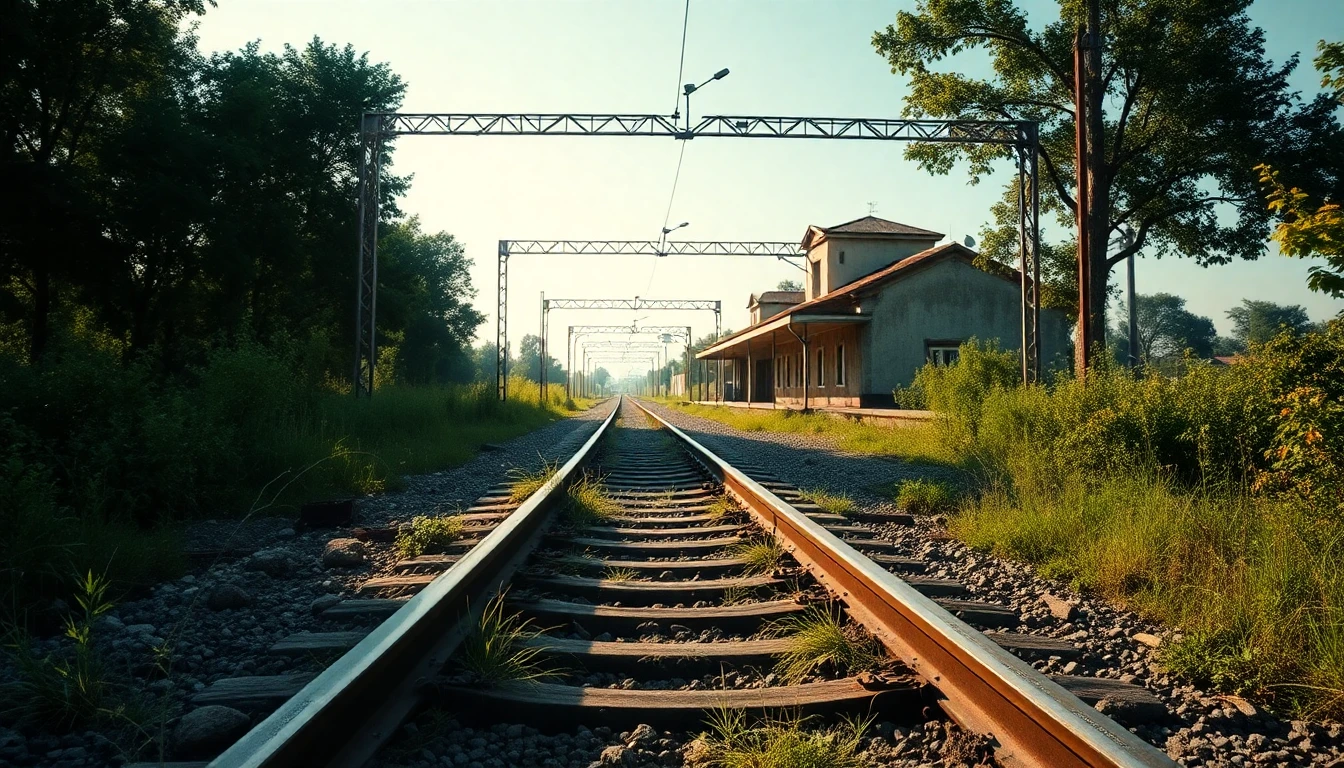
Paraguay once crossed its eastern region by train. Wood-burning steam locomotives left Asunción, passed towns that grew around their stations and eventually reached Encarnación, linking into the Argentine network. By the end of the twentieth century, regular service had vanished and station clocks had become museum pieces.
The railway is often remembered as proof that Paraguay was once ahead of its neighbours. It was indeed one of South America’s early systems, opening in 1861, but the more interesting history is not a ranking. It is how a state-led modernization project survived war, became foreign-owned, returned to public hands and then lost the competition for investment.
A railway built by the López state
Under President Carlos Antonio López, the government hired foreign engineers, imported equipment and planned a line from Asunción toward Paraguarí. The first working section connected the capital with Trinidad in 1861. Extensions reached Luque, Areguá, Ypacaraí, Pirayú and Paraguarí in stages.
The present Central Station building—originally San Francisco—was designed by the English engineer Alonso Taylor and Italian architect Alessandro Ravizza and officially inaugurated in 1864. Its European architecture projected a particular message: the landlocked republic could acquire modern technology under national direction.
Train and telegraph changed time and distance. Agricultural goods could reach the capital more predictably; passengers, letters and news moved along the same corridor. Stations became places for hotels, shops, food vendors, workshops and settlements. The railway did not simply connect existing towns: it helped make ‘railway towns.’
War interrupted the line
The War of the Triple Alliance began before the planned network was complete. Rails, locomotives, workshops and stations became military assets and then spoils in an occupied country. Recent historical research follows how the postwar government struggled to regain and finance the system while foreign forces and creditors exercised power over it.
The line that survived to Paraguarí was gradually extended again. In the late 1880s the railway passed to a British company, the Paraguay Central Railway Company, under a mix of privatization, concession and land arrangements. FEPASA dates the English-concession period from 1889 to 1961.
Private capital helped extend service through Villarrica toward Encarnación. By the early twentieth century the main line reached the Paraná, and ferry and later bridge connections tied it to Posadas and Argentine routes. For passengers, the railway could form part of a journey far beyond Paraguay.
Why did it disappear?
There was no single closure switch. The railway aged while roads improved. Buses offered more flexible schedules and stops; trucks could move freight door to door; the Paraguay–Paraná waterway carried bulk cargo cheaply. A narrow national market made a full modernization programme expensive, while political management and repeated underinvestment weakened track, rolling stock and service.
The state reacquired the system in 1961 and later operated it as the Ferrocarril Presidente Carlos Antonio López. Public ownership did not restore the investment cycle. A World Bank transport review described an almost unchanged steam-era operation, with wood-fired locomotives, telegraph dispatch and unballasted track. It reported that the last regularly scheduled train ran in 1994.
Some residual and tourist movements continued, so sources use different ‘last train’ dates. The broad Asunción–Encarnación service was cancelled in the late 1990s. By then, slowness and unreliability were consequences of decline, not romantic features. FEPASA itself says Paraguay chose to invest in roads and not trains.
The railway did not vanish completely
Tracks, land corridors, bridges, rolling stock and stations remained. The national rail heritage is legally protected, and stations in Asunción, Pirayú, Ypacaraí, San Salvador and other towns serve as museums, cultural spaces or restoration projects. Oral memories survive among railway families and former station communities.
That heritage can be vulnerable even when protected. Roadworks, private occupation, neglect, redevelopment and theft can fragment the right of way. Once a continuous rail corridor is built over piece by piece, future transport becomes much harder and more expensive. Preserving a station façade while losing the route behind it preserves only half the system.
Paraguay also retains a regular passenger rail service: the international Encarnación–Posadas train. FEPASA reports frequent low-cost border crossings carrying more than one million passengers a year. It is a short cross-border service and very different from the former national network, but it shows that Paraguayan passenger rail did not end entirely in a museum.
A new framework for the commuter train
The legal framework changed after the original version of this article. Law 7434/2025 now governs rehabilitation of the Presidente Carlos Antonio López railway through the electric Tren de Cercanías project between Asunción and Ypacaraí, and it expressly repealed Laws 6084/2018 and 7237/2023.
The project remains in implementation, not operation. During 2026 FEPASA and the Ministry of Public Works and Communications (MOPC) worked with Etihad Rail on studies and engineering. Official communications describe an initial Asunción–Luque phase followed by extension to Ypacaraí; in May the MOPC said the final design was still under technical evaluation and that, under the preliminary schedule, main works could begin in the first half of 2027 after engineering is completed.
It is important to separate the legal framework, official announcements and a completed railway. Law 7434 and active engineering work make the project more concrete than the 2018 promise, but they do not mean that financing, procurement, final alignment, stations and construction timetable are all closed. Those points should be checked against current FEPASA and MOPC publications.
What was really lost
Paraguay lost more than locomotives. It lost a national habit of passenger rail, technical skills, regular investment and the land-use pattern that grows around dependable stations. Roads filled the gap but also produced congestion, crashes, fuel dependence and dispersed development.
The empty stations therefore carry two lessons. First, infrastructure that is not maintained can move from national pride to irrelevance within a few generations. Second, preserving a corridor keeps options open. The old railway cannot return exactly as it was, and nostalgia cannot finance the new one. But the line still offers a map of where Paraguay once connected places—and where a different transport future might be built.