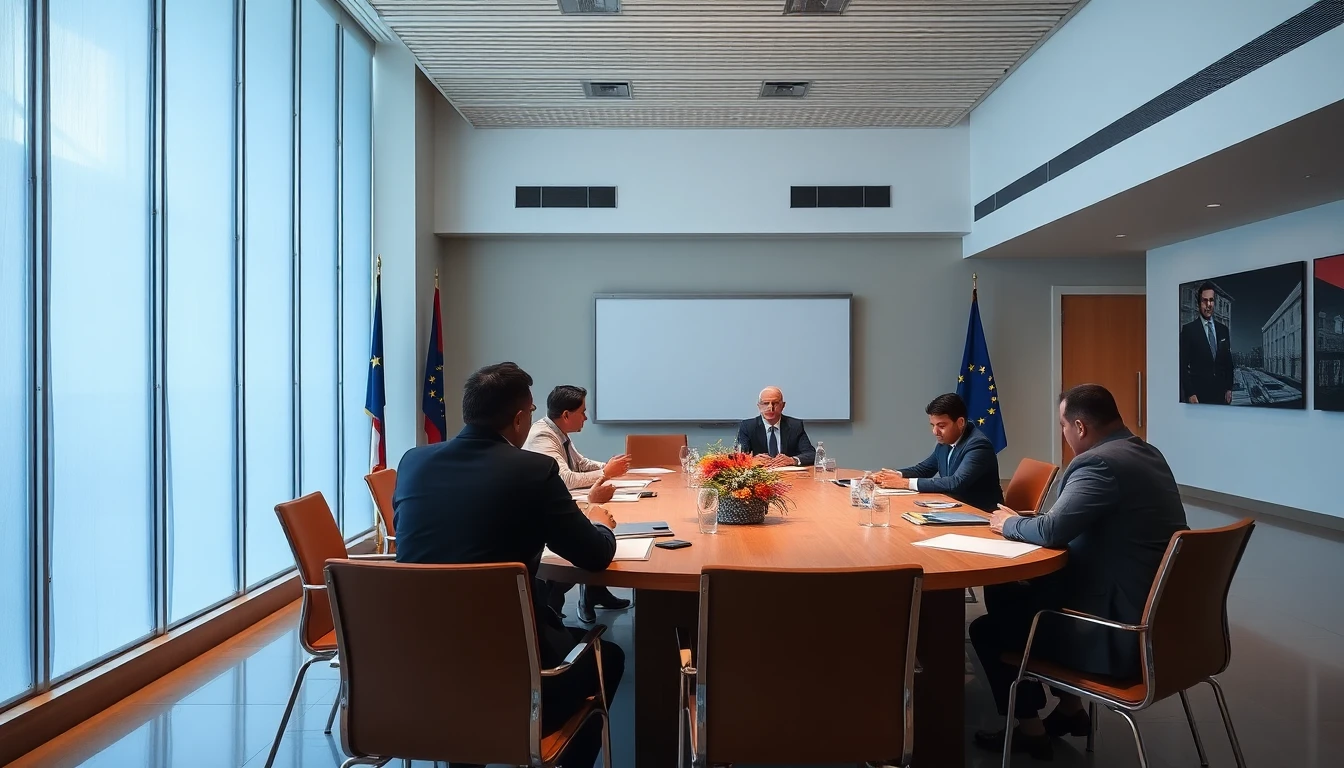
Paraguay seeks a fair, equitable and reasonable allocation of quotas under the European Union–Mercosur agreement, as an equal member of the South American bloc, without seeking special treatment. The agreement offers a potential market of about 450 million consumers, tariff advantages and clear procedures for requirements beyond tariffs, depending on its implementation.
The issue was discussed on September 30 at “Acuerdo UE-Mercosur: Oportunidades para Paraguay”, held at the Centro Cultural del Puerto in Asunción. The European Union Delegation and Paraguay’s ministries of Foreign Affairs and Industry and Commerce organised the event. Foreign Minister Rubén Ramírez Lezcano delivered the opening address.
Ramírez said the desired quota allocation had not yet been achieved and that negotiations were complex. He presented Paraguayan production as complementary to Europe’s food security and competitiveness needs. He also offered government support to connect Paraguayan companies with European Union importers.
On the business panel, Enrique Duarte, president of the Paraguayan Industrial Union (UIP), said the agreement could transform the country’s production model if market access generates income, opportunities for local suppliers and quality jobs. He identified potential in electronics, plastics and forestry products, subject to the ability to meet market requirements.
Duarte cited obstacles involving electricity infrastructure, logistics, institutions, certification and traceability. He asked European Union ambassador Katja Afheldt for support in developing domestic certification and traceability capacity, with environmental protection. Preparation involves demonstrating products’ origins and compliance with the required standards.
In a recent statement cited by state television, UIP director Eduardo Felippo said meeting European quality and safety requirements could facilitate access to other world markets.
Ricardo Dos Santos of the National Chamber of Commerce and Services of Paraguay (CNCSP) warned that benefits would be neither automatic nor uniform: they would depend on implementation, business adaptation and supporting policies. He called for progress in logistics, trade facilitation, digitalisation, regulatory quality, certification and finance. To prepare businesses, he highlighted access to information, sector-specific analysis and dialogue, with particular attention to small and medium-sized enterprises.
Dos Santos offered the CNCSP’s Investment Facilitation Centre to connect European investors with Paraguayan companies, alongside the Paraguay Arbitration and Mediation Centre (CAMP), which specialises in business disputes. He said predictability, reliable institutions and coordination between the public and private sectors were conditions for making use of the agreement’s opportunities.