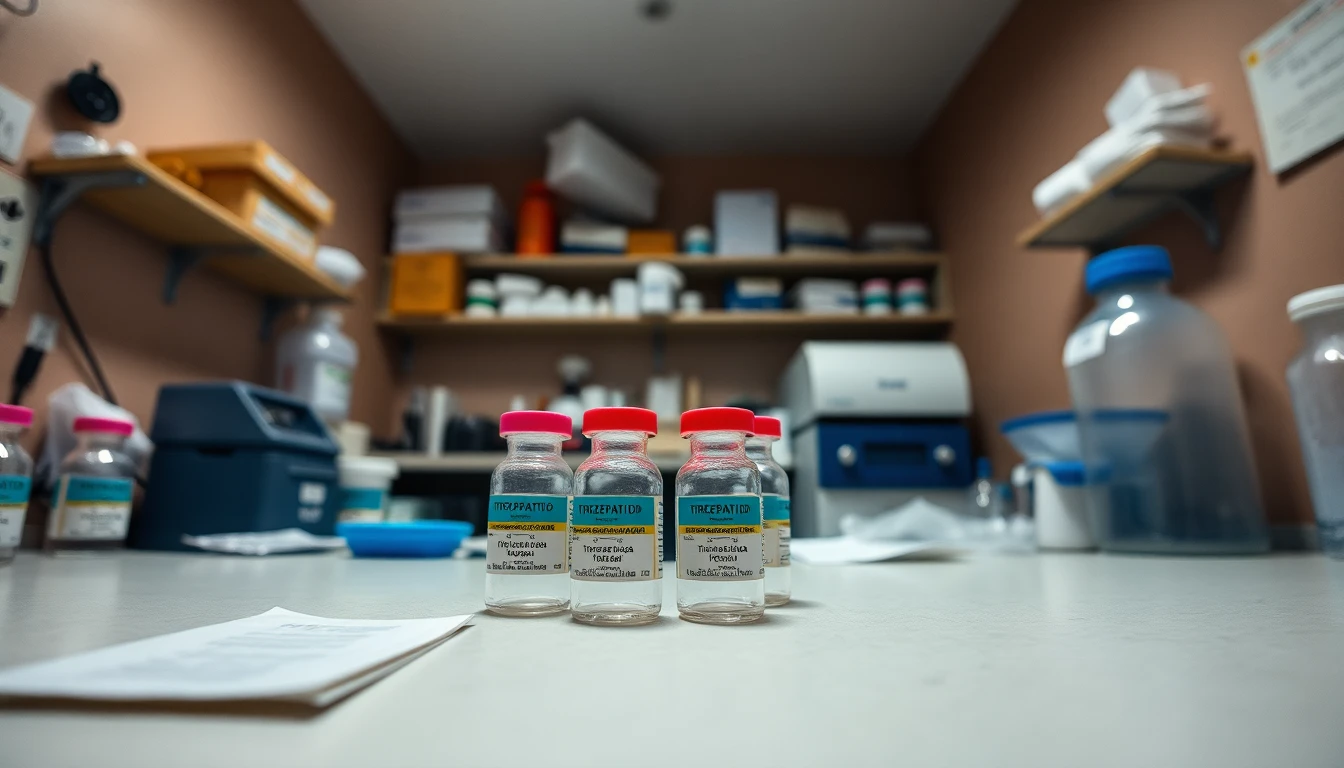
The National Police of Paraguay dismantled a clandestine drug laboratory in the border city of Pedro Juan Caballero, in an operation involving the Department of Economic Crime, the Special Operations Group (GEO), and the Public Prosecutor's Office. The focus of the action was the illegal production of Tirzepatide, a highly sought-after weight-loss drug.
The police operation took place in a high-end residence, with sources mentioning the Mariscal Estigarribia or Mariscal López neighborhoods, located about 100 meters from the border with Brazil. At the site, agents seized approximately one thousand vials of the medication, as well as equipment and supplies used in the falsification. Among the items found were test tubes, dosing machines, an ultrasonic bath machine, a magnetic stirrer, and various packaging materials.
Three people were detained during the action: the Brazilian citizens João Paulo Moura Neves (33), Marco Antonio Teixeira Furtado (37), and the Paraguayan Juan Martínez Ovando (32). Prosecutor Katia Uemura, who coordinated the procedure, stated that "elements typical of a laboratory, packaging materials, and machinery to produce the brand" were found.
According to the investigation, the falsified products were sold through a pharmacy located in the Dubai Shopping Center in downtown Pedro Juan Caballero, serving Paraguayan and Brazilian clients, which suggests a cross-border distribution circuit.
Tirzepatide, the active ingredient in brand-name drugs like Mounjaro, has become a lucrative target for organized crime. Data cited by the investigative journalism organization OCCRP indicate that the black market for this drug moved about 485 million dollars last year. The organization also highlighted that, in 2026 alone, Brazilian customs had already seized a quantity more than ten times greater than that recorded in all of 2025.
Paraguayan authorities continue the investigation to determine the full extent of the network involved in the illegal manufacture and distribution of the drug and to identify other possible individuals involved.