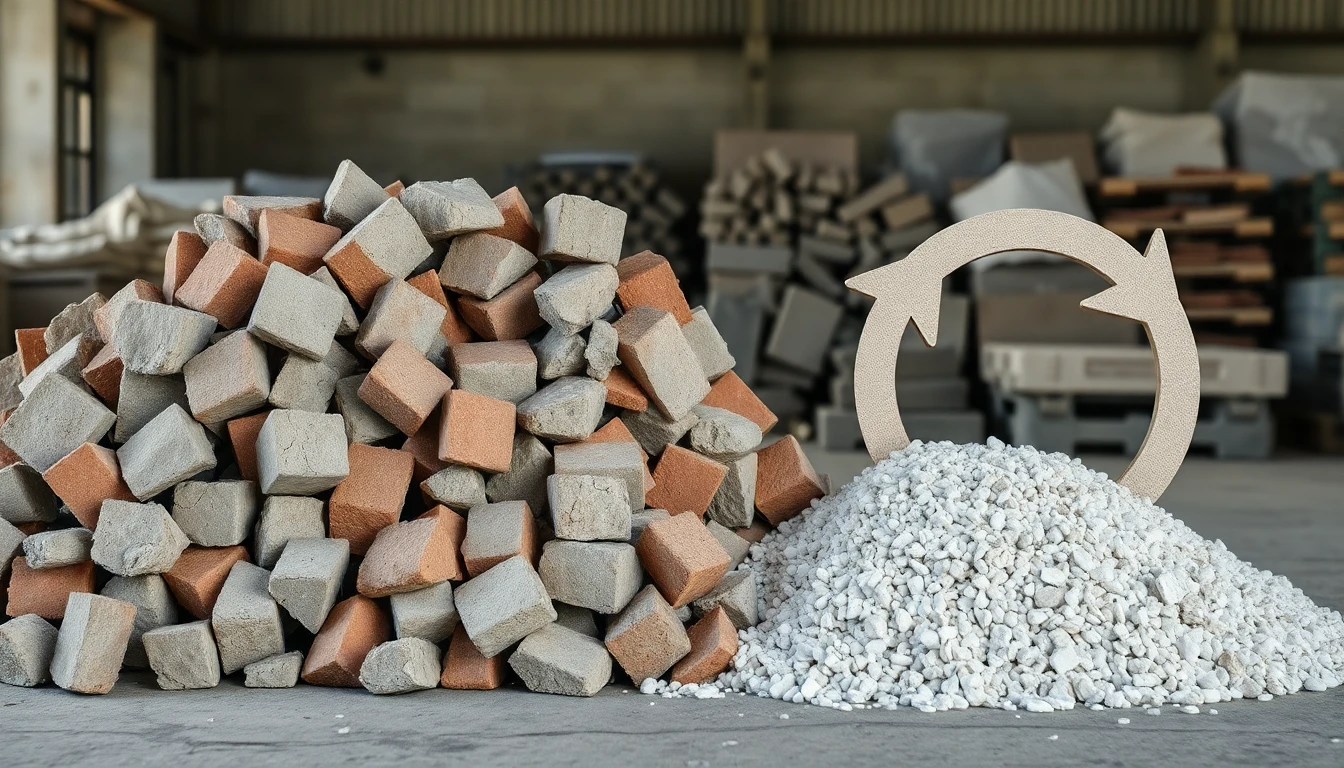
A project funded by the Paraguayan government seeks to demonstrate, with scientific backing, that construction and demolition waste can be transformed into quality raw material. The initiative embraces the circular economy to reduce the pollution generated by this debris, which is frequently dumped in streams, wetlands, and urban drainage systems.
The project "Valorización de residuos de construcción para una economía circular y sostenible" emerged three years ago out of operational and environmental frustration over the critical volume of waste produced on construction sites and the lack of adequate solutions for its disposal. The question that drove the initiative was: "Where do these wastes actually end up, and what fate do container logistics companies give them?" says engineer Miguel Amarilla Barrios, the project's general director, which is funded by the Consejo Nacional de Ciencia y Tecnología (CONACYT).
The initiative challenges the traditional linear model of the construction sector — extract, use, and discard — and demonstrates that waste of stony origin, concrete, and other materials, processed under strict control at a facility, exhibit stable mechanical strength coefficients. These results lay the technical groundwork for the first "Guía de utilización de áridos reciclados de Paraguay."
The study was based on the pace of real estate and infrastructure growth in Paraguay, which maintains an increase of close to 15% per year. This dynamism generates a critical and constant volume of thousands of tons of stony waste in the cities of the Área Metropolitana de Asunción. "More than a fixed stock, we identified an endless flow of raw material that construction sites do not know how to manage properly, representing an immense potential market for the circular economy," says Amarilla Barrios.
If the debris maintains correct segregation at the construction site of origin, the recovery rate rises between 90% and 95%. Virtually all concrete, demolition debris, and ceramic material can be transformed back into secondary raw material ready for immediate reuse in the construction cycle.
The facility has an installed capacity to process 100 metric tons of debris per day. The initial projection was to revalorize at least 1,000 tons per month, but market reality shows that, currently, the maximum processed is 1,000 tons per year. "This enormous gap between what is generated on the streets, our installed capacity, and what is actually recycled highlights a profound lack of environmental and industry-wide awareness that we are seeking to reverse," says the engineer.
The plant process operates in three phases: segregation, reception, and separation of material to remove soil, plastics, or plant matter; mechanical crushing of the clean stony and aggregate waste; and high-precision screening, with final classification into four standardized commercial subproducts — fine aggregate (up to 5 mm), medium aggregate (up to 15 mm), coarse aggregate (30 to 70 mm), and filler sands.
The main challenge identified is a strong cultural barrier that splits into two fronts: the lack of adequate environmental disposal of waste and the ignorance within the Paraguayan construction market about the quality and homogeneity that can also be achieved with recycled aggregates. The project includes sectoral and institutional education efforts alongside construction unions, schools of Architecture and Engineering, and public agencies such as the Ministry of Environment and Sustainable Development, municipal governments, and the Ministry of Public Works and Communications.
This year's target includes a projected 30% increase in sales and a 15% reduction in operational costs through improved process efficiency, as well as the creation of new formal jobs dedicated to the circular economy. The project also seeks to place on the national agenda the urgency of having exclusive regulations for construction and demolition waste, as Paraguay is the only country in the region that still lacks such standards.