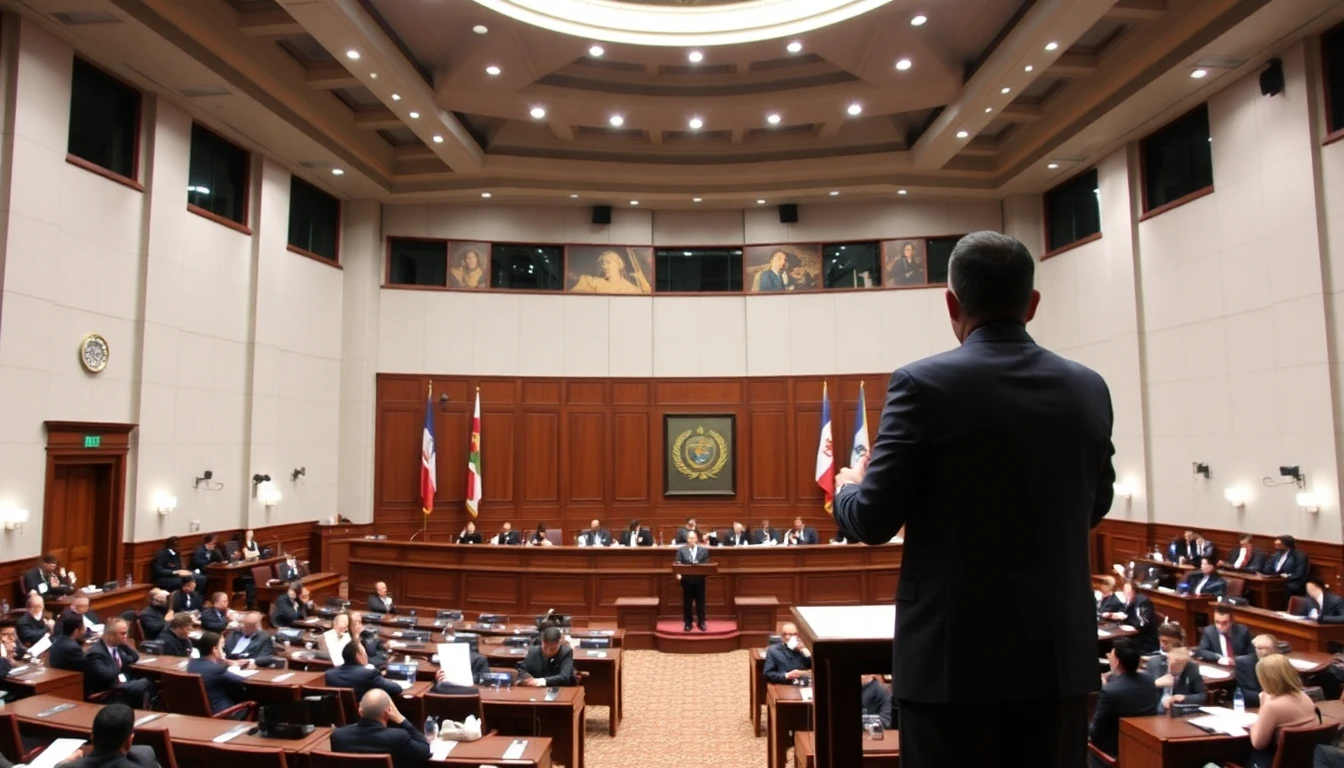
Santiago Peña's third management report to Congress presented a narrative of economic progress and institutional coordination, but also sparked a public dispute over what was left out of the presidential address. The government highlighted GDP growth, falling unemployment, poverty reduction, public works, social programs, and the relationship with the Legislature; opponents and analysts countered that the report omitted fiscal problems, public procurement, health, energy, and inequality.
The presidential speech was built around the idea of stability and a Paraguay experiencing its best economic moment. Peña and his allies cited 6.6% growth, investment-grade credit rating, falling unemployment, an increased minimum wage, poverty reduction, and a supposed ability to coordinate reforms with Congress. Government sources also linked these results to the enactment of laws, political consensus, and the performance of ministers in areas such as housing, education, transportation, health, and security.
This interpretation was reinforced by lawmakers and leaders close to the government. Raúl Latorre and other allies defended the investment and growth figures, while senators like Derlis Maidana, Chase, and Pettengill assessed the report as realistic or approved, although some pointed out communication issues. There were also positive mentions of public works, health, the fight against organized crime, housing, the Hambre Cero and Che Róga Porã programs, Yguazú Digital, and the diplomatic relationship with Israel.
The opposition and critical sectors, however, described a different country. Legislators stated that the growth does not reach families, that poverty still forces people to rely on raffles and community mobilization to solve basic problems, and that the official figures were presented without acknowledging daily hardships. Media outlets like ABC Color, Última Hora, El Nacional, and other sources compiled criticisms regarding poverty, informal employment, the housing deficit, public health, lack of medicines, and the absence of responses for vulnerable sectors, including indigenous peoples.
The economic front also faced scrutiny. Reports pointed out that Peña praised investment and stability but avoided giving weight to the fiscal deficit, the war economy, debts to suppliers, bureaucracy, legal insecurity, and energy issues. Economists and former ministers warned that a strong macroeconomy alone does not solve social problems and that exaggerating the numbers could undermine the report's credibility.
Health emerged as one of the most sensitive areas. The president acknowledged that the sector remains a pending issue and promised to demand more from his ministers, while allies highlighted historic investment. Simultaneously, doctors, opponents, and critical media outlets pointed to deaths due to poverty, lack of medicines, deficiencies in the public system, problems at the Social Security Institute (IPS), and the gap between official announcements and actual care.
There were also criticisms about omitted or superficially treated topics. Sources mentioned the so-called "Sobres del Poder" scandal, the Ueno case, the assets of public officials, corruption, contracts, debts, energy, kidnappings, the crisis at the National Electricity Administration (ANDE), the Yguazú Digital project, the still non-existent Asunción-Luque train, public transportation, and security promises. For critics, the report cherry-picked achievements and avoided addressing the political and fiscal costs of the administration.
In the political arena, the session took place under tension. There were absences and criticisms from dissident factions of the ruling Colorado Party, as well as reactions from opposition benches who labeled the report as repetitive, propagandistic, or out of touch with reality. The use of Congress as the stage for accountability contrasted with the criticism that Peña had previously prioritized his party and allies, fueling accusations of the report's political use.
The result is a report with two conflicting narratives. For the government, the message consolidates a story of growth, fiscal order, reforms, and coordination between branches of power. For opponents, economists, and social sectors, the same set of sources shows that the country still grapples with poverty, informality, a housing deficit, deteriorating health, questions about procurement, and a list of omissions that do not fit into the official discourse.
The public relevance of the episode lies less in an isolated phrase from the president and more in the dispute over accountability. The report served for Peña to defend his administration, but it also organized, around a single event, the criticisms regarding contracts, health, the economy, security, energy, and inequality that will shape the political assessment of the government in the coming months.