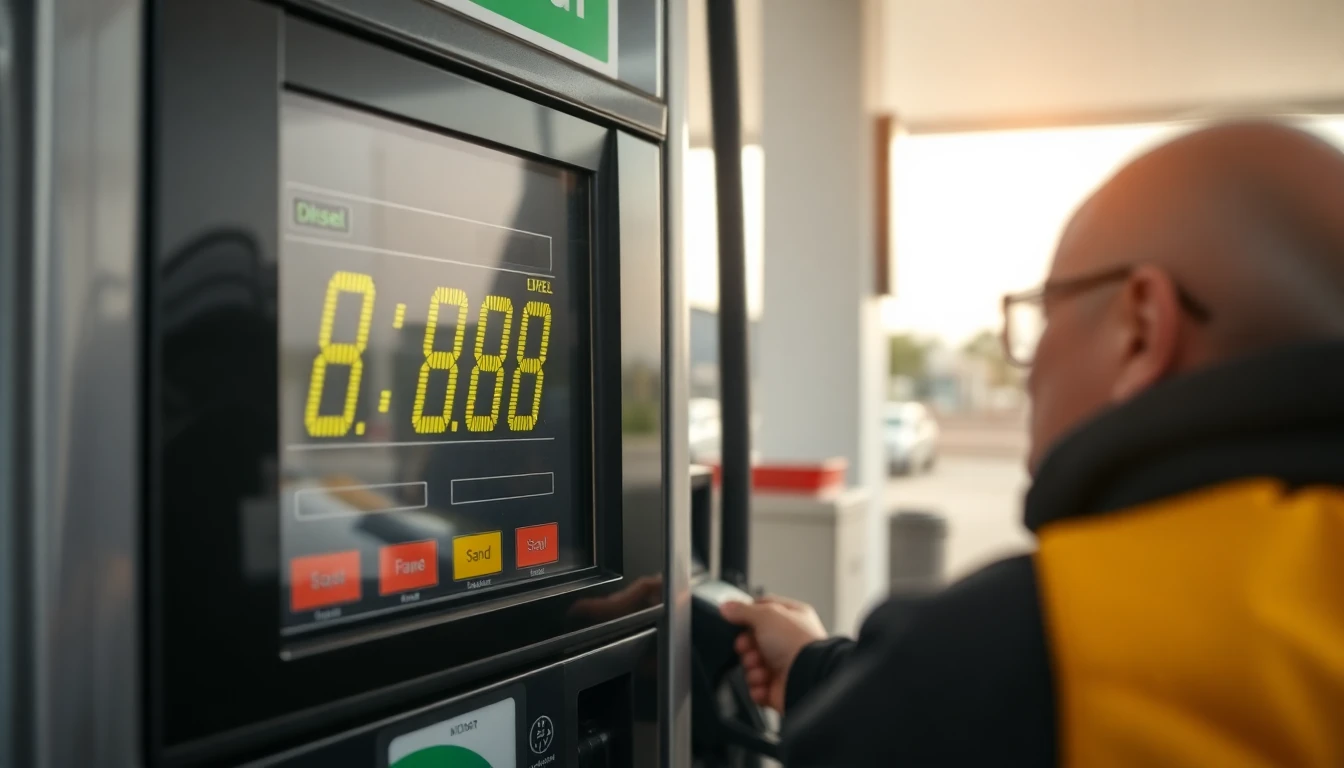
Major private fuel distributors in Paraguay began applying a significant price adjustment at service stations on Thursday. The increases range between G. 500 and G. 800 per liter for diesel and between G. 500 and G. 600 per liter for gasoline.
Víctor Yambay, president of the Association of Owners and Operators of Service Stations and Related Businesses (Apesa), confirmed that one or two distributors have already communicated the adjustment. He stated that the adjustment is a direct response to the evolution of the international oil market, which has reached historically high levels.
Adolfo Martin, president of the Paraguayan Chamber of Fuel Distributors (Cadipac), reinforced that it has become unviable to maintain previous prices. "We are losing a lot selling at these prices. It is impossible to maintain the values in line with the rise that has occurred in recent days in the international market," declared Martin, adding that companies waited for a correction that did not materialize.
Diesel, a critical fuel for the productive and logistics transport sector, recorded the largest increases. The 93 and 97 octane gasoline had slightly smaller adjustments. The update on the electronic boards at service stations caught many drivers by surprise.
Geopolitical tension in the Middle East is cited as the main factor behind the high international oil costs, which surpassed the USD 100 per barrel mark, putting pressure on import prices and river freight costs for Paraguay.
Attention now turns to Petróleos Paraguayos (Petropar), the state-owned company. So far, there has been no official announcement of price changes from Petropar, whose last move was a reduction in diesel prices in early July.
The fuel price increases have a broad effect on the economy, and their impact is expected to be felt soon on supermarket shelves, as transportation cost is a significant component in the pricing of various products.