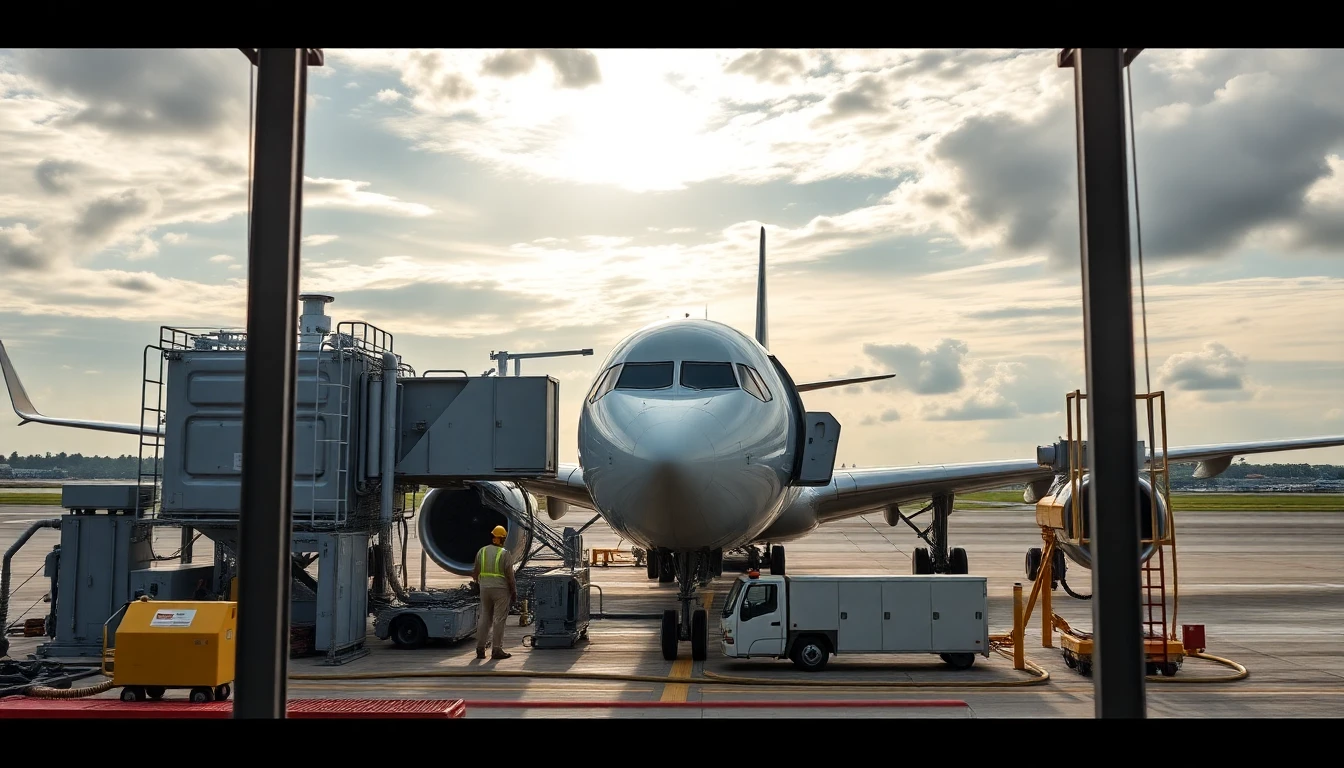
Petróleos Paraguayos (Petropar) has formally entered the aviation fuel market by selling Jet A-1 and AVGAS. The launch took place on August 24 at Encarnación International Airport, in Capitán Miranda, in the presence of President Santiago Peña, Vice President Pedro Alliana and state oil company officials.
The project calls for five fueling plants across the country. The first has begun operating in Encarnación, while the expansion includes Silvio Pettirossi International Airport in Luque; Guaraní International Airport in Minga Guazú, in the Ciudad del Este region; as well as Mariscal Estigarribia and Concepción. Sources differ on the configuration of the initial phase, referring both to the first operating unit and to three locations planned for the network's start.
Jet A-1 is used mainly by aircraft with turbine engines, such as commercial airliners. AVGAS, in turn, primarily serves aircraft with piston engines. The supply is expected to reach airlines, general and business aviation, and state operators.
Petropar President William Wilka said the initiative expands an activity historically focused on fuels for ground transportation. “Today we will also be accompanying them in the air, with Paraguayan fuel, Paraguayan service and Paraguayan quality,” he said.
The operation will be structured through a public-private partnership. Wilka explained that the private operator will assume investments in infrastructure and equipment, while Petropar will grant use of its brand and receive compensation tied to the volume handled and sales. The partner's identity and the amount invested have not been disclosed publicly and consistently.
In a subsequent interview, Wilka said the model was defined after a bidding process and that the aim is to generate returns for the state-owned company without direct investment in the infrastructure involved. The strategy also seeks to expand the brand's presence in a segment described as competitive and limited in volume, but relevant to airport operations.
Petropar says it will use specialized equipment, trained personnel and procedures consistent with national and international safety and quality-control standards. Fueling is expected to be carried out through the Petropar Fleet Card, a tool intended to control and trace operations.
Company estimates indicate a current share of approximately 3% of the aviation fuel market. The initial target is to reach about 10%; later, the state-owned company intends to approach a 50% share. These percentages are business objectives, not results already demonstrated. The company also said the fuels it sells are imported and that it is assessing an upgrade to its laboratory to work with sustainable aviation fuels in the future.