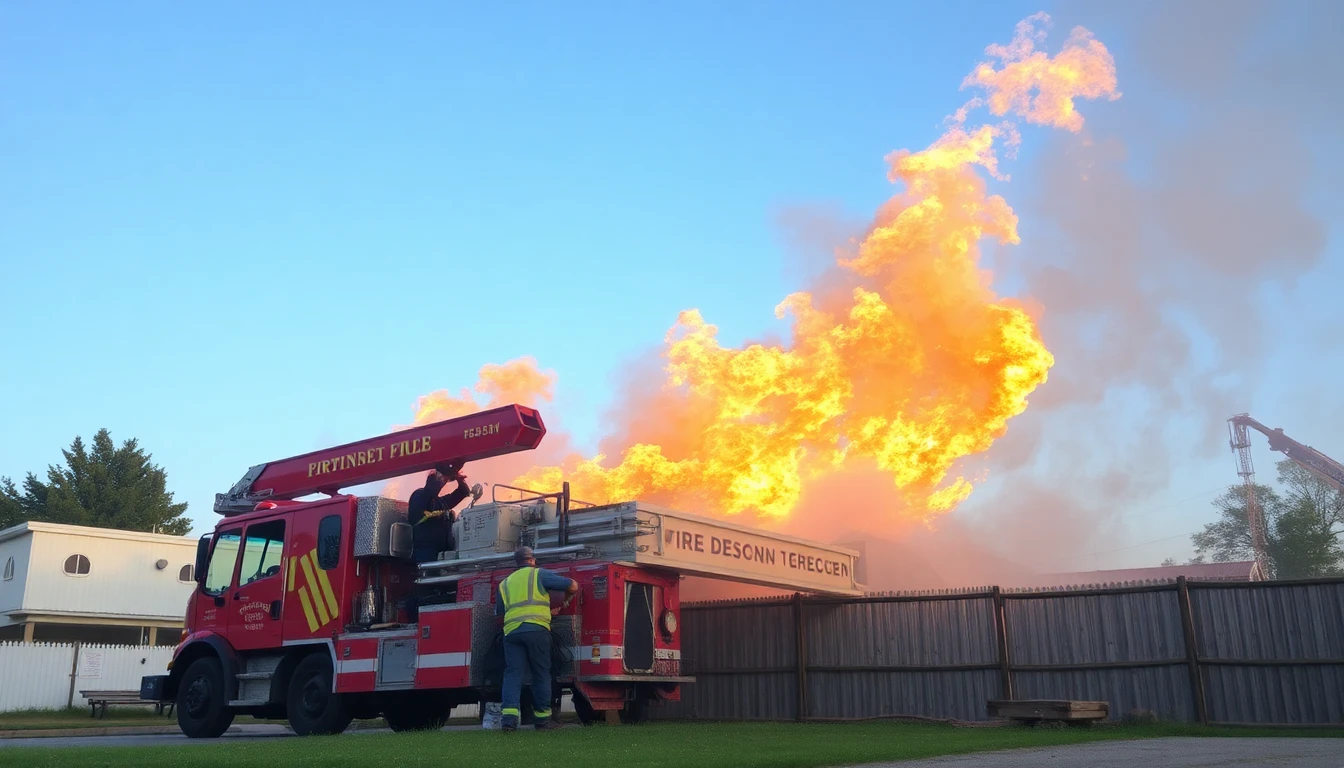
Fire protection must be integrated from the earliest stages of architectural design and maintained as operational throughout a building's entire lifespan, argues engineer Guillermo Cáceres, a specialist on the subject. He warns that elements like evacuation routes, protected stairwells, compartmentalization, fire doors, and smoke control systems are an intrinsic part of the architecture and, when not planned from the outset, their later incorporation leads to complex redesigns and additional costs.
Cáceres acknowledges that new developments in Paraguay are now adopting prevention measures more frequently but highlights the challenge posed by older buildings, which were constructed under outdated criteria. The specialist emphasizes that safety depends not only on design and installation but also on inspections, tests, and periodic maintenance over the years. "A system can go years without being used, and for that very reason, it needs to be checked regularly to ensure it will work in an emergency," he stated.
Another point raised is the need to update municipal ordinances, such as Asunción's Ordinance No. 468/14, which is now twelve years old. Cáceres argues that fire protection engineering has evolved significantly, with new technologies and materials that current regulations do not fully encompass. He advocates for the standardization of criteria among municipalities so that buildings with the same level of risk have similar requirements, regardless of their location. "The goal of the update is not to demand more, but to design better," he explained, adding that modern standards can lead to more efficient projects with greater legal certainty.
These topics will be addressed by Guillermo Cáceres in the conference "Vertical Risk: challenges of fire protection in high-rise buildings," which opens the program of the Second International Engineering Forum (FIING). The event, organized by the Paraguayan Center of Engineers (CPI), will take place on July 23, the date on which Paraguayan Engineer's Day is celebrated, at the organization's headquarters in Asunción. The forum will also debate infrastructure, renewable energy, artificial intelligence, and other topics relevant to the country's development.