Technology has moved from being a supplement in Paraguayan agribusiness to becoming a central tool for competitiveness. In a scenario of climate variability, rising costs, and the need for sustainability, producers are increasingly adopting digital tools to optimize decisions and improve efficiency in the field.
Concepts such as precision agriculture, satellite monitoring, drones, sensors, and artificial intelligence are part of this transformation, which is advancing in both extensive agriculture and other sectors. The goal is to produce more, use resources better, and reduce risks.
Santiago Bertoni, former Minister of Agriculture and Livestock (MAG) and current advisor to the Union of Production Guilds (UGP), states that this process has its roots in the massive incorporation of biotechnology at the beginning of the century. "It was the use of biotechnology that allowed Paraguayan agriculture to take off. We went from producing approximately 3 million tons (two decades ago) to about 10 million tons currently," he said.
Technological evolution today includes GPS and auto-guidance systems for tractors, yield monitors on harvesters, and the variable rate application of inputs according to the characteristics of each plot. These tools generate real-time data, allow for more precise interventions, and reduce waste. "Productive efficiency is fundamental for Paraguay. And this efficiency is only achieved with knowledge and the use of technology," Bertoni argued.
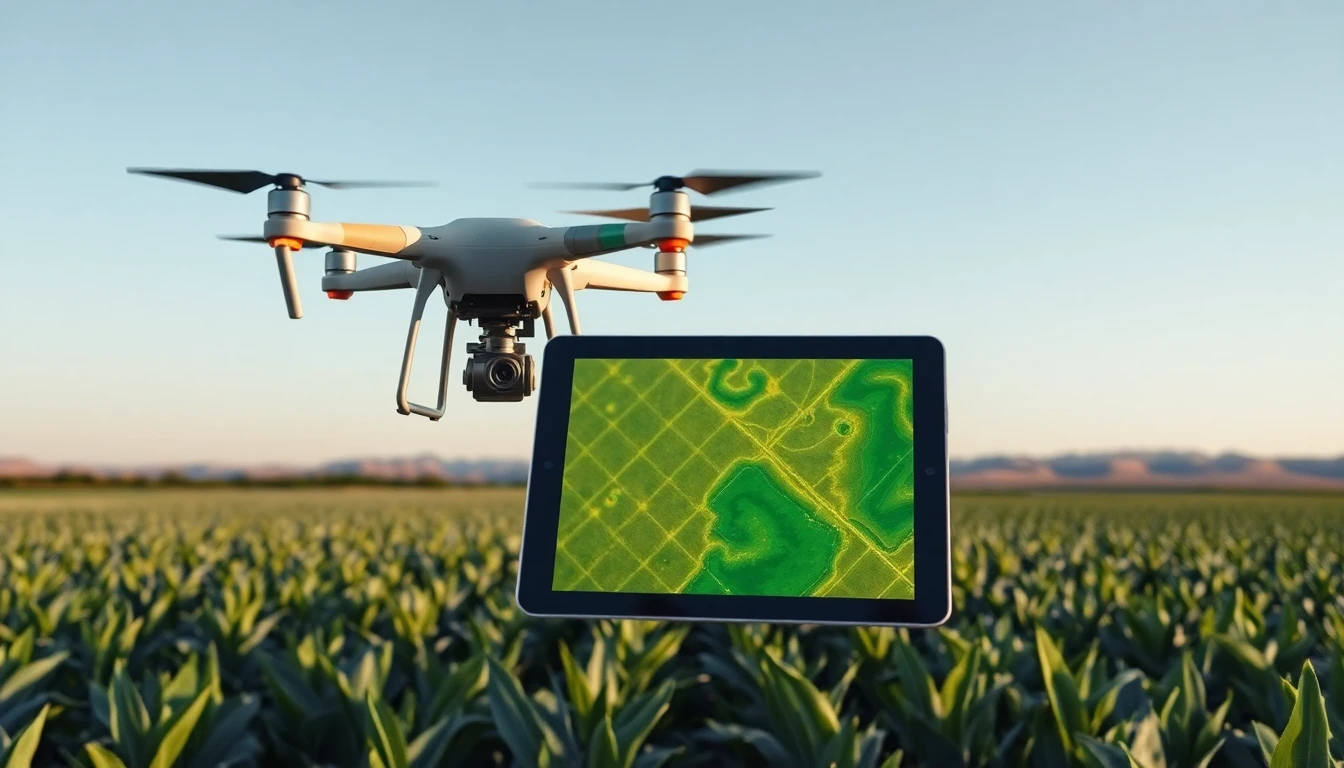
Drones and satellite monitoring systems complement the work, allowing for the observation of crop behavior, measurement of soil moisture, assessment of plant cover, and detection of problems before they cause economic losses. The availability of climate data has also become strategic for planning planting and harvesting.
In horticulture, the advance is visible in the automation of irrigation systems and the use of sensors to measure environmental variables. Edgar Frutos, a specialist from the Directorate of Agrarian Extension (DEAg) of the MAG, explained that producers are adopting automated systems controlled by sensors. "The use of sensors allows for better decision-making and resource optimization. Today we can determine whether it is necessary to irrigate for five minutes or twenty minutes, depending on the actual conditions of the crop," he indicated.
The MAG is also working on projects that use multispectral drones and satellite monitoring for the early detection of diseases, acting before the damage is visible to the naked eye. Frutos emphasized that technology is crucial in the face of phenomena like El Niño, which increase the phytosanitary risk.
Despite the progress, challenges persist. The initial investment cost is still a barrier, especially for small producers, although experts point out that the tools tend to pay for themselves over time through higher yields. Deficient infrastructure, such as a lack of connectivity, quality electricity, and adequate roads, also limits mass adoption in some regions.
Artificial intelligence emerges as the next step, with the potential to process the large volumes of data generated by sensors, drones, and satellite images, aiding in faster and more precise decision-making. The trend of a sector increasingly based on data, constant monitoring, and digital analysis is already consolidated.