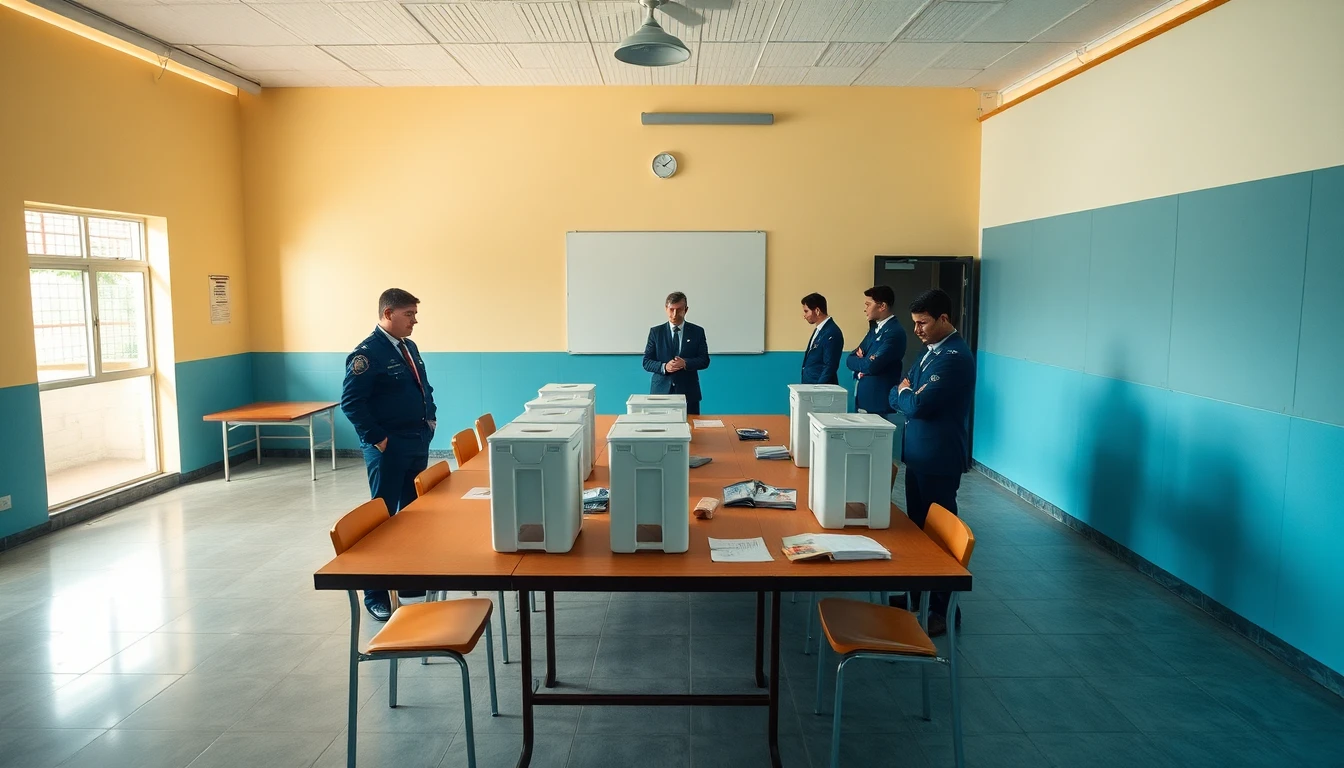
In Paraguay’s municipal elections on October 4, 2026, responsibility for organizing and overseeing the process will be shared among the Electoral Justice system, political parties, the Public Prosecutor’s Office and the National Police. The Supreme Court of Electoral Justice (TSJE), Paraguay’s state electoral body, is responsible for organizing, directing and supervising the vote, as well as guaranteeing its legality, transparency and accuracy, under Articles 273 to 275 of the 1992 National Constitution.
The TSJE also provides technical and logistical support, appoints electoral delegates and coordinates the certification of tally sheets before the Party Electoral Tribunals. The structure includes Electoral Tribunals, made up of three members in each judicial district, and Electoral Courts, with one judge in each departmental capital. Asunción has two courts; Alto Paraguay and Boquerón are exceptions established by Law No. 635.
Civic boards operate as temporary auxiliary electoral bodies in districts and polling places. Each consists of five regular members and five alternates, proposed by political parties, movements or alliances and appointed by the electoral tribunals. Their duties include proposing polling places, suggesting the members of polling-station boards, accrediting poll watchers and helping distribute and receive electoral materials.
At polling stations, board members organize the vote and record its results. Party representatives officially represent the candidacies in acts and operations of the process, while observers follow the progress of voting at each station. This division allows electoral administration and party oversight to operate simultaneously during the opening, operation and closing of polling places.
The Public Prosecutor’s Office is preparing a system to respond quickly to possible electoral crimes. Sandra Ledesma, the prosecutor specializing in Electoral Offenses in Asunción, has again been appointed as the liaison and coordination point for prosecutorial coverage during election day. Electoral Prosecutor’s Offices, present in the departments, act before the Electoral Justice system and are administratively dependent on the Public Prosecutor’s Office.
The National Police will remain near polling places and accompany prosecutors’ agents in joint monitoring operations. For voters, the arrangement means that complaints and incidents may involve different authorities: the Electoral Justice system handles organization and electoral disputes, the Public Prosecutor’s Office investigates possible crimes, and the police support security and the preservation of public order.