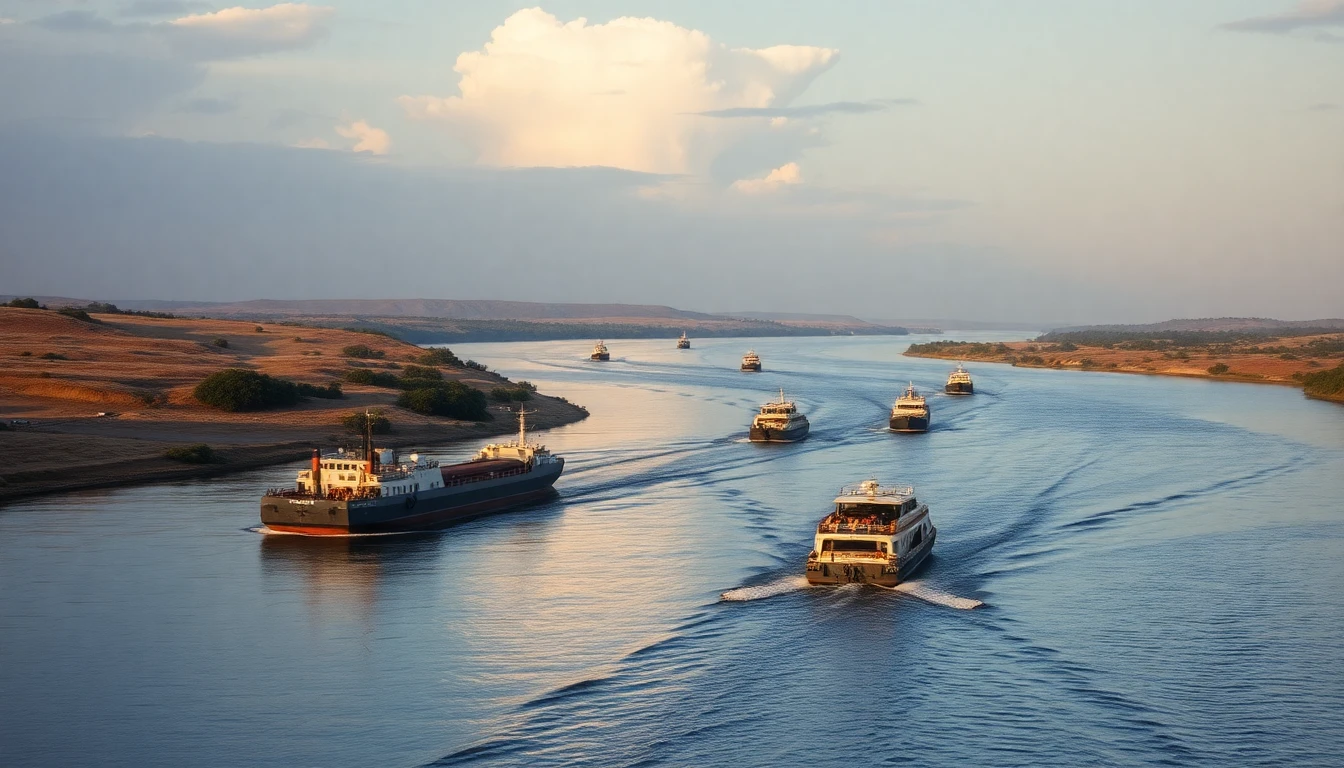
A landlocked country with one of the world’s largest merchant fleets sounds like a contradiction. It makes sense once the word river is added. Paraguay’s commercial fleet consists mainly of barges, push boats, tugs and other vessels designed for the Paraguay–Paraná waterway. They carry bulk cargo and containers between inland terminals and ports on the Río de la Plata, where cargo can connect with ocean shipping.
Official figures vary by date and definition. A Paraguayan government green-hydrogen strategy published in 2025 describes more than 3,000 barges operating on the waterway and calls Paraguay’s river fleet the world’s third largest. A Ministry of Public Works and Communications report from April 2024 counted more than 2,500 units in the national fleet. Those statements are useful estimates, not a permanent league table: registries change, and some counts include barges, powered vessels and other craft differently.
The careful claim is therefore that Paraguay has an unusually large inland commercial fleet and is one of the dominant operators on the regional waterway. It is misleading to imagine thousands of Paraguayan container ships crossing the Atlantic. Most barges have no engine of their own. A push boat assembles them into a convoy and moves them along the river system.
A river corridor to the sea
The Paraguay–Paraná waterway runs roughly 3,400 kilometres through Brazil, Bolivia, Paraguay, Argentina and Uruguay. From the Paraguayan section, vessels travel south through the Paraná and the Río de la Plata system toward terminals such as Rosario, Zárate, Buenos Aires, Nueva Palmira and Montevideo. Transshipment arrangements then connect Paraguayan cargo to overseas markets.
This route is not a picturesque alternative to the road network. It is the logistical backbone of foreign trade. In 2025 the transport vice-minister said about 80 percent of Paraguay’s foreign commerce moves through the corridor. An earlier Foreign Ministry breakdown estimated about 80 percent of exports and 65 percent of imports. Percentages depend on period and measurement, but the structural point is stable: a serious interruption on the waterway affects the national economy.
Geography explains the fleet’s existence. Economics explains its scale. A barge convoy can move large quantities of low-value-per-tonne cargo with less fuel and fewer crew members per tonne than a long line of trucks. That matters for soybeans, soybean meal, maize, wheat, iron ore and other bulk products whose competitiveness can turn on freight cost. On the return journey and in specialized services, vessels also carry fuels, fertilizers, machinery and containers.
Why Paraguayan operators expanded
Four forces reinforced one another. First, agricultural production and exports grew, creating regular demand for southbound bulk transport. Second, private investment produced ports, silos, shipyards, repair services and fleets along the Paraguay River. A 2019 Foreign Ministry account listed 53 terminals on the river, 49 of them private—another dated number that illustrates the private sector’s weight rather than today’s exact inventory.
Third, the five waterway countries established a regional legal framework through the Santa Cruz de la Sierra Agreement. Common navigation rules and freedom of transit make cross-border river services possible, although permits, safety rules, customs procedures and national requirements still matter. Fourth, a local cluster developed: owners, naval engineers, welders, mechanics, pilots, captains, agents and logistics companies can support new vessels and keep existing ones working.
The result is cumulative. A country that already has cargo, terminals, crews and repair capacity is an attractive place to register and operate the next vessel. Recent MOPC reports show both locally built barge additions and investment in modern push boats. One operator cited by the Ministry in 2024 alone had 18 push boats and 254 barges registered with the Paraguayan authority.
What the fleet actually does
A typical bulk convoy is modular. Barges are loaded at river terminals and joined in a formation suited to the channel, water level and rules of the section ahead. A powerful push boat moves the formation. Convoys may be broken up, reassembled or transferred as they encounter bridges, bends, locks, ports and changing drafts.
Container services use powered vessels or barges configured for boxes and connect Paraguayan ports with downstream hubs. They should not be confused with direct intercontinental liner services. A Paraguayan exporter may contract a through movement, but the box will often transfer to a seagoing vessel at a river or estuary port.
The fleet also creates work beyond navigation. Vessels require construction, inspection, certification, insurance, crewing, provisioning, fuel, maintenance and emergency response. The regulator—the Dirección General de la Marina Mercante within the transport authorities—registers and oversees commercial vessels under the national flag. The maritime prefecture and other institutions have separate safety, traffic, customs, port and environmental roles.
Size does not eliminate vulnerability
A large fleet cannot manufacture water. Low river levels force operators to reduce the load in each barge, use smaller convoys, wait, or perform additional trips. Dredging, buoyage, hydrographic measurements and real-time monitoring help preserve safe navigation, but they do not remove climate variability. The ANNP’s monitoring and MOPC navigation work are therefore economic infrastructure, not merely river maintenance.
The route is also international. A rule, toll, strike, accident or dredging problem downstream can affect Paraguayan trade even when the domestic section is open. Dependence on one dominant corridor creates bargaining and coordination challenges among five countries. Roads and the developing bioceanic corridor can diversify some movements, but they do not cheaply replace barges for every bulk flow.
Environmental costs need equal attention. River engineering, port expansion, spills, wakes, emissions and heavier traffic can affect ecosystems and river communities. Lower fuel use per tonne than road haulage does not make navigation impact-free. Government strategy is examining lower-carbon fuels for the barge fleet, but technological, safety and infrastructure questions remain and adoption will take time.
The paradox resolved
Paraguay did not build a large fleet despite being landlocked. It built one because it is landlocked beside a navigable river system that reaches Atlantic ports. The river substituted for a coastline, export agriculture supplied the cargo, and private terminals and shipyards created a regional logistics industry.
So the memorable ranking should be used with a footnote. Paraguay is a heavyweight in inland waterway transport, with official estimates in the thousands of vessels or barges. That achievement says more about convoys, ports and the geography of trade than about ships on the open sea. The fleet is both an adaptation to isolation and a reminder of how strongly the country depends on the depth, governance and health of two rivers.