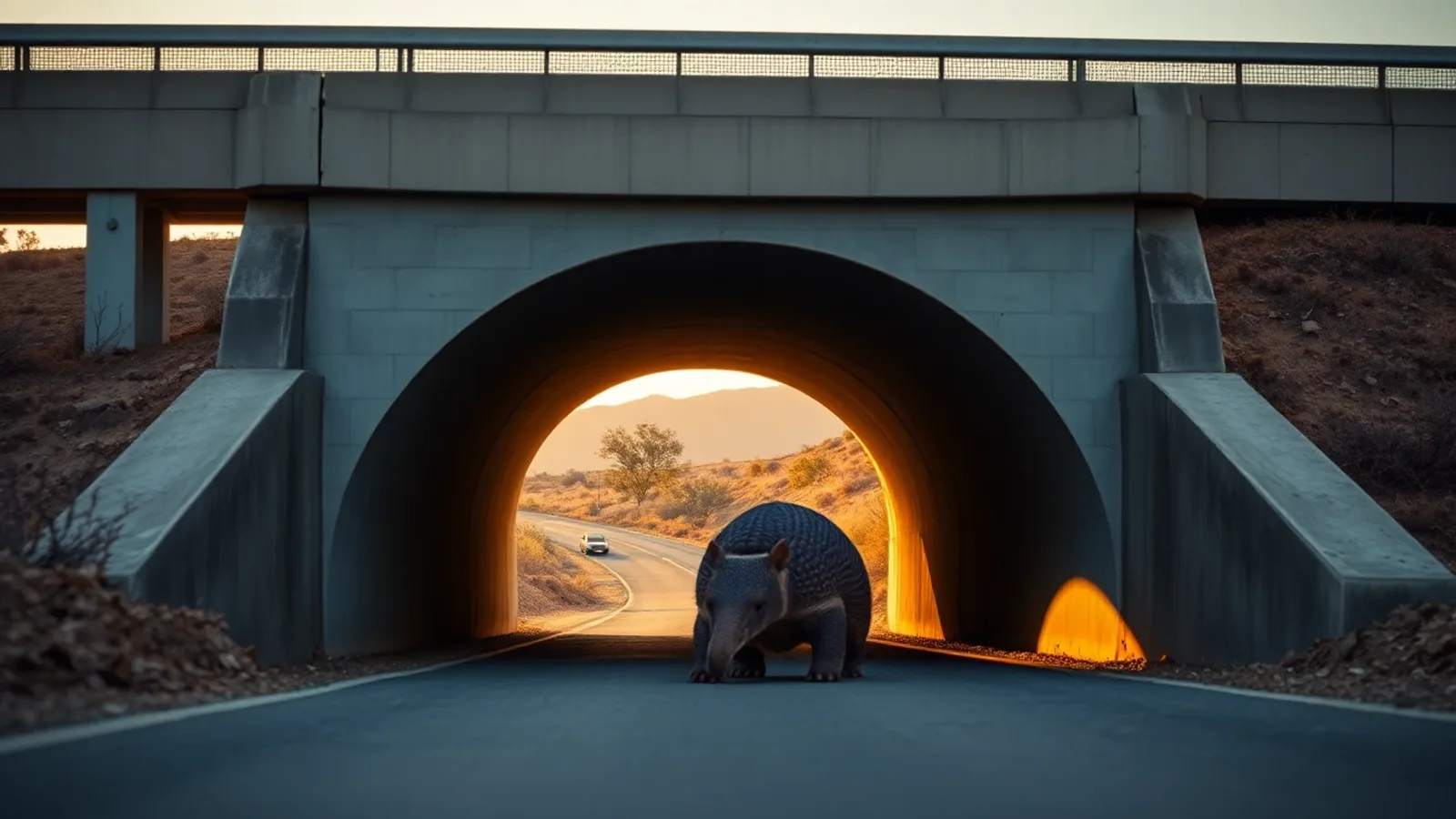
The Ministry of Public Works and Communications (MOPC) and the environmental organization WWF have confirmed that various species of fauna from the Paraguayan Chaco have begun using the wildlife crossings built on Section 1 of the Bioceanic Corridor, between Carmelo Peralta and Loma Plata.
The first images from monitoring cameras, reviewed in June, show animals such as the giant armadillo (a threatened species), giant anteater, ocelot, and white-lipped peccary using these structures to safely cross under the highway.
Carlos Molinas, a connectivity specialist at WWF, explained that preliminary results have identified 23 mammal species, including bats and as-yet unclassified small mammals. He noted that while it is too early to measure the definitive effectiveness of the structures, the data is promising for the coexistence of road infrastructure and biodiversity.
Section 1, inaugurated in February 2022, is 275.7 km long and includes 13 wildlife crossings. The work was carried out by the Bioceanic Corridor Consortium, formed by the companies Queiroz Galvão S.A. and Ocho A S.A.
New sections of the route continue to be developed. Section 2, currently in the study phase, plans for the installation of approximately 15 crossings for large mammals. Meanwhile, Section 3, under construction between Mariscal Estigarribia and Pozo Hondo, will incorporate another 13 wildlife crossings.