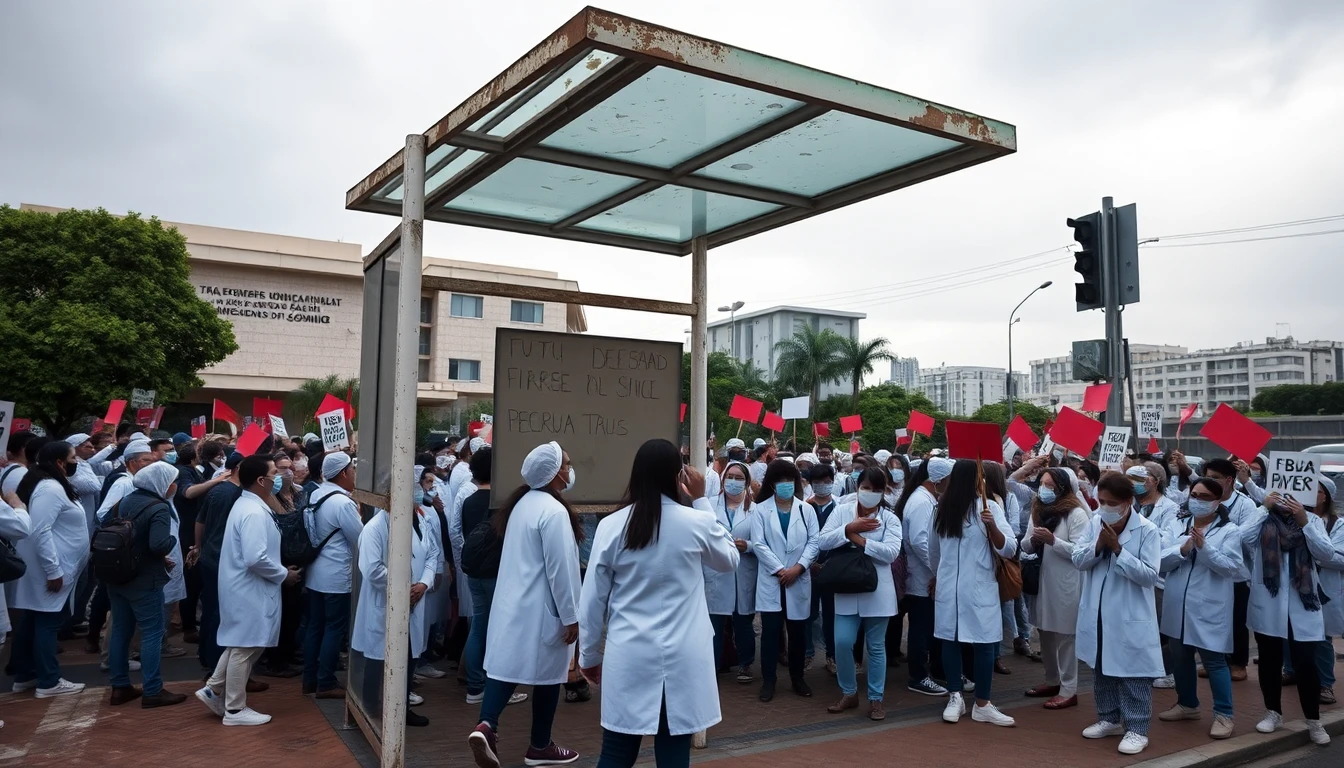
Biomedical and pharmaceutical chemistry professionals held a protest this Thursday in front of the Ministry of Public Health in Asunción, demanding a salary adjustment after more than a decade without increases and a reduction in working hours. A spokesperson for the group stated that, despite having six years of training and postgraduate degrees, many receive salaries equivalent to the minimum wage, declaring: "We are also heroes in white."
The following day, on Friday, various unions and social organizations gathered on Mariscal López Avenue, in front of the presidential residence Mburuvicha Róga, for a cacerolazo (pot-banging protest) marking the three years of Santiago Peña's government. The mobilization, which included workers from health, education, and public services, partially interrupted traffic in the capital.
Representatives of the Social Security Institute (IPS) denounced the critical state of the entity, with a shortage of basic supplies, medicines, and hospital beds. Marina Ayala, a workers' representative, stated that more than a thousand nurses have resigned due to overload and labor collapse, and that thousands of contracted employees do not even receive the minimum wage.
Teachers' union members from the Organization of Education Workers of Paraguay (OTEP-SN) harshly criticized legislative reforms promoted by the government, such as the Pensions Superintendency Law, adjustments to the Labor Code, and the Fiscal Fund reform, considering them a setback for hard-won rights. Teacher Blanca Ávalos stated that almost 90% of the population faces serious problems supporting their families, contrasting with the "bubble" of prosperity indicated by official macroeconomic indicators.
In contrast to the criticism, an economic analyst pointed to the creation of the National Directorate of Tax Revenue (DNIT), resulting from the merger of the Undersecretariat of Taxation and the National Directorate of Customs, as the main economic achievement of the Peña government, for having strengthened tax collection. However, the specialist also warned of the challenges that exchange rate volatility imposes on the private sector, which demands greater predictability.
The protesters blamed the government for the deterioration of public services, labor precarity, and the increase in the cost of living, and warned that they will maintain and intensify strike measures until the Executive branch prioritizes public policies that address the urgent needs of the population.