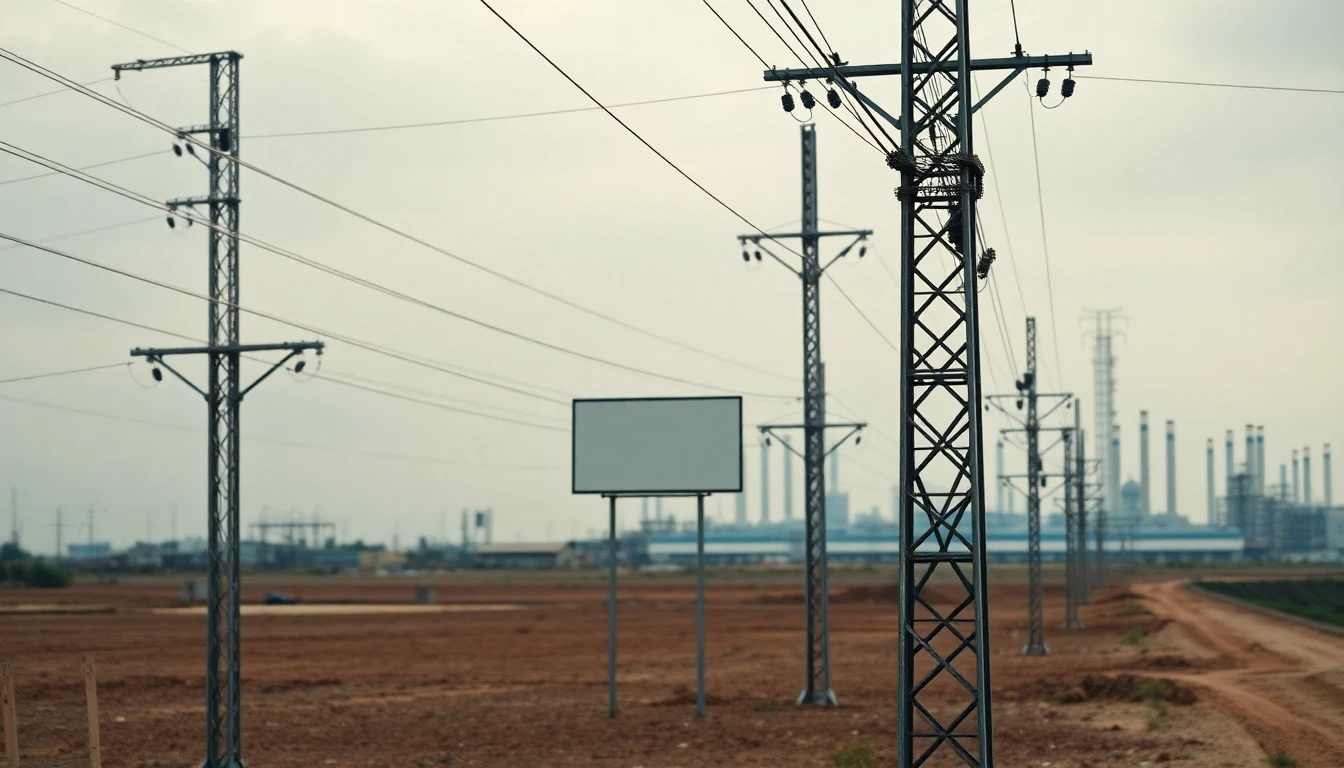
The National Electricity Administration (ANDE) established September 30, 2026, as the final deadline for Atome PLC to define the operation of its plant in Villeta. State company president Miguel Ángel Báez Reyes informed the Bicameral Commission during the budget presentation that, if no agreement is reached, the company must deposit a bank guarantee estimated at $40 million or have its contract annulled.
The stalemate stems from successive extensions to the construction schedule. The original contract, signed in 2022 under tariff No. 21, provided for operations to begin in January 2025 with 60 megawatts (MW). Through three addenda submitted between 2023 and 2024, the date was postponed to January 2027, and the contracted capacity increased to 145 MW. However, in August 2026, Atome requested a new postponement to 2029. According to Báez Reyes, there are no constructions on the site, only a sign, while ANDE reserves capacity at the binational Itaipu hydroelectric plant based on commitments assumed by the company.
The divergence is commercial. Atome seeks to migrate from the current tariff, close to $36 per megawatt-hour, to a 15-year Power Purchase Agreement (PPA) with a fixed value of $30 per MWh for the first ten years. "We cannot sell below our tariff," stated the ANDE president, highlighting that the institution has defined legal conditions and that any future complaint would fall to the state company.
Parallel to the conflict with Atome, ANDE presented its draft budget for 2027, totaling $2.34 billion. The document foresees an 11% reduction in global resources compared to the current fiscal year, attributed mainly to exchange rate variations. Energy purchases will absorb $956 million (40.9% of the total), with 95% destined for Itaipu. Physical investments will receive $614 million, a 22% drop from the amount available until July 2026.
Investments prioritize the expansion of high-voltage transmission, including the second circuit of the Right Margin-Villa Hayes line ($38 million in 2027) and electrical reinforcement of Central Chaco ($76.5 million). Modernization of the Acaray hydroelectric plant is also planned, with $74.5 million allocated to leave the unit, which turns 60 years old, "like new." The slowdown in infrastructure works occurs in a context of pressure on the national system, frequently exposed to blackouts during consumption peaks.