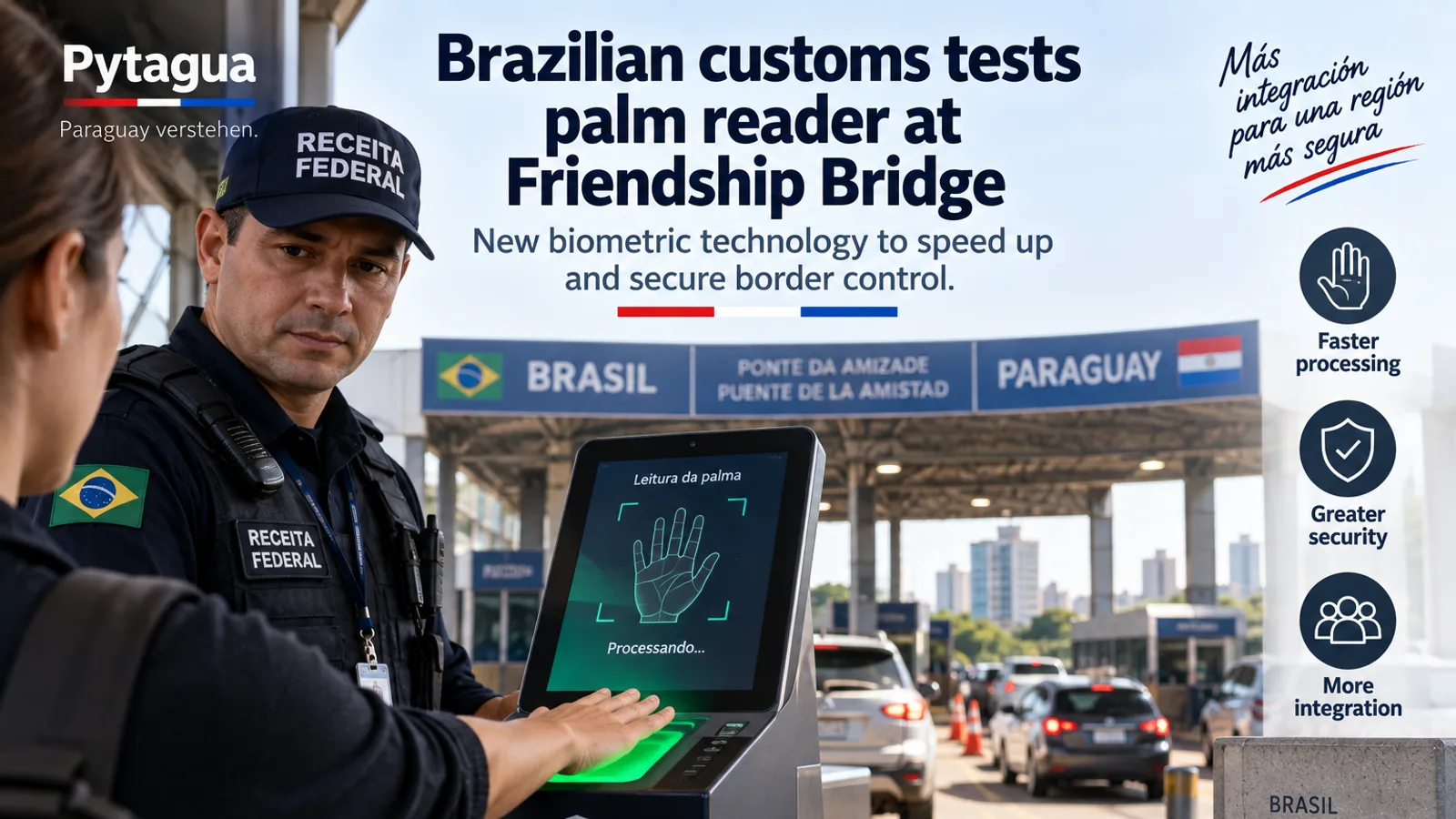
Brazil’s Federal Revenue Service began a 30-day test of Pasaje Digital in October 2026. The system scans pedestrians’ palms at Friendship Bridge and records how often they cross between Ciudad del Este and Foz do Iguaçu. It is intended to help direct inspections, particularly when people make repeated crossings within short periods.
The reader works without physical contact. In the corridor for travelers with no goods to declare, a traveler holds a hand near the device, which generates a unique code and records the crossing. When it detects a pattern considered irregular, the system sends an alert to customs officers’ terminals. They can stop the traveler to ask why they are crossing so often and check the goods they are carrying.
At a later stage, the system may also ask travelers directly whether they are carrying products above the duty-free allowance. Depending on their answers, they may continue on their way or be referred to the inspection area.
The initiative aims to combat the practice known as “cruce hormiga,” in which goods are transported across the border in numerous short trips. Biometric scanning does not replace the customs declaration or change the allowance: purchases worth more than US$500 or goods with commercial characteristics must be declared when entering Brazil. Simply using the reader does not use up the monthly allowance; according to the Federal Revenue Service, the allowance is considered used when the traveler files a declaration.
The project is part of the Frontera Inteligente strategy, included in Brazil’s customs management plan for 2026 to 2028. The system was developed with the Federal Data Processing Service (Serpro), a state-owned information technology company. Itaipu Parquetec is participating through the Muralha Inteligente agreement, which provides for technical validation of the companies and solutions used.
During the test, officials will assess how the equipment works and how biometric data are handled. Data processing must comply with Brazilian data-protection law, with security measures, access controls and audits. Experience with pedestrians may guide possible use with private vehicles and at other border crossings, but permanent adoption will depend on the results.
The initiative aims to increase inspection capacity without disrupting traffic at Friendship Bridge. Brazil’s Federal Revenue Service estimates that about 103,000 people and 45,000 vehicles cross the bridge each day.