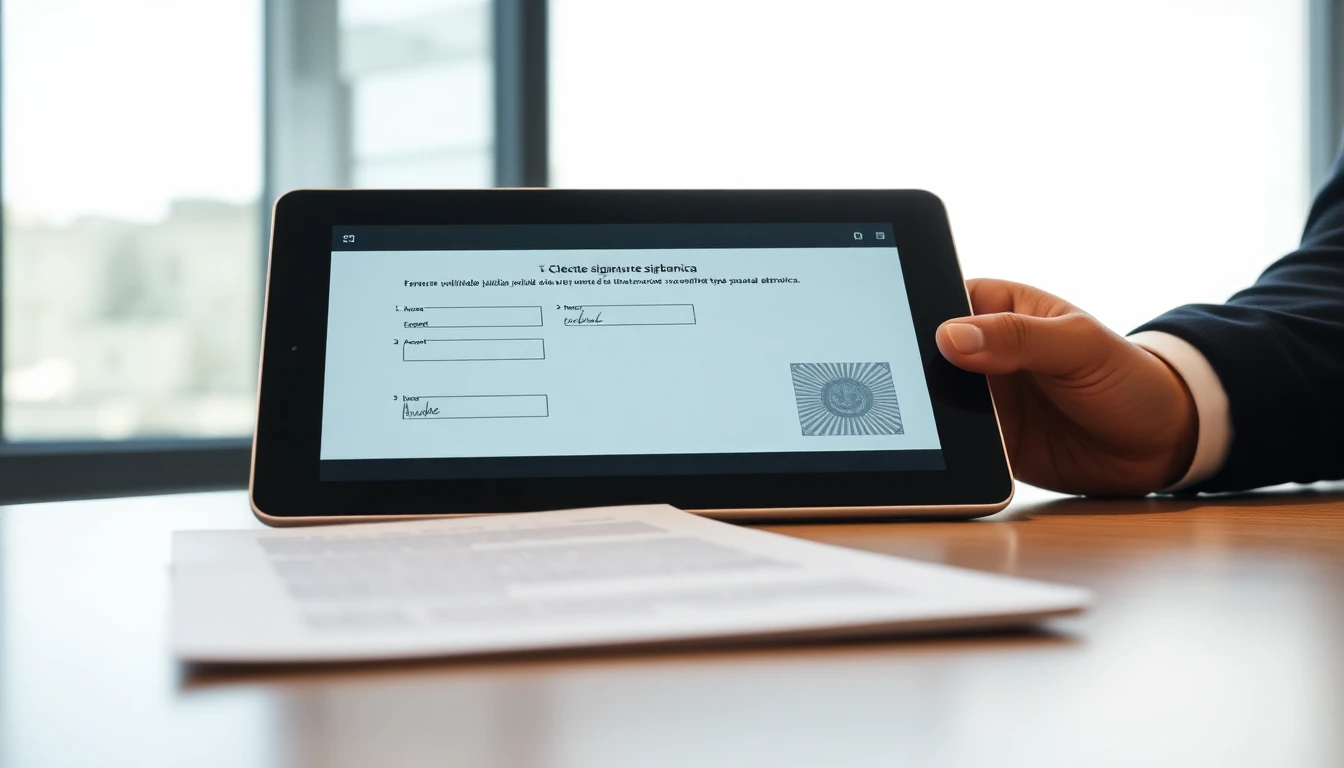
Electronic signatures are expanding in Paraguay as public services and private companies move more procedures online. Government applications, forms, declarations and administrative files can already be signed without printing them. In the private sector, the tool is used to open bank accounts, obtain loans and insurance, sign promissory notes and financial-service contracts, authorize debits and meet tax obligations without visiting a branch.
Electronic Identity and an electronic signature are not the same thing. According to Klaus Pistilli, Paraguay’s deputy minister of information and communication technologies at Mitic, Electronic Identity authenticates citizens when they enter government digital services. Through Portal Paraguay, it also provides access to legally valid digital documents such as the national identity card, driver’s license, vehicle registration and vehicle identity card. Once their identity has been verified, users can apply an electronic signature to complete online procedures.
Law No. 6822/2021 on trust services and electronic documents replaced the former term “digital signature” in Paraguayan law with “qualified electronic signature.” The framework distinguishes qualified from non-qualified signatures. Only the qualified form carries a legal presumption equivalent to a handwritten signature because it relies on a certificate issued by a qualified trust service provider and offers stronger technical guarantees of authenticity and integrity.
A non-qualified electronic signature can also be legally valid. It may consist of clicking an acceptance button, entering a password, using a fingerprint, sending an email or signing through a corporate platform. The difference becomes important when authorship is disputed: authenticity must then be demonstrated, usually through computer forensics and other evidence. A scanned image of a handwritten signature is the weakest option because it is easily copied and has no technical protection; it is therefore unsuitable for contracts or documents with significant economic value.
To obtain a qualified certificate, citizens must apply to one of six Qualified Trust Service Providers authorized by the General Directorate of Digital Signature and Electronic Commerce under the Ministry of Industry and Commerce. The directorate operates Paraguay’s Root Certification Authority and supervises issuers. Each provider sets its own application process and price, so there is no single official fee. Four additional non-qualified trust service providers operate in the country, but their certificates do not have the same evidentiary effect as a qualified signature.
Public employees covered by Mitic Resolution No. 132/2025 can obtain a qualified signature free of charge and entirely online. They sign in to Portal Paraguay with their Electronic Identity, open “Mi Firma Electrónica,” validate their institutional email address and generate the certificate by following the system’s instructions. Some purpose-specific certificates are also free, including the certificate used for the e-Kuatia’i system, which is available through offices of the National Directorate of Tax Revenue (DNIT).
The technology is not limited to large companies. For micro, small and medium-sized businesses, digital signatures can reduce spending on printing, physical archives, couriers and travel. Most civil and commercial contracts may be concluded electronically, and company board minutes are already accepted when signed with a qualified electronic signature.
Some legal acts still require a public deed, physical presence or a handwritten signature. These include property donations, mortgages, wills, marriage and acknowledgment of children. In those cases, an electronic signature does not replace the formalities required by law.
Security depends largely on the certificate holder. Cybersecurity lawyer Sebastián Ibarra Maciel recommends protecting the PIN, password and device used for signing because the law presumes that documents signed with those credentials were authorized by the holder. If a device is lost, stolen or suspected of being compromised, the provider should be notified immediately. With non-qualified signatures, users should retain emails, access logs and IP records that may help establish authorship in a later dispute.