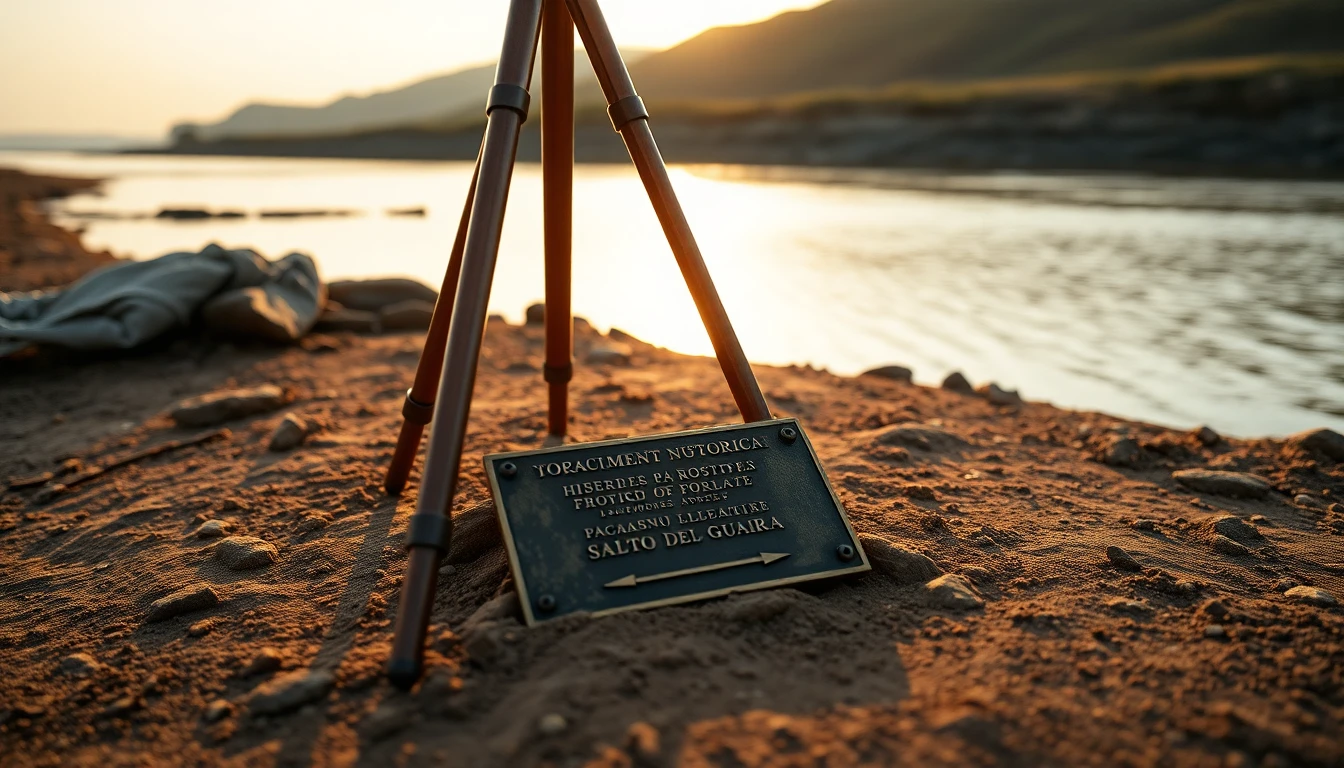
The definition of the border between Paraguay and Brazil was the result of a long historical process combining diplomatic negotiations, international agreements, and intense fieldwork carried out by joint demarcation commissions over decades. This documentation became a fundamental basis for Paraguay's position in the Salto del Guairá controversy.
The starting point was the Loizaga-Cotegipe Boundary Treaty, signed in Asunción on January 9, 1872, which defined the border line and established the appointment of commissioners responsible for its demarcation. The first Joint Boundary Commission, composed of Paraguayan and Brazilian representatives, operated between 1872 and 1874, surveying the border, creating maps, and erecting the first markers.
Among the protagonists of this initial phase was Frigate Captain Domingo Antonio Ortiz, a veteran of the War of the Triple Alliance, appointed as the first Paraguayan commissioner. He worked alongside his Brazilian counterpart, Rufino Enéas Gustavo Galvão, in placing the first border marker on the Apa River.
One of the initial challenges was identifying the main source of the Apa River, an issue resolved by the Protocol of January 7, 1874, which recognized the Estrella stream as its origin and established precise geographic coordinates for the demarcation.
The process received new impetus with the Complementary Boundary Treaty of 1927 and the Protocol of Instructions for the Demarcation and Characterization of the Border of 1930, which reorganized the work and created the Joint Commission for the Demarcation and Characterization of the Paraguay-Brazil Border.
The Salto del Guairá controversy emerged as one of the most important border disputes between the two countries. While Brazil maintained that the entirety of the falls belonged to it and that the border was already demarcated, various historical and legal interpretations regarding sovereignty over this geographical feature arose in Paraguay.
Historian Efraím Cardozo argued that the 1872 Treaty had not expressly awarded sovereignty over Salto del Guairá to Brazil, maintaining Paraguay's historical dominion. Conversely, jurist Juan José Soler argued that the falls should be analyzed as part of an international river, constituting a shared geographical feature.
These interpretations influenced the official position taken by the Paraguayan Chancellery in Note D.P.I. No. 712 of December 1965, a document that consolidated the country's stance in the border controversy.
To this day, approximately 8 kilometers remain to be demarcated in the area of the Mbaracayú Biological Refuge, demonstrating that the process of border delimitation between Paraguay and Brazil remains a continuous work of technical and diplomatic cooperation.