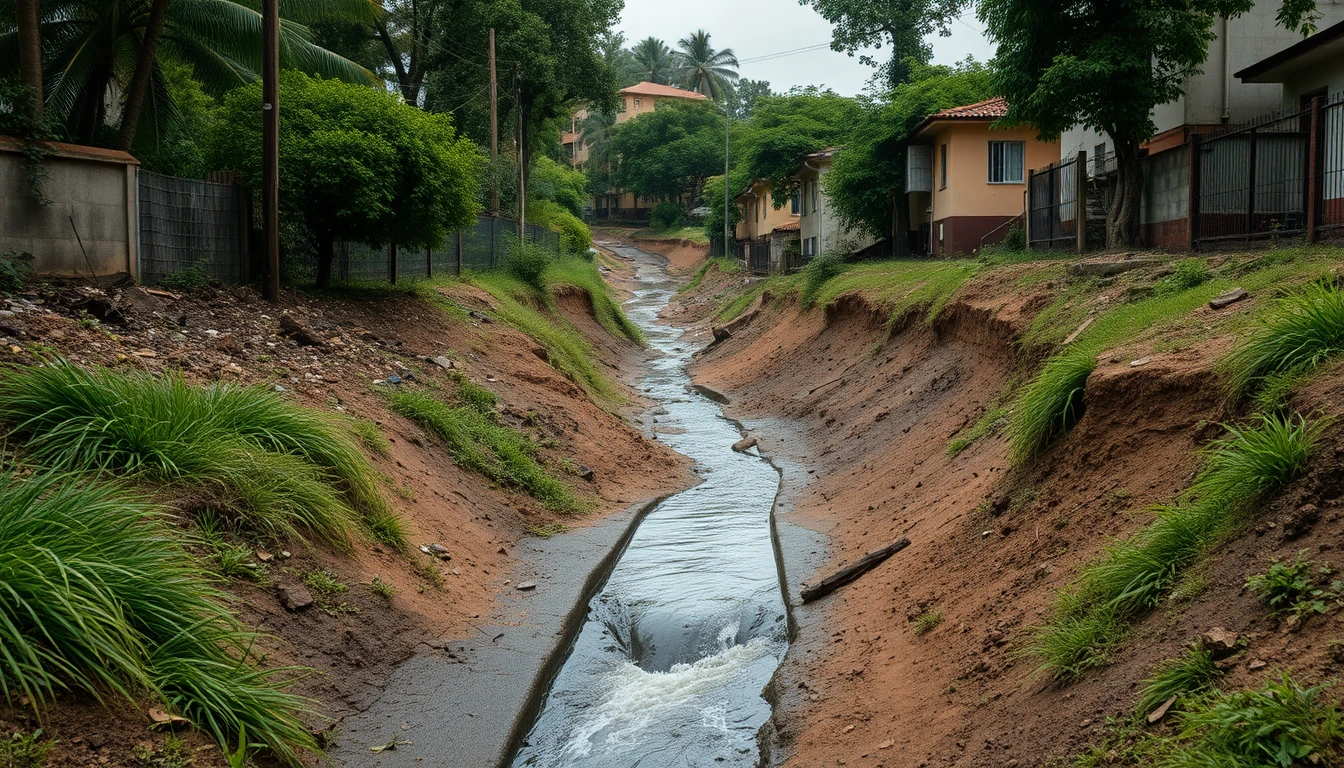
Lambaré city government formally notified families living along the banks and within the safety zone of the Lambaré Stream to leave the area as a precaution. The measure was adopted by the municipality’s Urban Development Directorate because of the arrival and consolidation of the El Niño phenomenon and weather forecasts considered severe.
The document identifies risks of flooding, overflows, landslides and soil erosion. It also recommends that residents remain alert to sudden rises in water levels, turn off electricity and gas lines during intense storms, and not dump waste or debris in the streambed.
The notification advises residents to leave the risk zone as a precaution to protect their physical safety and states that the municipal administration disclaims responsibility for any incidents. The initiative has caused concern among residents who have lived there for decades and say they have not been affected by floodwater so far.
Celsa Villamayor, a resident of the Mariscal López neighborhood, said she was surprised to receive the notice. “In the 50 years we have lived here, this has never happened. The water has never reached us, and we do not want to leave,” she said.
Villamayor also questioned the lack of permanent water-management works. She said the existing channel for carrying water was built by a neighbor, without municipal involvement. “The solution here would be to channel everything. What they offered us is not a definitive solution; it is only temporary,” she said.
The episode pits two responses to risk along the stream against each other: the immediate removal of families from an area considered vulnerable and residents’ demand for permanent intervention. For those living there, the notification threatens to disrupt decades of residence; for the municipality, the advance of El Niño and the possibility of intense rainfall justify taking precautions. The case also highlights the challenge of municipal risk management and the implications of urban prevention policies for residents of flood-prone areas.