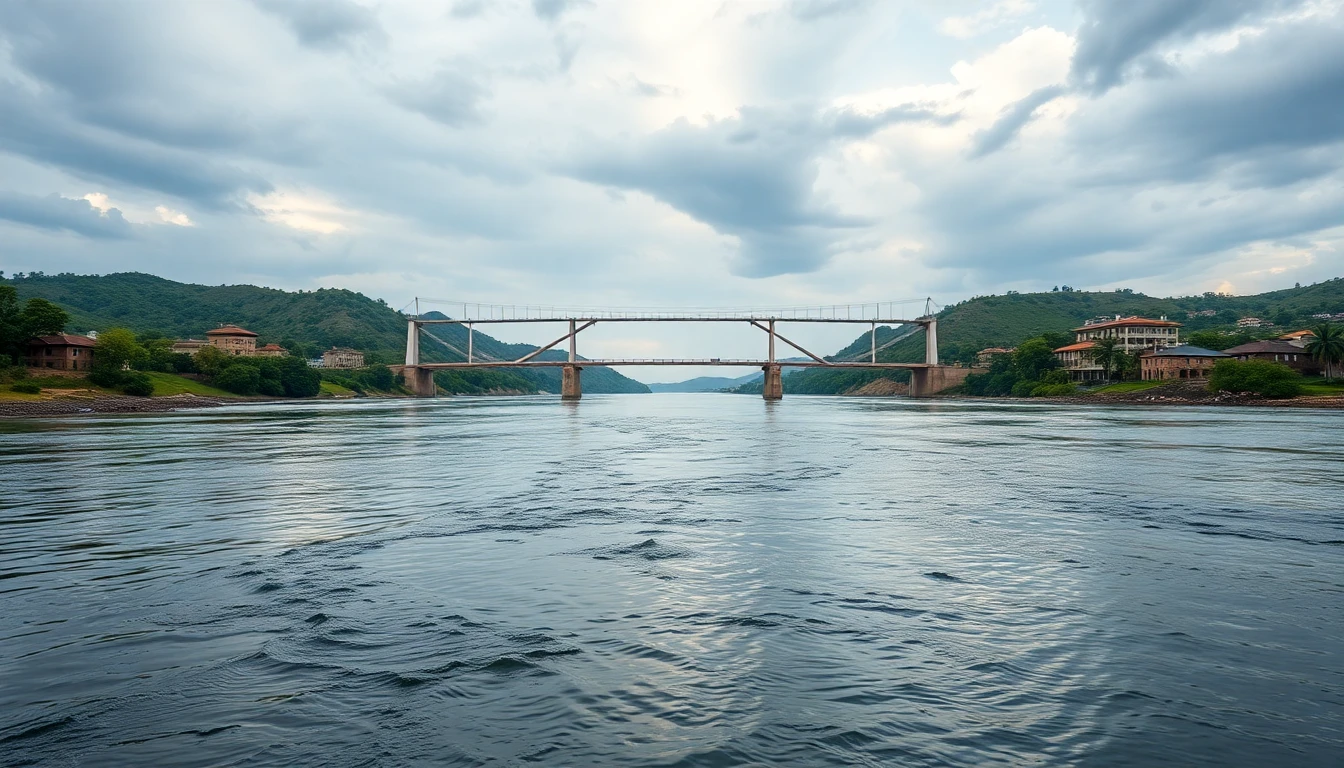
The Corpus Christi binational hydropower project on the Paraná River is in the pre-feasibility study stage and has an estimated investment of $5 billion. The proposal under review by Paraguay and Argentina considers awarding construction and operation to a private company, since the two governments would not have the capacity to finance the project directly.
Enrique Guardo, Management Director for the Argentine Delegation to the Joint Paraguayan-Argentine Commission on the Paraná River (COMIP), said there is still no agreement on financing or on the final operating model. The current estimate includes 20 turbines, installed capacity of 2,880 megawatts and annual generation of 20,000 gigawatt-hours, a volume comparable to Yacyretá.
The alternative under study is about 60 kilometers upstream from the Itacuá site, which was considered in earlier projects. The change would reduce the affected area, according to Guardo’s assessment: approximately 6,000 to 6,500 hectares on the Argentine side and 6,800 hectares on the Paraguayan side.
More than 220 families would need to be resettled along roughly 250 kilometers—116 in Argentina and between 120 and 130 in Paraguay. The project does not foresee flooding urban areas or causing mass displacement, and COMIP distinguishes the scale of the intervention from the Yacyretá experience, which reportedly involved about 7,000 relocations on the Argentine bank alone.
The location in a narrower section of the Paraná would allow part of the rise in the river level to be absorbed by the riverbanks themselves. Even so, territorial and environmental impacts remain among the issues dependent on updated studies, which began nearly six decades ago. The current proposal also differs from the one submitted to a referendum in Argentina’s Misiones province in 1996 because of the new site, technological advances and environmental requirements.
At present, COMIP has not requested a new referendum. The decision on any possible consultation lies with Misiones province. The commission is working with the National University of Misiones, the Professional Council of Engineers and the Economic Confederation of Misiones, while also maintaining an agreement with the University of Itapúa for territorial surveys in Paraguay.
The preliminary schedule calls for about six years of construction, with the first turbines entering operation from the fifth year onward. The estimated internal rate of return exceeds 10%, an indicator used to assess the project’s potential appeal to private investors.
Corpus Christi already appears in the energy planning of Paraguay’s National Electricity Administration (ANDE), the state-owned company responsible for the sector, for the 2024–2043 period. In addition to power generation, the proposal includes a bridge over the Paraná and is presented as a possible integration corridor for the electricity systems of Paraguay, Brazil and Argentina, with a possible broader regional connection. Stabilizing the riverbanks could also benefit navigation, ports and logistics, particularly the transport of cargo by Paraguay’s extensive river fleet.