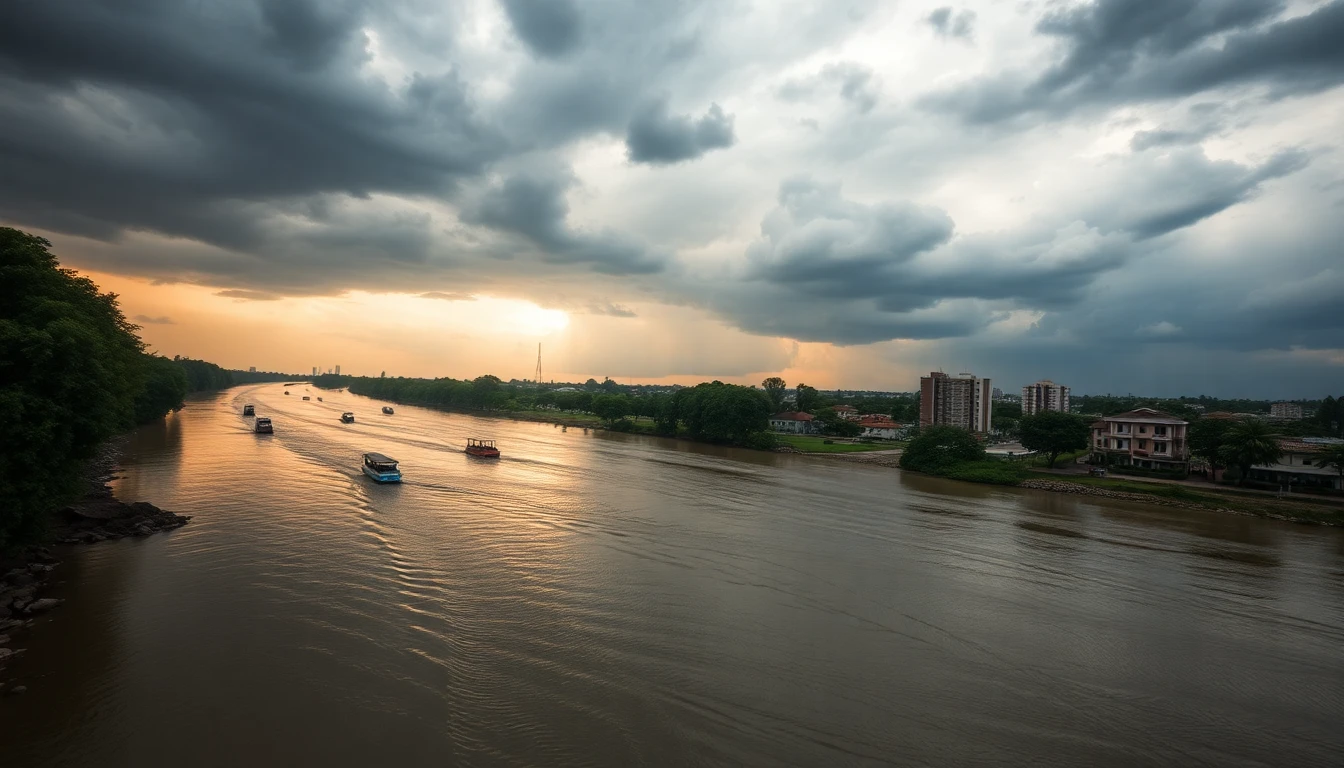
The Paraguay River continues its widespread downward trend at the country’s main ports, while the Paraná River records isolated rises. The latest data from the Directorate of Meteorology and Hydrology show that the lack of significant rainfall continues to influence conditions in the Paraguay basin.
In Asunción, the level reached 0.56 meters, a drop of 3 centimeters in 24 hours. In Concepción, the level stood at 1.76 meters, also 3 centimeters below the previous reading. Alberdi recorded 2.12 meters after falling by 2 centimeters, while Villeta and Itá Enramada each fell by 4 centimeters over the same period.
Humaitá and Pilar were the exceptions on the Paraguay River, rising by 4 centimeters at each port. Levels reached 2.34 meters and 2.57 meters, respectively, without changing the predominance of falling water observed along the rest of the river.
On the Paraná, the Ciudad del Este station recorded a rise of 121 centimeters, reaching 15.91 meters. There were also increases in Salto del Guairá, of 19 centimeters, and Encarnación, of 13 centimeters. The source attributes this variability to discharges and precipitation in the river’s upper basin.
The situation could change in the coming months if the region’s climate forecasts are confirmed. The Directorate of Meteorology and Hydrology and international organizations project a dramatic change associated with the consolidation of the El Niño phenomenon, with increases in the frequency and intensity of rainfall.
If these forecasts are confirmed, sudden rises in the rivers could cause flooding in vulnerable areas, such as Asunción’s wetlands and other riverside zones in the Eastern Region. In that scenario, authorities would be required to maintain contingency plans.