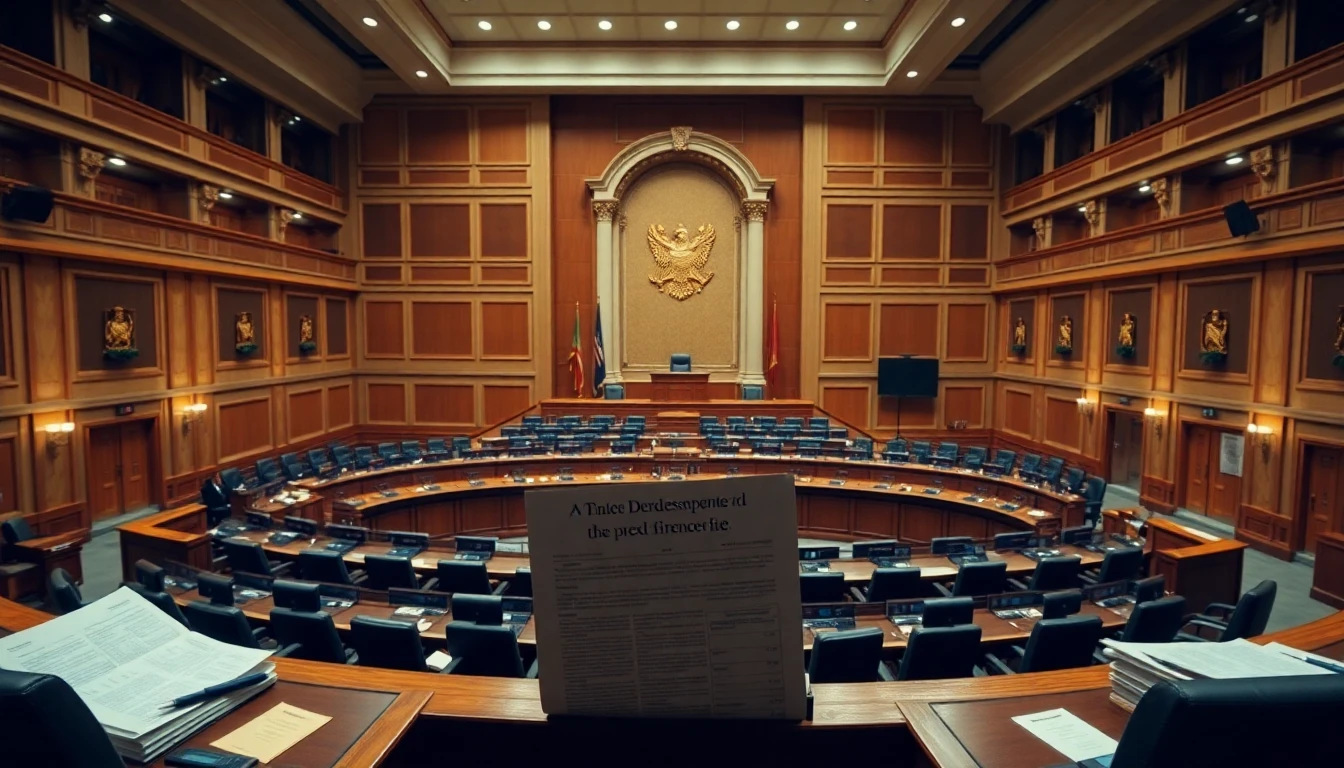
Paraguay’s Chamber of Deputies did not place the emergency bill for the Social Security Institute (IPS) on its agenda, even though the full chamber had approved a priority motion to speed up its consideration. Chamber President Raúl Latorre left the proposal out of the 27 items scheduled for the session, temporarily halting an initiative that could increase the exposure of the institution’s funds to Ueno Bank.
The chronology provided by the sources contains two references: the motion mentioned in one of them pointed to September 28, while the bill’s consideration was being prepared for the September 22 session, scheduled for 9 a.m. In any case, Latorre’s decision was not a withdrawal after changes to the text: the bill simply was not placed on the agenda, even though the priority motion had been approved.
The original proposal approved by the Chamber had five articles and declared a state of emergency at the IPS, Paraguay’s institution administering mandatory social security, because of shortages of essential medicines, infrastructure problems and failures in the elevators at Central Hospital. The Senate replaced that text with an expanded version, described in the sources as having 19 or 20 articles, a difference arising from the legislative versions considered in the coverage.
Among the provisions drawing the most scrutiny are Articles 17 and 18 of the Senate version. The current rule limits to 10% of the IPS’s total assets the amount that may be invested in a single financial institution, counting the different products together. The change would provide for Certificates of Savings Deposits (CDA), on one hand, and bonds, obligations and debt securities, on the other, to be counted separately. The limit could therefore apply by category rather than to the total exposure to the same bank.
The potential effect would mainly concern Ueno Bank, controlled by Grupo Vázquez SAE, whose president is Federico Miguel Vázquez. Reports state that the institution reached and has exceeded the limit since February 2025. The Comptroller General’s Office warned of “significant exposure” of IPS funds to the bank. Grupo Vázquez also had previous commercial relations with President Santiago Peña, a context that increased political pressure on the bill.
The change in the agenda came amid an internal crisis in Honor Colorado, a movement within the Colorado Party led by former President Horacio Cartes. Cartes confirmed the group’s presidential ticket, made up of Vice President Pedro Alliana and Housing Minister Juan Carlos Baruja. Caucus deputy leader Alejandro Aguilera had said that lawmakers would still assess which version to support and confirmed the summons of the new IPS president, Derlis León.
León will meet with the Honor Colorado caucus at noon on September 21. At 8 a.m. on September 22, one hour before the scheduled session, he is expected to speak with four committees: Accounts and Budget Execution Oversight; Economic and Financial Affairs; Justice, Labor and Social Security; and Budget. The Chamber needs 41 votes to reaffirm its position in response to the Senate’s amendments.
Before the proposal was excluded, Latorre met with Peña. The president also received Paraguayan Central Bank President Carlos Carvallo and representatives of the financial sector, including the Association of Banks of Paraguay. The political dispute now leaves it uncertain whether the governing majority will continue trying to speed up the vote.