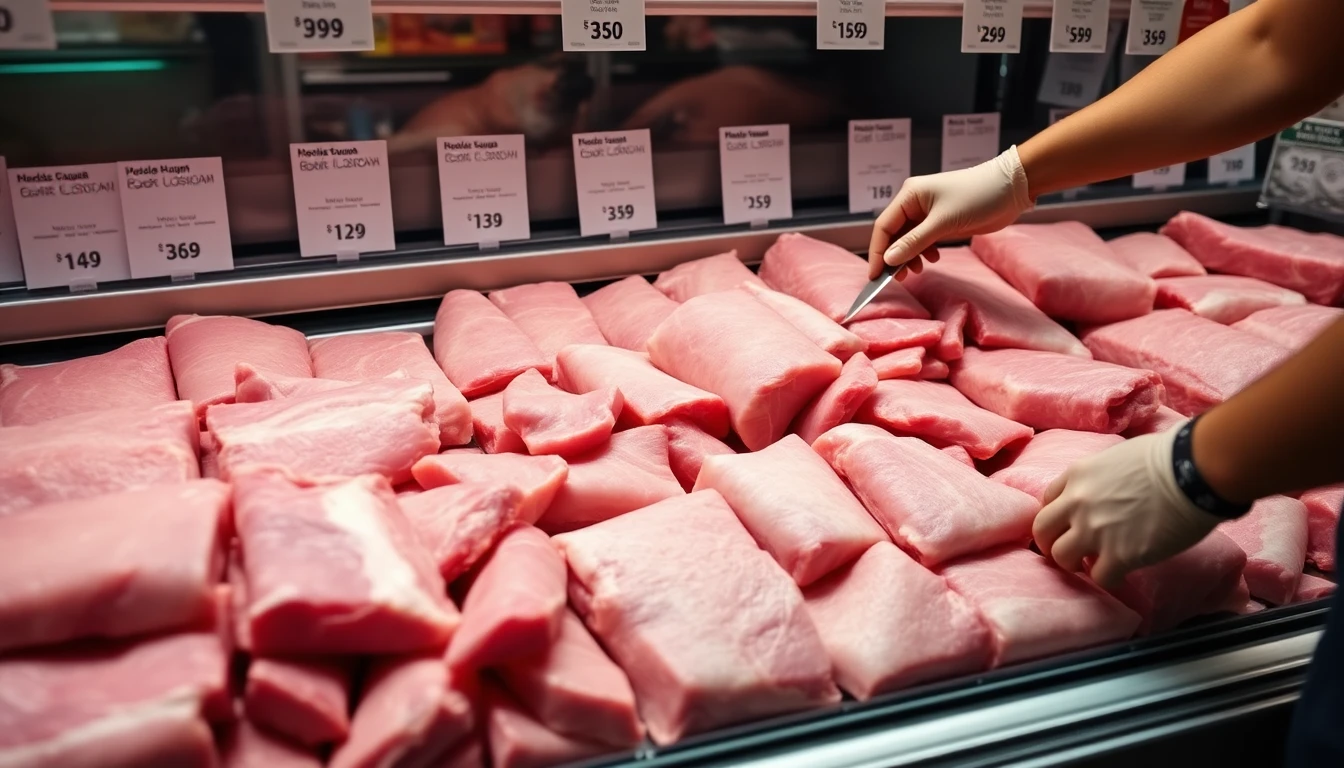
Pork’s share of the Paraguayan market rose from about 5% to 15%, while the volume sold grew by nearly 6,000 kilograms compared with the previous year, an increase of approximately 23%. Profitability, however, stood at just 2% amid a reduction in the price per kilogram.
Gustavo Lezcano, president of the Paraguayan Supermarkets Chamber (Capasu), made the remarks in an interview with Radio 1000. He said the price of pork “on the carcass” fell from about 22,000 to 15,000 guaraníes per kilogram, and linked lower production and marketing costs to the increase in sales volume.
Lezcano said chicken also accounts for about 15% of families’ daily preference and competes with pork for space. Beef continues on its own growth trajectory; the data presented do not indicate direct substitution caused by pork’s advance.
On how beef prices are set in supermarkets, Lezcano explained that the chains buy whole carcasses and divide them into about 30 cuts. Popular cuts, such as puchero and bone-in or lower-grade cuts, may be sold below their purchase cost, for between 9,000 and 12,000 guaraníes. Premium cuts are more expensive and help offset that difference. Under this system, the chains’ estimated final margin is between 12% and 13%.