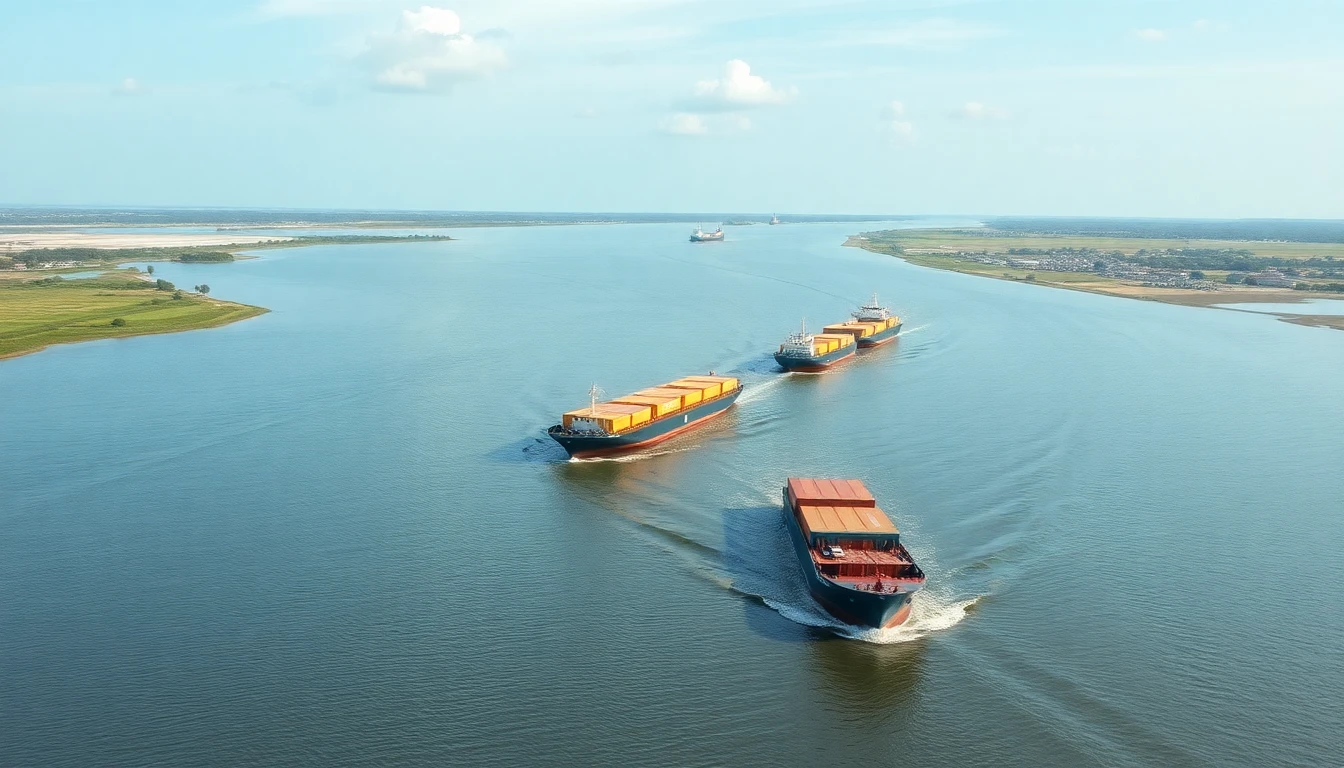
Operational problems at the port of Montevideo have increased costs and uncertainty for Paraguayan cargo transported along the Paraná–Paraguay waterway. Work stoppages, restrictions on convoy formation width and Argentina’s toll on the Paraná River are undermining the predictability of Paraguay’s foreign trade.
Montevideo remains one of the main alternatives for Paraguayan exports to reach the sea because it offers shorter operating times and less congestion than other regional ports. But stoppages recorded in recent months have affected vessel traffic and may generate additional expenses for shipowners.
Bernd Gunther, president of the Paraguayan Center of River and Maritime Shipowners (Cafym), said that interruptions lasting four or five days create costs that are difficult to recover. In general, the impact is absorbed by shipping companies, raising cargo transport costs.
Operations were also affected by a commercial dispute between Terminal Cuenca del Plata and Mediterranean Shipping Company (MSC). As a result, the company began routing certain shipments through Buenos Aires, requiring shipowners to send barges to the port chosen by each company.
Despite these problems, the sector considers Montevideo logistically convenient because it allows less congestion and faster vessel turnaround. For Gunther, the main obstacle now is commercial rather than strictly logistical.
On the waterway, restrictions on the width of convoy formations sometimes require convoys to be broken up, with barges left moored along certain stretches. Convoys continue with less cargo capacity, increasing the number of trips and operating costs.
Shipowners are also challenging Argentina’s US$1.30 charge per net registered ton on the stretch between Santa Fe and the confluence with the Paraguay River. The charge applies on both outbound and return journeys, making both legs of the navigation more expensive.
Paraguay is seeking to expand its transshipment options with an anchorage area and a barge berth at Punta del Arenal Sur. The deadline for submitting proposals is September 17. The sector views the facility as a way to reduce dependence on a small number of operating points, provide greater predictability for export flows and keep pace with the growth of Paraguayan cargo transported along the waterway.