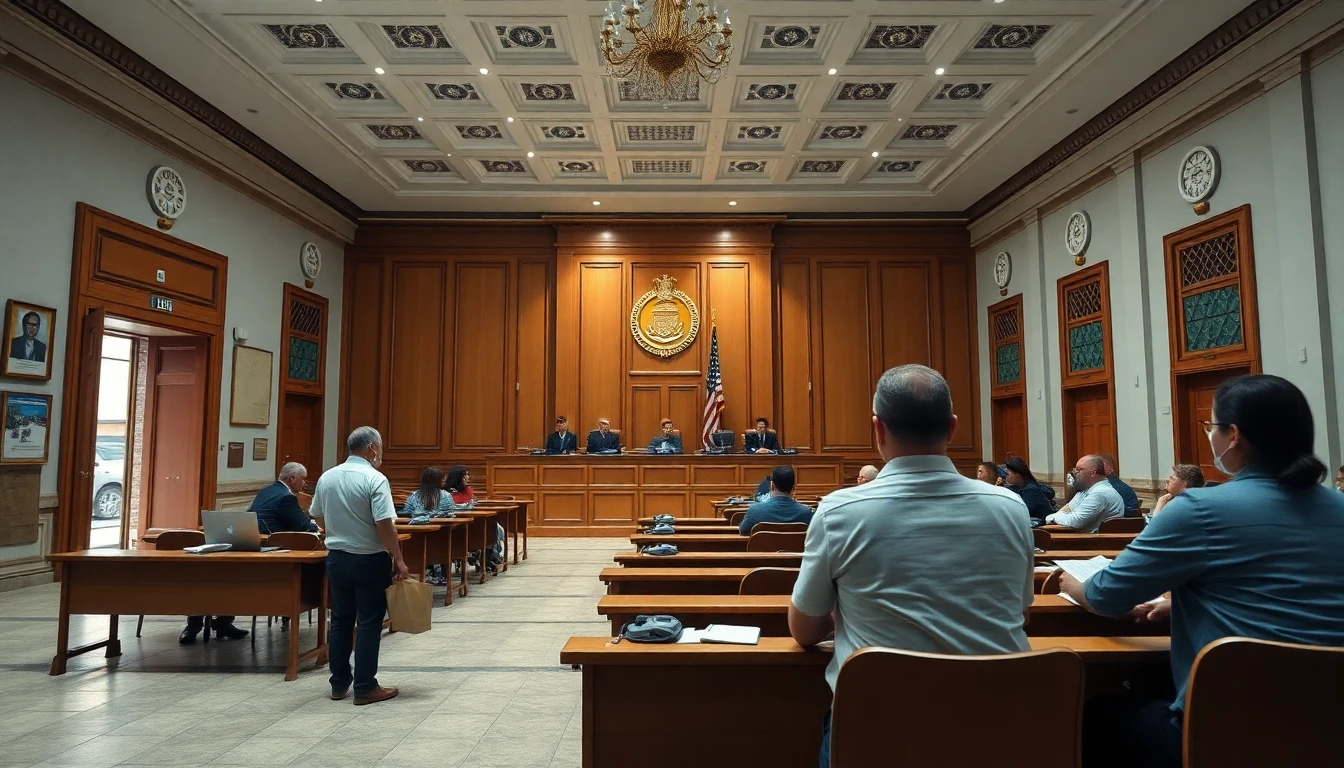
The collective agreement under review by the Asunción Municipal Council provides for G. 3.541 billion a month in medical subsidies for about 9,000 employees, as well as bonuses for seniority, education and punctuality. The debate comes just days before the October 4 municipal elections and combines questions about the cost of the benefits with political accusations over the speed of the agreement’s handling.
Clause 78 sets a monthly payment equal to 13.5% of the legal minimum wage, or G. 398,000 per employee. Applied to the 8,897 people listed on the June 2025 payroll, the calculation comes to G. 3,541,006,000 a month. The final amount depends on how many workers are covered and on implementation of the agreement.
The agreement also provides for a seniority bonus calculated on the minimum wage: 25% for those with five to 10 years of service, 35% for 11 to 20 years, 55% for 21 to 30 years, 70% for 31 to 39 years and 100% from 40 years onward. The cited rule applies to daily-wage workers and permanent contract employees at the Centro Paraguayo Japonés and the Asunción Bus Terminal Directorate who contribute to the IPS, Paraguay’s social security institution. For the groups counted at those locations, the estimate is G. 215.714 million.
For daily-wage workers, the text provides for a monthly payment of G. 1,979,000 to those who present a university degree requiring at least four years of study, and G. 1,065,000 to those with technical training lasting at least two years after high school. There is also a quarterly punctuality bonus of G. 210,000. If half of the employees arrive punctually, the estimated outlay will be about G. 934 million per quarter. The municipal legal adviser, Jorge Sabaté, said the payments depend on budgetary and financial availability.
An ABC Color report published on September 28 estimated the combined cost of seniority and degree bonuses at the Mayor’s Office and Municipal Council at G. 12.608 billion. That calculation has a different scope from the G. 215.714 million estimate for the groups at the Centro Paraguayo Japonés and the bus terminal; the figures should not be treated as equivalent estimates or added together without distinguishing beneficiaries and categories.
Mayor Luis Bello submitted the agreement to the Municipal Council, and councilor César Escobar acknowledged that there had been an intention to vote on it directly, without the usual referral to a committee. Última Hora reported that unions had called employees to press for approval. ABC Color, meanwhile, attributed electoral motives to the mobilization, citing allegations by opponents; that interpretation has not been independently corroborated. Union representative Silvia Araújo said regular approval can take more than a month and involve labor authorities, but the parties can implement the agreement even without formal approval.
Camilo Pérez, the Colorado Party (ANR) candidate for mayor, criticized the speed and called the agreement disrespectful to taxpayers and public employees. In an interview with ABC TV, he pledged to increase revenue, digitize the administration to fight bureaucracy and so-called “parallel cash boxes,” and seek a surplus of US$18 million. He also said he plans to eliminate about 3,000 positions through retirements and voluntary departures, financed by the Inter-American Development Bank, a proposal that still depends on coordination and funding. Pérez said he has the support of ANR president Horacio Cartes and the party’s organization; he also promised to eliminate the bike lanes and consult neighborhood committees on drainage works and traffic diversions in residential areas.