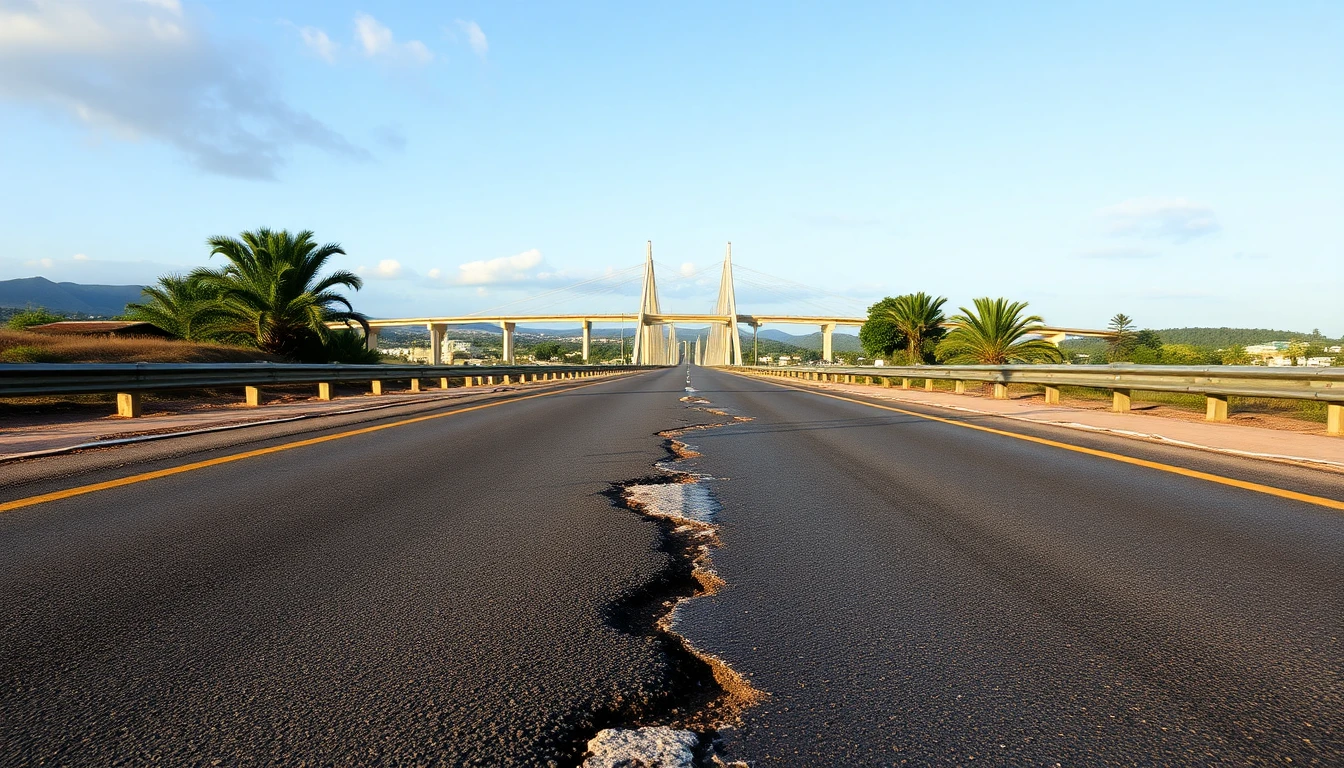
The Integration Bridge between Presidente Franco, Paraguay, and Foz do Iguaçu, Brazil, is being opened in stages as roadworks and control facilities advance on both sides of the border. About 7,500 trucks traveled through the new corridor over a 30-day period, said Paraguay’s director of Migration, Jorge Kronawetter, in contact with radio station 780 AM.
According to Kronawetter, the first phase was reserved for vehicles traveling without cargo. Tourist buses then began crossing at fixed times during the high season. The third stage began last week and allows private vehicles belonging to residents of Foz do Iguaçu, Presidente Franco and Ciudad del Este to cross.
The gradual opening was agreed by the joint Paraguayan-Brazilian commission to prevent saturation of the local road network. Full opening does not yet have a defined date. On the Paraguayan side, one of the main pending tasks is completion of the bridge over the Monday River, which is needed to divert heavy traffic without overloading the urban area of Presidente Franco. Access and control works also remain under way on the Brazilian side.
A new technical assessment of the binational arrangement is scheduled for the end of this year, according to information attributed to Kronawetter. So far, the partial opening has eased traffic on the Friendship Bridge only to a limited extent. The bridge connects Ciudad del Este with Foz do Iguaçu and continues to handle a large share of international traffic.
The Paraguayan access route to the Friendship Bridge faces another problem: approximately four kilometers, including the primary control zone and Ruta PY02, have numerous potholes. Maintenance of the stretch is the responsibility of the Ministry of Public Works and Communications (MOPC), after the area ceased to be part of the segment managed by the Tape Porã consortium.
Paraguay’s Senate approved a bill introduced by lawmaker Walter García of Yo Creo to declare a road emergency on the stretch between the bridge’s primary zone and kilometer 3.5 of Ciudad del Este. President Santiago Peña vetoed the proposal in full. The MOPC and the Ministry of Economy and Finance argued that the repairs could be carried out through the ordinary procedure, without declaring an emergency.
The Minga Guazú Mobile Asphalt Plant said the potholes do not pose an immediate risk to traffic, but the condition of the road forces drivers to maneuver and affects the travel of residents, transport operators and tourists. The expansion of use of the Integration Bridge therefore depends both on the binational timetable and on completing the access routes and repairing the roads that feed into the two crossings.