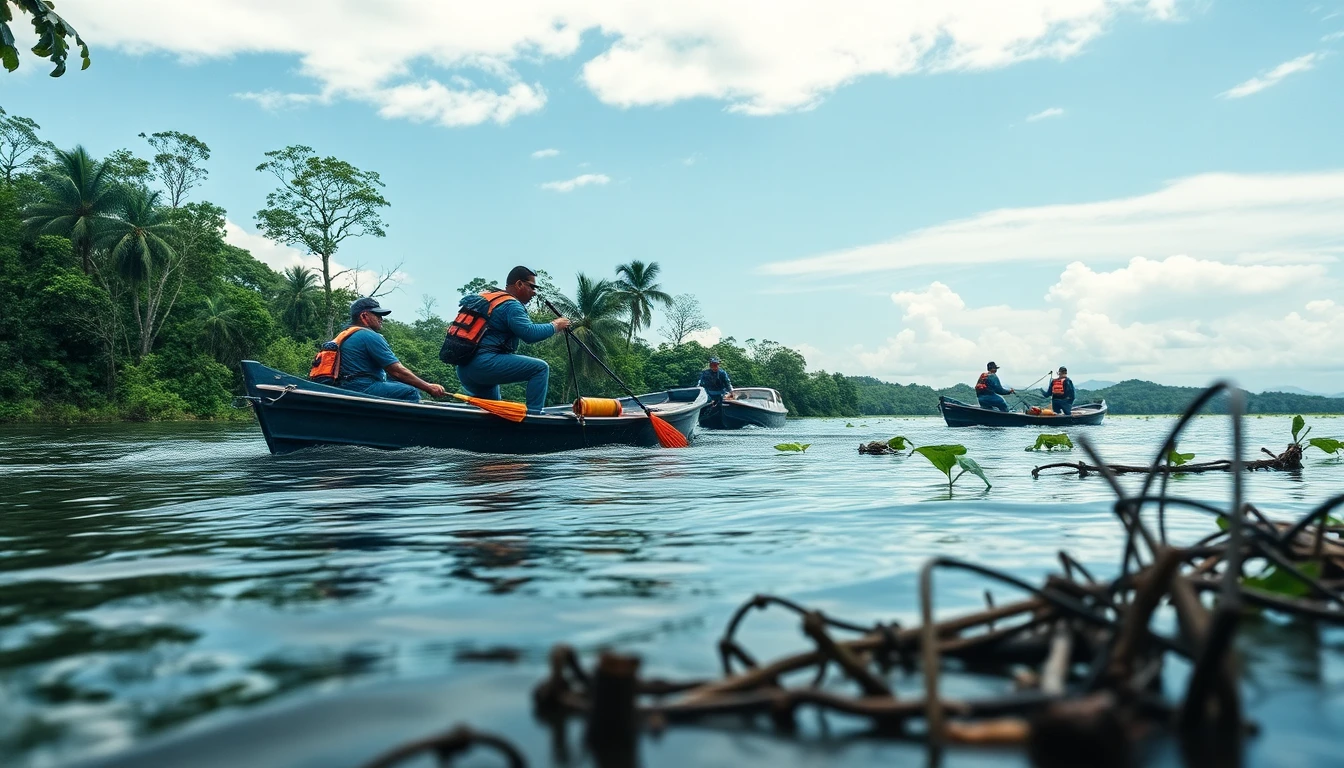
The Mymba Kuéra operation rescued 27,150 animals on the Paraguayan side during the filling of the Itaipu reservoir, between October 13, 1982, and January 10, 1983. Including the approximately 11,000 animals removed on the Brazilian side, there were nearly 39,000 rescues, making it one of the largest wildlife rescue operations in South America.
The operation began after the main construction work on the plant had been completed, when the gates of the channel that had temporarily diverted the Paraná River were closed and the area of the future reservoir began to flood. The lake covers about 1,350 square kilometers, in a region of the Upper Paraná Atlantic Forest estimated to contain approximately 20,000 plant species, at least 2,000 animal species and 400 bird species.
The Paraguayan project was led by agricultural engineer Darío Pérez Chena, then an employee of the Itaipu Binational Entity. Planning took several years and included an inventory of the affected area carried out by botanists, zoologists and forestry engineers. In an interview with BBC News Mundo, in material written by Alejandra Martins, Pérez Chena said the survey created a large archive of Paraguayan wildlife and expanded knowledge of the region.
The core team had 189 members. Rescuers were preferably selected from among people up to 40 or 45 years old who could swim and had good eyesight and hearing. Brazilian technicians and technicians from other countries took part in the training. The support group included about 150 professionals, including doctors, nurses, helicopter pilots, mechanics and firefighters.
In boats, with radio communication often conducted in Guarani, the rescuers mainly removed animals that could not swim, such as monkeys, armadillos, snakes, tarantulas and birds. The pace reached more than 600 animals in a single day. Snakes accounted for 45% of the total rescued, and half of them were venomous; for that reason, each boat carried a kit with antivenom.
Some of the animals were moved to more than 100,000 hectares of protected areas in the same ecosystem. Hundreds of snakes were sent to the Butantan Institute in São Paulo, a biological research center that produces antivenoms and other medicines. Some six-banded armadillos were taken to Japan.
Pérez Chena, now 87, lives with his wife, Lucina. He acknowledged to the BBC that many animals probably died, especially insects and species that lived in underground burrows. The operation received several international honors, according to the engineer, and helped inspire later initiatives such as the Tekotopa Environmental Center, maintained by Itaipu in Hernandarias.