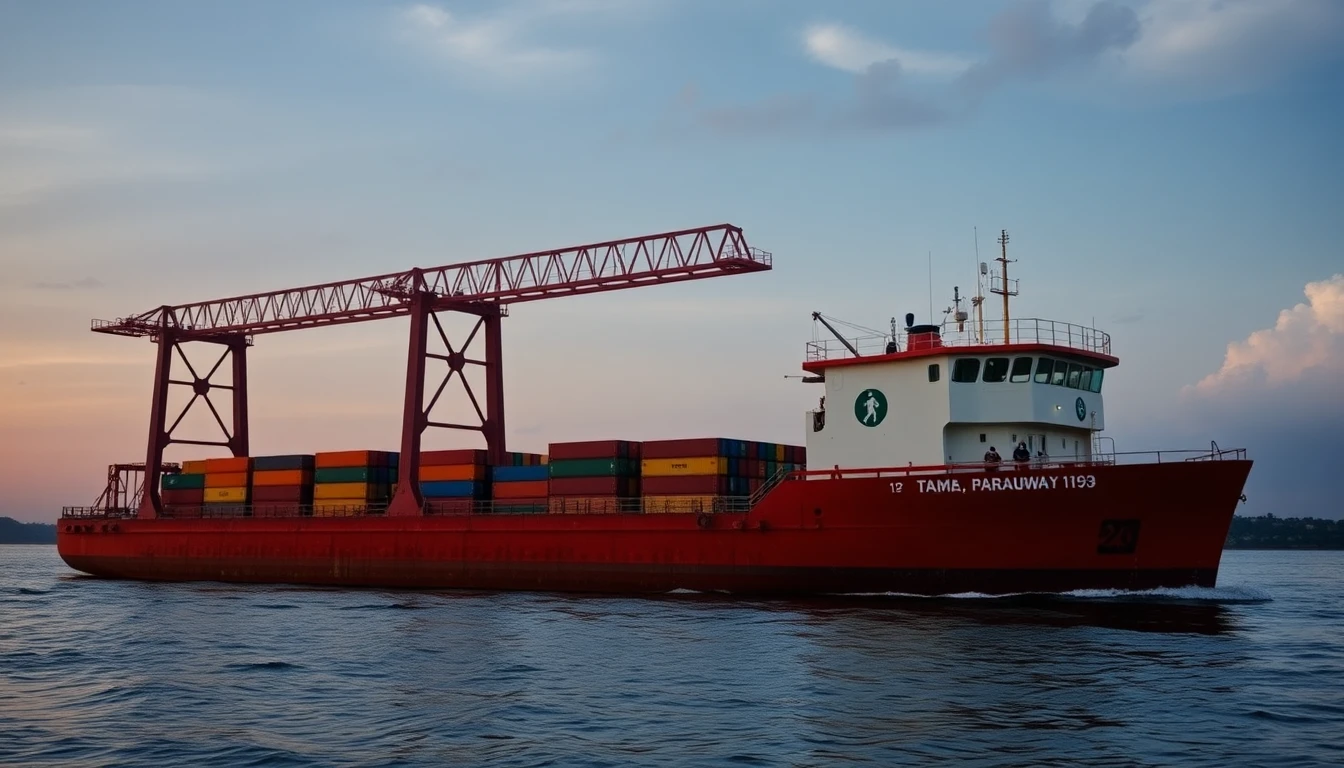
The Paraguayan private sector alerted the government that the cost of the toll on the Argentine stretch of the Paraná-Paraguay Waterway may, at certain times, exceed the profit margin of agricultural products exported via this route. The warning was issued by the president of the Paraguayan Chamber of Oilseed and Cereal Processors (Cappro), Raúl Valdez, during a meeting of the Logistics Council chaired by President Santiago Peña.
Valdez explained that the current tariff of US$1.30 per net registered ton was initially considered temporary and should have been linked to a technical committee to evaluate the value and level of service provided. However, with the entry of the new concessionaire for the Argentine stretch, the Belgian company Jan De Nul, the tariff was not reviewed and there was no improvement in service, leaving Paraguayan users dissatisfied.
The leader emphasized that the impact goes beyond the amount paid directly. In certain market situations, the amount spent on the toll may be greater than the profit margin obtained from the sale of agricultural commodities that depend on the waterway to reach export ports. This situation jeopardizes the competitiveness of Paraguayan exports.
In response to the complaint, President Peña instructed the Ministry of Foreign Affairs to lead the development of a technical and diplomatic strategy to address the toll issue with the Argentine counterpart. The goal is to find resolution mechanisms now that the concession for the Argentine stretch of the Paraná River has been formally awarded.
In addition to the tariff issue, the private sector advocated for strengthening Paraguay's institutional framework related to the waterway. Valdez argued that the country needs to update and give greater weight to the entities responsible for governing the river corridor, which would allow for more modern internal management and a stronger position in international forums.
The view presented is that the waterway should be developed comprehensively, considering it as a single system. Any work or improvement on the Paraguayan stretch must be interconnected with the concession systems of other countries in the basin, such as Brazil and Argentina, to avoid an unbalanced model with multiple tolls and high costs that do not connect.
Regarding the concession project for the Brazilian stretch, which is also underway, Valdez stated that the sector supports private initiatives to improve infrastructure. However, he cautioned that any change must be analyzed from the perspective of regional integration and with the active participation of users, something that, according to him, did not occur in the Argentine process and which he hopes will be different in the case of Brazil.