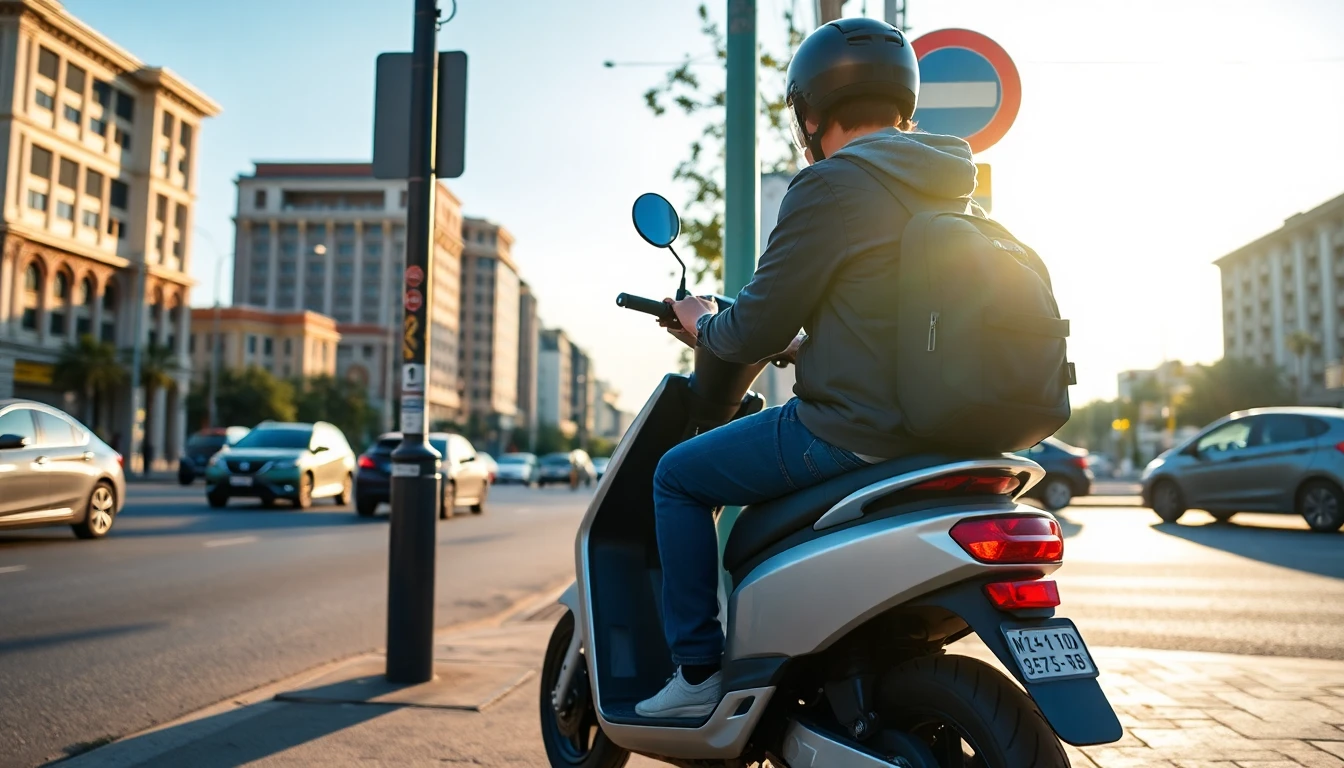
The urban landscape of Ciudad del Este is changing rapidly with the proliferation of electric scooters, a phenomenon advancing faster than traffic legislation. Young people, mostly Brazilian students, increasingly use these silent and agile vehicles to move around the city, mixing with car, motorcycle, bus, and pedestrian traffic.
Faced with the growth in use of these micromobility vehicles, the Municipality of Ciudad del Este is preparing a specific municipal ordinance to regulate their circulation. The objective, as confirmed by Leonardo Roa, director of the Municipal Traffic Police (PMT), is to organize traffic and reduce accident risks. The proposal is under development and the city hall hopes to approve it this year.
The need for rules became evident with the increase in incidents. Roa stated that currently, out of every ten accidents recorded in the city, six involve motorcycles and four are related to electric scooters. The ease of use, low cost, and ability to avoid some congestion explain the scooters' popularity, but the lack of clear rules about who can operate them, where they should circulate, and which safety equipment is mandatory generates concern.
While the municipality acts locally, a bill with national reach is moving through Congress. Deputy Walter García, from the Yo Creo party, presented a proposal last year to modify the National Traffic and Road Safety Law (Law No. 5016) and incorporate specific provisions for electric scooters. The initiative, which is still in the Chamber of Deputies, seeks to create a single regulatory framework to prevent each municipality from needing to solve the problem separately.
Deputy García's bill proposes mandatory helmet use, definition of specific circulation zones, speed limits, and priority rules at intersections. García argues that the objective is not just to impose restrictions, but to integrate micromobility into the urban transport system safely, fostering alternatives that reduce dependence on motor vehicles. He believes that although the phenomenon is more visible in border cities like Ciudad del Este and Pedro Juan Caballero, the trend should expand throughout the country.
The director of PMT, Leonardo Roa, reinforces that in the absence of a specific law, scooter operators must already obey general traffic rules. "Circulation is not prohibited, but they must comply with traffic rules. They must respect traffic lights, pedestrians, and helmet use as well," he stated. Currently, a fine can be applied for lack of helmet, since the absence of specific licensing or permits for the vehicle is not provided for in the law.
The discussion in Paraguay accompanies international experiences from countries like Spain, France, Brazil, and the United States, which have already established rules for these vehicles. Organizations like the Inter-American Development Bank (IDB) have also developed recommendations to promote safe, sustainable, and equitable micromobility in Latin American cities. The local challenge is to balance regulation to minimize risks without impeding the development of a transport alternative that can contribute to urban mobility.