A clean morning is not an annual average
At mid-morning on 7 August 2026, Greater Asunción was breathing unusually clean air. Paraguay’s Ministry of Environment and Sustainable Development (MADES) reported “good” conditions at all three operating stations on its public dashboard: an air-quality index of 22 at the Parque Guasú reference station, 32 at the nearby Parque Guasú sensor and 7 in Villa Elisa. The Costanera station was listed as under maintenance. At about 10:00 local time, the private monitoring company IQAir also classified Asunción’s air as good, with a US AQI of 23 and PM2.5 at 4.2 micrograms per cubic metre.
Those readings answer one question: the air was clean at that moment. They do not prove that Asunción’s air is clean throughout the year. A live AQI is a short-term snapshot, while the World Health Organization’s most stringent PM2.5 guideline is 5 micrograms per cubic metre as an annual mean. WHO also recommends a 24-hour mean no higher than 15 micrograms per cubic metre. Comparing a single reading of 4.2 directly with an annual limit would therefore give a misleading sense of certainty.
The longer view is less pristine, but far removed from the world’s worst pollution. IQAir estimates that Paraguay’s average PM2.5 concentration in 2025 was 10.4 micrograms per cubic metre—about 2.1 times the WHO annual guideline. The company ranked Paraguay 92nd among 143 countries in its 2025 air-pollution table. These figures are a private international estimate, not an official Paraguayan annual statistic, and the country’s monitor coverage remains limited. Still, they point to a useful conclusion: Paraguay is not among the world’s most heavily polluted countries, yet average fine-particle exposure remains above the health-based benchmark.
A scientific dataset published in 2026 provides a firmer local foundation than Paraguay had only a few years ago. Researchers from the Universidad Nacional de Asunción assembled three years of continuous, high-frequency measurements from April 2019 to December 2021. Their network included nine stations in urban Asunción, one on the UNA campus in San Lorenzo and one in semi-rural Cerrito in the Paraguayan Chaco. The instruments recorded PM2.5 and PM10 every five minutes, alongside meteorological variables that help explain how pollution disperses.
The dataset does not supply a current citywide annual average. Its value is different: it documents how particulate pollution changes by place and time and gives researchers an open basis for comparing traffic corridors, urban neighbourhoods and a rural reference site. It also helps explain why air quality can vary within the metropolitan area even on the same day.
Local pollution and regional smoke
Asunción faces two overlapping pollution patterns. The first is local and persistent. Vehicle exhaust, especially from diesel buses, trucks and poorly maintained engines, concentrates near busy roads and congested junctions. The capital’s municipality has continued roadside inspections for black smoke and carbon monoxide under national and municipal air-quality rules. It also reported new controls in March 2026 against the open burning of waste in vulnerable areas along the Costanera. On ordinary days, distance from a major avenue or a recurrent burning site can therefore make a meaningful difference to personal exposure.
The second pattern is episodic and regional. Smoke from forest, grassland and agricultural fires can travel hundreds or thousands of kilometres. When fires intensify in Paraguay or neighbouring parts of Brazil, Bolivia and Argentina, wind can carry fine particles across the entire metropolitan airshed. The US Environmental Protection Agency identifies PM2.5 as the pollutant of greatest health concern in wildfire smoke because the particles can reach deep into the respiratory tract. These episodes explain why Asunción can move from clear skies to haze and a smell of smoke without a comparable change in local traffic.
Weather and the monitoring network
Weather determines how strongly both kinds of pollution are felt. Rain and stronger winds disperse or wash out particles; stagnant, dry conditions allow them to accumulate. On 7 August, MADES stations recorded southerly or south-westerly winds, while IQAir showed a wind speed of about 20 kilometres per hour in Asunción. That makes the day a useful example of good dispersion, not a prediction for the rest of the season.
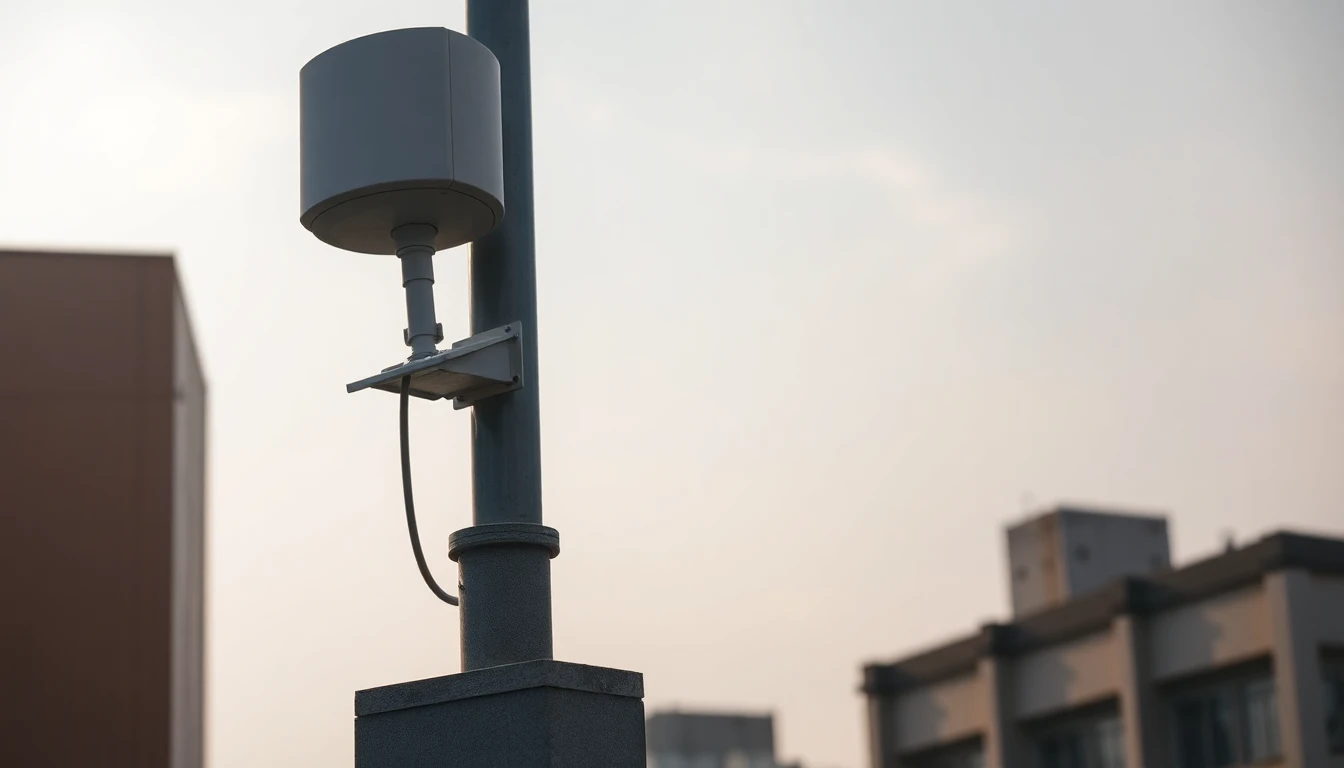
Public monitoring capacity also changed after that August snapshot. By late September 2026, the MADES dashboard showed five active or recently reporting monitoring points in Asunción and Villa Elisa, including the Parque Guasú reference station, Villa Elisa, a sensor at the Universidad Nacional de Asunción engineering faculty on Mariscal López, the Costanera José Asunción López and another Parque Guasú sensor. The portal also exposes an API for active stations, parameters and historical data. That expansion improves the ability to detect episodes and compare locations, although five points remain too sparse for block-by-block conclusions, and MADES notes that its visible air-quality index is calculated from PM2.5 and PM10 and may not reflect every other pollutant.
What residents should do with the data
For residents, the practical lesson is to read the dashboard rather than rely on how blue the sky looks. On routine days, homes, schools and workplaces farther from heavy traffic and open burning may have lower exposure. During a large regional smoke event, however, moving a few streets away will offer much less protection because the whole metropolitan area can be affected. Children, older adults, pregnant people, outdoor workers and people with heart or lung disease face higher risks during smoke episodes and should follow official health advice.
The fairest verdict is that Paraguay’s air is often good and usually much cleaner than conditions in the world’s severe pollution hotspots. But “often clear” is not the same as consistently meeting WHO health guidelines. IQAir’s national estimate puts fine-particle exposure at about twice the WHO annual recommendation, and fire smoke can turn an otherwise clean-air city into a regional pollution basin. Paraguay’s new monitors will not solve those problems, but they make them harder to ignore—and easier to manage.